BODHI BLOOM SOCIETY, a community initiative founded by Dipongshi Chakma, has enrolled over 500 artisans across remote parts of Mizoram and is connecting traditional producers to buyers, the organisation said.
From village skills to market linkages
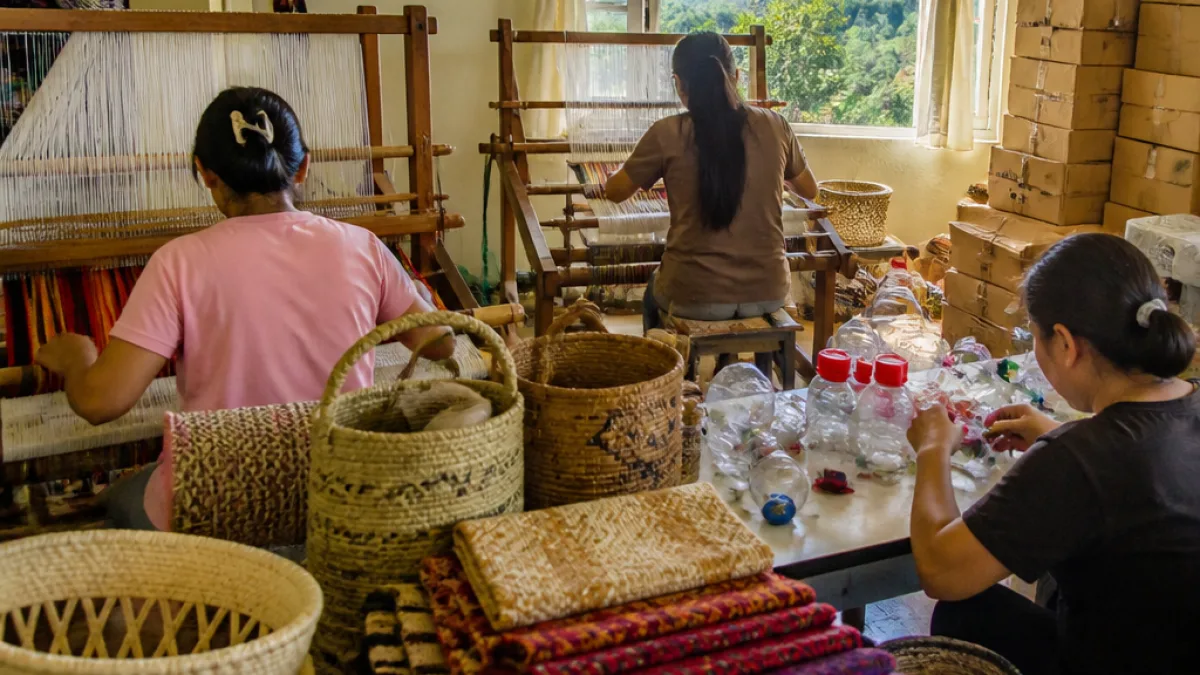
Chakma, who returned to her village after graduating in Arts from Guwahati, found craft skills widespread but rarely converted into sustainable livelihoods. The society now works with artisans involved in weaving, bamboo and cane craft, and small-scale upcycling projects. Of those enrolled, 286 are women weavers, according to the organisation's information.
“People knew a lot, but were doing nothing with their skills,” says Chakma.
The group's activities include training young people in bamboo craft and helping artisans find customers and institutional buyers. Chakma said the presence of abundant bamboo across the state offers opportunities for household items such as laundry baskets, jewellery boxes and chairs, but producers face barriers including long distances to markets, poor transport and limited access to buyers.
Operational constraints and upcycling efforts
Despite the outreach, Bodhi Bloom operates from a rented room serving as both office and meeting place and lacks a dedicated production centre or machinery. The limited infrastructure makes it difficult for the organisation to scale production when demand rises.
To add value and reduce waste, the society has begun making decorative items from discarded bottles. Chakma said the upcycling initiative is a stopgap while the organisation seeks to expand its capacity.
Plans beyond handicrafts
Chakma has signalled a desire to broaden the group's work beyond handicrafts by drawing on traditional medicinal knowledge and other indigenous skills, with the stated aim of strengthening livelihoods in tribal communities.
“Mizoram has plenty of bamboo. You open your window, and see it everywhere,” Chakma said.
She emphasised that the larger objective is to change how tribal communities perceive and use the skills they already possess, adding:
“I won’t always be there with them, but I’ll make sure that our people learn now itself, so that they can guide others later.”
What the society provides and challenges ahead
- Market linkages: identifying customers and reaching institutional buyers.
- Training: weaving, bamboo craft and related artisanal skills for youth and women.
- Upcycling: producing saleable decorative items from waste materials such as discarded bottles.
However, the society's capacity constraints — no production centre, limited storage and basic infrastructure — pose a challenge when orders increase. Distance and transport infrastructure in remote areas of Mizoram also continue to restrict artisans' direct access to larger markets.
Context and local impact
Mizoram's craft traditions include intricate textiles and extensive use of bamboo and cane for household goods. Efforts to translate these cultural skills into income-generating activities have often been hampered by geographic isolation and lack of organised market access.
By focusing on training, market linkage and small-scale value addition through upcycling, Bodhi Bloom seeks to strengthen income options for women and youth in remote communities. The initiative aims to make traditional knowledge economically meaningful for the present generation while building local capacity to sustain these activities independently.
| Metric | Figure |
|---|---|
| Artisans enrolled | 500+ |
| Women weavers | 286 |
| Current office | Rented room (office and meeting place) |
Chakma's approach underscores a practical model followed by several grassroots organisations in northeastern India: build skills locally, create market connections externally and use modest value-addition to enhance returns. How quickly Bodhi Bloom can acquire production space, equipment and broader buyer networks will determine its capacity to absorb larger orders and deliver consistent incomes to artisans.
For now, the society continues to prioritise training and market access while experimenting with sustainable material use, hoping to create pathways for tribal communities to convert cultural capital into durable livelihoods.