Aizawl: Mizoram Education Minister Vanlalthlana has called on the Centre to frame education policies that reflect the unique geographical and socio-economic conditions of northeastern states, saying a uniform approach devised for larger states cannot adequately address the region’s challenges, an official statement said on Friday.
Distinct problems need region-specific responses, minister says
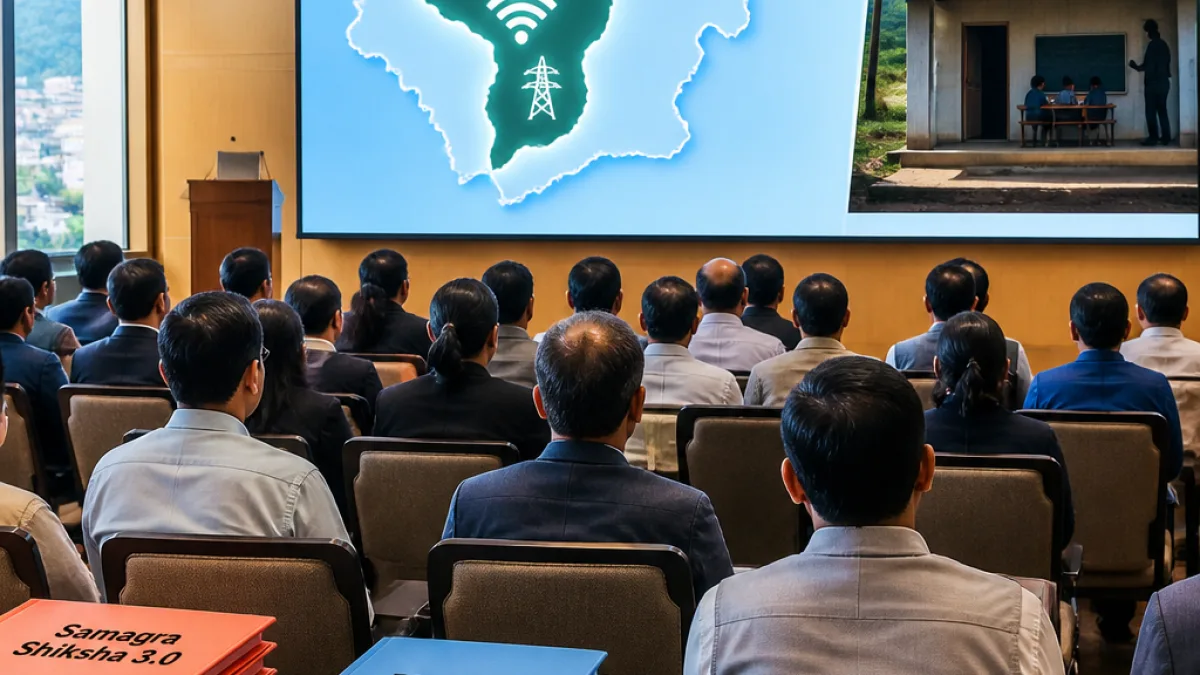
Addressing the North East Education Conclave 2026 in Chumoukedima, Nagaland, the minister underlined that several issues confronting the region demand targeted support and adaptations to national programmes. He drew attention to both progress made in Mizoram and the gaps that persist in implementing the National Education Policy (NEP) 2020.
According to the statement, Vanlalthlana pointed to a set of recurring difficulties across the Northeast that cannot be resolved through one-size-fits-all measures designed for much larger and better-connected states.
- Declining enrolment in government-run schools;
- Shortage of secondary schools in rural and remote areas;
- Inadequate manpower at District Institutes of Education and Training (DIETs) and State Councils of Educational Research and Training (SCERTs);
- Poor internet connectivity that impedes digital learning;
- Operational difficulties in providing regular solar power and other off-grid solutions.
The minister also emphasised financial constraints faced by northeastern states when recruiting additional personnel or developing infrastructure to meet NEP 2020 requirements. He urged the Centre to recognise these as common regional obstacles and provide appropriate support and flexibility.
Mizoram showcases local initiatives
Vanlalthlana highlighted steps Mizoram has taken to strengthen assessment and life-skills education. The state has introduced a Standardised Assessment for Elementary Schools and is using the Vidya Samiksha Kendra mechanism to bolster monitoring and evaluation of learning outcomes.
The statement said the minister highlighted project Intodelh, an initiative aimed at equipping students with financial management and entrepreneurship skills so they can become self-reliant. The delegation also put forward proposals on implementing Samagra Shiksha 3.0 and PM-USHA and suggested strategies tailored to Mizoram’s terrain and way of life.
Practical challenges in the Northeast
Officials from the region have frequently cited difficult terrain, sparsely populated districts and connectivity gaps as complicating factors for classroom access, teacher deployment and technology-enabled learning. In such contexts, the minister’s request seeks greater policy flexibility and targeted funding to translate NEP provisions into practice.
| Issue | Mizoram / NE context | Suggested focus |
|---|---|---|
| Enrolment | Declining in government schools | Programmes to make public schools attractive; community engagement |
| Secondary school access | Shortage in rural areas | Alternate schooling models; transport and boarding solutions |
| Teacher training | Understaffed DIETs/SCERTs | Recruitment support, capacity-building grants |
| Connectivity & power | Poor internet; unreliable grid | Investment in last-mile internet; solar electrification schemes |
While the statement did not include budget figures or a timetable for the proposals, it noted that the Mizoram delegation formally submitted suggestions at the conclave for modifications in the roll-out of national schemes to reflect local needs.
What this means for students and schools
If the Centre accepts region-specific adjustments, schools in Mizoram could see changes such as more flexible implementation timelines for NEP mandates, enhanced hiring support for teachers and trainers, and targeted connectivity and power projects in remote habitations. The state’s emphasis on entrepreneurship and financial literacy through project Intodelh also indicates a push to broaden curriculum priorities beyond traditional academics.
Vanlalthlana’s representations at the North East Education Conclave echo wider demands from northeastern states for policy recognition of geographic and socio-economic distinctiveness. The proposals now await consideration at the national level.