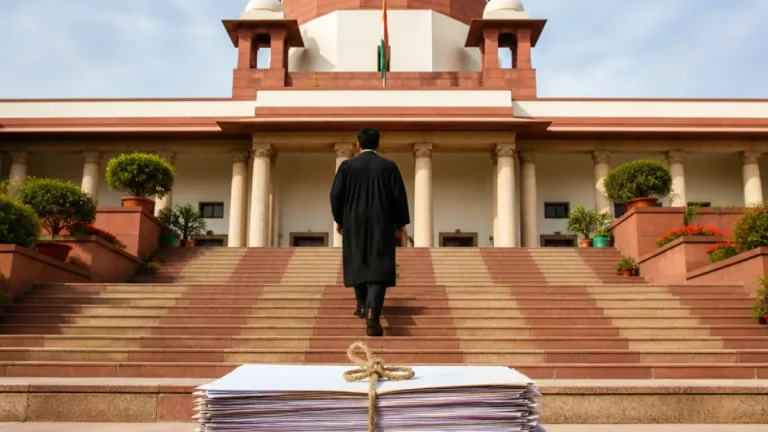
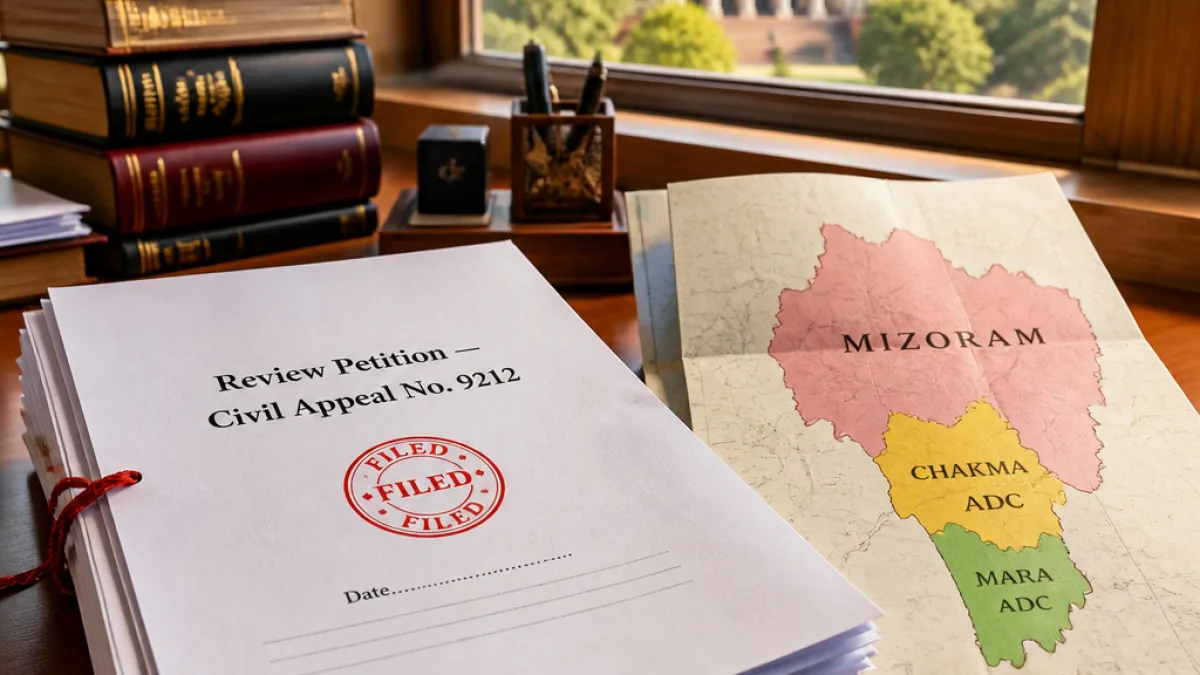
Guwahati: Rashik Mohan Chakma, a sitting MLA who is also a member of the Chakma Autonomous District Council (ADC) in Mizoram, said he will file a review petition against the Supreme Court’s judgment in Civil Appeal No. 9212 of 2026 — Rustom Chakma v. The State of Mizoram & Ors. dated 20 July 2026, which directed the Chakma ADC and the Mara ADC to restore the bar on dual membership.
Allegation of concealed material fact, claim of denial of natural justice
According to a statement released in Guwahati, Rashik Mohan Chakma contends that the petitioner in the original case, Rustom Chakma, concealed a material fact concerning the Lai ADC’s rules on dual membership. He said this led to an incorrect observation by the apex court that the Lai ADC still retained a prohibition on dual membership between ADCs and the State Legislative Assembly.
“This observation is not factually correct as the Lai ADC had removed the bar on dual membership in the ADCs and the State Legislative Assembly by repealing its Constitution and Conduct of Business Rules of 2002 in 2010… This material fact was concealed by petitioner Rustom Chakma to secure a favourable judgment, and he interfered with the administration of justice.”
Chakma further argued that he was not afforded a proper opportunity to reply. He said the Supreme Court disposed of the petition at the first hearing after issuing notice and did not permit him to file a written response, which he characterised as a violation of the principles of natural justice.
Background of the litigation
The dispute originated when Rustom Chakma challenged the view that Articles 101 and 190 of the Constitution bar an ADC member from becoming a member of a State Legislative Assembly. The Gauhati High Court had earlier held that these constitutional provisions do not impose such a bar and had relied on the opinions of the Election Commission of India and the Governor of Mizoram.
The Supreme Court, in its July judgment, took a different view and directed uniformity across ADCs by restoring prohibitions on dual membership for the Chakma and Mara ADCs, observing that the Lai ADC retained such a bar. It is this factual premise about the Lai ADC that Rashik Mohan Chakma says is incorrect.
Legal and political consequences
If a review petition is admitted and the apex court reconsiders the factual record, the judgment could be modified. Any change would have immediate implications for office-holders who currently hold or seek to hold positions in both ADCs and the State Assembly.
The matter also engages the constitutional provisions concerning dual membership (Articles 101 and 190) and the definition and scope of an "office of profit" under Article 191(1), which the source petition raised. The precise legal questions — whether ADC membership is incompatible with legislative membership and the consequence of holding an office of profit — remain central to the contest.
What the MLA says he will seek
- Filing of a review petition to correct the alleged factual error about the Lai ADC’s 2010 repeal of its bar on dual membership.
- Assertion that he was denied an opportunity to file a written reply, amounting to a breach of natural justice.
- Clarification on the scope and reach of the Supreme Court’s direction as it affects ADC rules and members.
| Item | Detail |
|---|---|
| Case | Civil Appeal No. 9212 of 2026 — Rustom Chakma v. The State of Mizoram & Ors. |
| Judgment date | 20 July 2026 |
| Primary legal issues | Dual membership of ADCs and State Legislative Assembly; office of profit under Article 191(1) |
| Parties raising review | Rashik Mohan Chakma (MLA and Chakma ADC member) |
Next steps and wider context
The source indicates that Rashik Mohan Chakma will move the Supreme Court to review its order on the grounds of concealed material fact and breach of natural justice. The review petition, if filed, will determine whether the apex court will re-open factual findings and the legal conclusions it drew in July.
The outcome will be watched closely in Mizoram and by other hill states where autonomous district councils provide local governance for tribal communities. Any definitive judicial pronouncement on whether ADC membership is compatible with State assembly membership will shape political alignments, candidatures and the functioning of representative bodies in the region.
No dates for the filing or hearing of a review petition were provided in the material made available. The record also notes earlier reliance by the Gauhati High Court on inputs from the Election Commission of India and the Governor of Mizoram, emphasising the multi-institutional aspects of the dispute.
Further developments will depend on the review petition’s admission and any directions the Supreme Court may issue thereafter.