
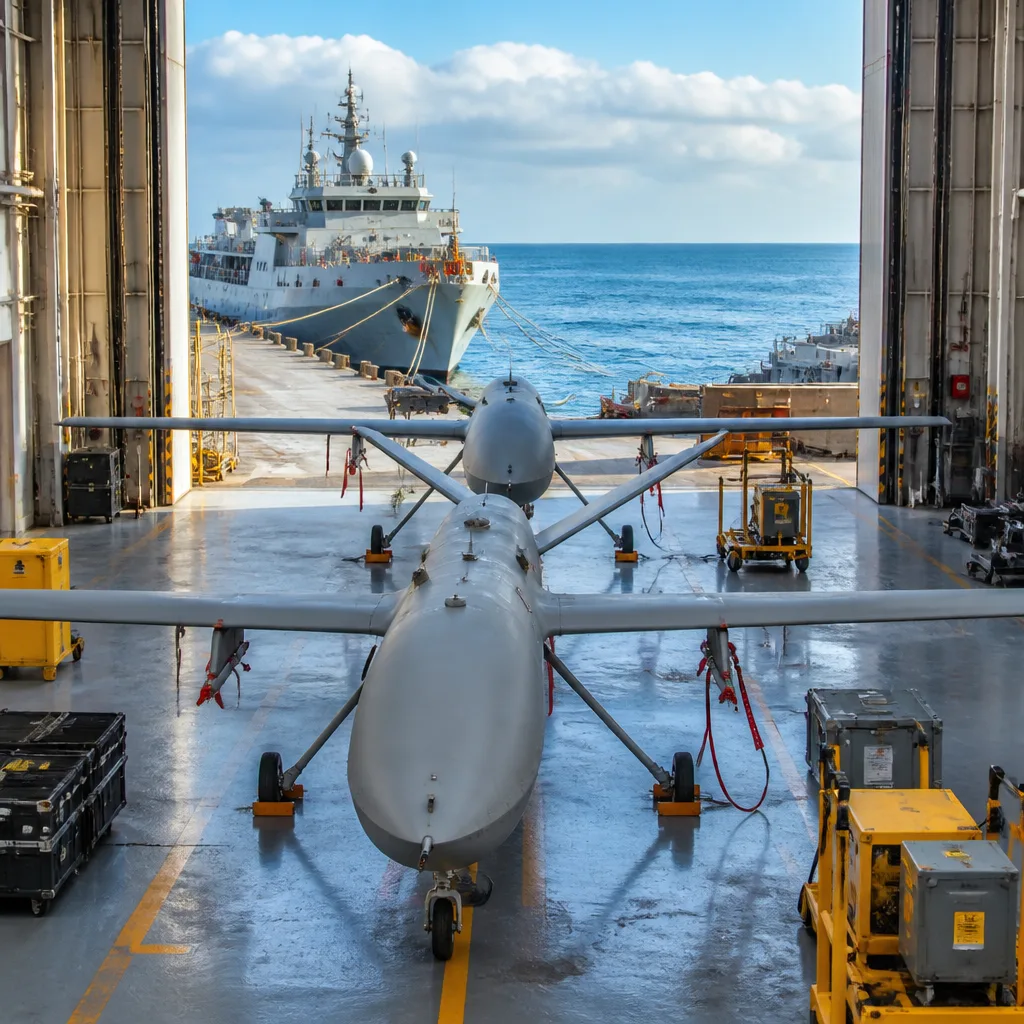
New Delhi: India has entered a $203 million (₹1,943 crore) lease agreement with General Atomics Aeronautical Systems to lease two MQ‑9B Sea Guardian high‑altitude, long‑endurance drones for the Indian Navy for a period of 30 months, the government said on Monday. The contract is intended to bolster maritime domain awareness and persistent surveillance across the Indian Ocean Region.
What the deal covers and why it matters
The lease provides India with additional unmanned aerial surveillance capacity while the country pursues longer‑term acquisitions of remotely piloted platforms. The MQ‑9B Sea Guardian is a maritime‑optimised variant designed for extended overwater patrols and intelligence, surveillance and reconnaissance (ISR) missions.
The agreement follows earlier steps by India to build unmanned aerial capability. In 2020 the Navy leased two MQ‑9A Sea Guardian drones from the same manufacturer for an initial one‑year period, which was later extended. In 2024, New Delhi signed a separate deal to buy 31 MQ‑9B Sky Guardian and Sea Guardian remotely piloted aircraft from the United States.
| Item | Detail |
|---|---|
| Contract value | $203 million (approx. ₹1,943 crore) |
| Platform | MQ‑9B Sea Guardian |
| Quantity | Two drones (lease) |
| Lease duration | 30 months |
Strategic context and regional implications
The lease comes amid intensifying strategic competition in the Indian Ocean, where sustained maritime surveillance has become a priority for New Delhi. By augmenting persistent ISR capabilities, the Navy aims to improve detection, tracking and response to developments across key sea lanes and maritime approaches.
For the defence industrial relationship between India and the United States, the agreement represents another transactional layer supporting interoperability and technology transfers. The leased systems allow operational familiarity with MQ‑9‑family platforms while the larger purchase of 31 MQ‑9B aircraft moves through procurement and induction timelines.
What this means for users and costs
Operationally, leased MQ‑9Bs expand the Navy’s ability to conduct long‑duration sorties beyond the endurance of manned maritime patrol aircraft, potentially lowering per‑sortie manpower demands and extending time on station. The lease is an interim solution that provides capability before the delivery and induction of the purchased MQ‑9Bs.
- Short term: Immediate uplift in maritime ISR for monitoring sea lanes, fishing zones and potential incursions.
- Medium term: Familiarisation with MQ‑9B systems ahead of larger fleet induction authorised in 2024 agreement.
- Budgetary aspect: The ₹1,943 crore lease is a service‑contract expense carrying operational costs but avoids the upfront capital outlay of a purchase.
While leased platforms can fill capability gaps quickly, operating them entails sustainment costs, sensor support, ground infrastructure and trained personnel — factors that will shape lifecycle expenditure once the outright purchase of MQ‑9B systems is operationalised.
The agreement also underscores the shift in modern maritime operations towards unmanned systems for routine surveillance and intelligence tasks. For industry observers and users, the lease demonstrates New Delhi’s prioritisation of persistent remote sensing as a force multiplier in the region.
No further contractual details on training, sensor fitment or basing arrangements were disclosed as part of the announcement.
“The agreement is aimed at significantly strengthening the Navy’s maritime domain awareness capabilities and its ability to monitor and respond to developments across the Indian Ocean Region,” the government said.
The lease should be seen as part of a sequence of acquisitions and interim arrangements designed to accelerate capability while procurement pipelines and induction programmes mature.