India’s merchandise exports to West Asia rose to $5.7 billion in July 2026, marking the strongest monthly performance since shipments plunged following the March outbreak of conflict in the region. The commerce ministry’s provisional estimates show exports climbed about 8.7% from $5.24 billion in July 2025, and recovered from the low of $2.62 billion recorded in March.
Why exports improved
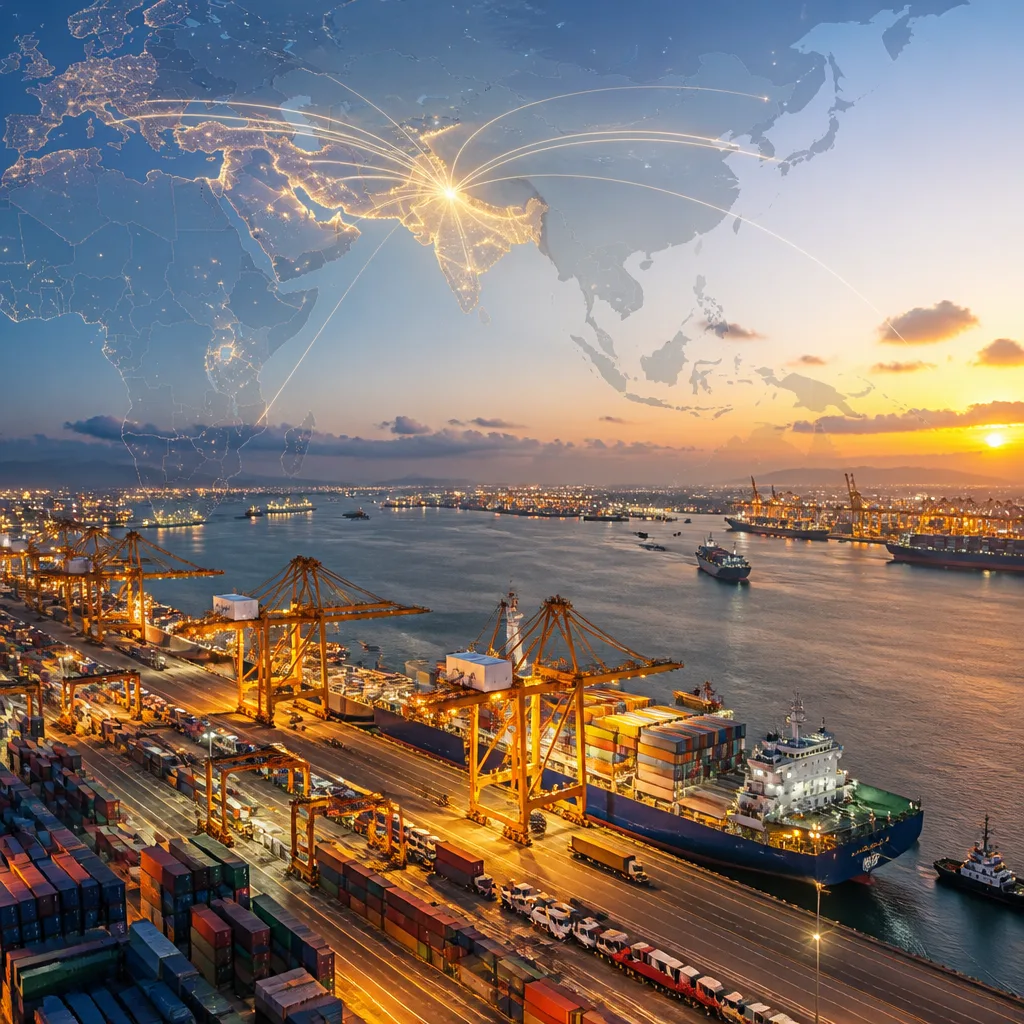
Commerce Secretary Rajesh Agarwal attributed the rebound to restoration and expansion of port capacity in the region, saying that new facilities became operational and took on cargo handling. Those additions include a port in Oman and two further ports in the United Arab Emirates, which helped smooth logistics and move goods that had been delayed or rerouted after the disruption.
“Exports to West Asia are now on an even keel,”
The easing of port constraints coincided with month-on-month recovery after a dip in June. Exports were valued at $5.02 billion in June 2026 and $5.27 billion in May 2026, according to the department of commerce provisional data.
Imports still lagging
While outbound shipments have regained traction, merchandise imports from West Asia remain muted. Imports for July 2026 stood at $9.81 billion, down from $12.4 billion in July 2025. There was a slight pick-up from June’s $9.37 billion, though May’s figure of $10.74 billion was higher.
The persistence of lower imports reflects continuing volatility in energy and commodity flows from the region, as well as recalibration of supply chains by Indian buyers and traders.
What the numbers show
| Month | Exports to West Asia (USD) | Imports from West Asia (USD) |
|---|---|---|
| March 2026 | $2.62 billion | — |
| May 2026 | $5.27 billion | $10.74 billion |
| June 2026 | $5.02 billion | $9.37 billion |
| July 2026 | $5.7 billion | $9.81 billion |
These figures suggest that while export flows have normalised to pre-crisis levels in part, the import side—particularly energy and related merchandise—has not fully recovered to last year’s levels.
Broader export diversification
The commerce ministry also reported parallel gains in other markets as India seeks to diversify trade destinations. In the first quarter of the fiscal year, exports to Singapore reached $6.52 billion, while shipments to the US — India’s largest export market — increased to $34.49 billion in July 2026 from $33.48 billion a year earlier.
Other markets showing higher exports include Tanzania ($2.91 billion), South Africa ($3.15 billion), Sri Lanka ($2.35 billion) and China, where exports rose by $1.2 billion to $5.59 billion in the first quarter of the fiscal year. Additional countries with growth in Indian shipments include Malaysia, Hong Kong, Vietnam, Italy, Kenya, Jordan, Turkey, Australia, Spain and Bangladesh, the ministry said.
- Immediate effect: Restored port capacity in Oman and the UAE improved cargo throughput, lowering delays and helping exporters meet orders.
- Trade balance: Continued weakness in imports from West Asia keeps pressure on sectors reliant on regional supplies, including certain energy and commodity lines.
- What it means for exporters: Strengthened logistics links and alternative market access could reduce shipment costs and improve predictability for trading houses and manufacturers.
For businesses and traders, the rebound offers short-term relief on fulfilment and revenue fronts, but the uneven import recovery and ongoing regional tensions underline the need for continued diversification of suppliers and markets. Policymakers will be watching whether the port additions translate into sustained export momentum and how import patterns evolve as energy markets and shipping routes stabilise.