India has about two decades to turn its demographic advantage into sustained economic growth, a Moneycontrol panel said, flagging the challenge of raising per‑capita income even as opportunities open up from manufacturing and artificial intelligence.
What the panel said
The discussion, presented as Moneycontrol’s “Take Three” and carried on social platforms, argued that India’s demographic profile offers a narrow window of opportunity. The panel pointed to a target of becoming a developed economy by 2047 and noted that policymakers, businesses and labour markets need to act now to capture the dividend.
“India has around two decades to turn its demographic advantage into sustained economic growth.”
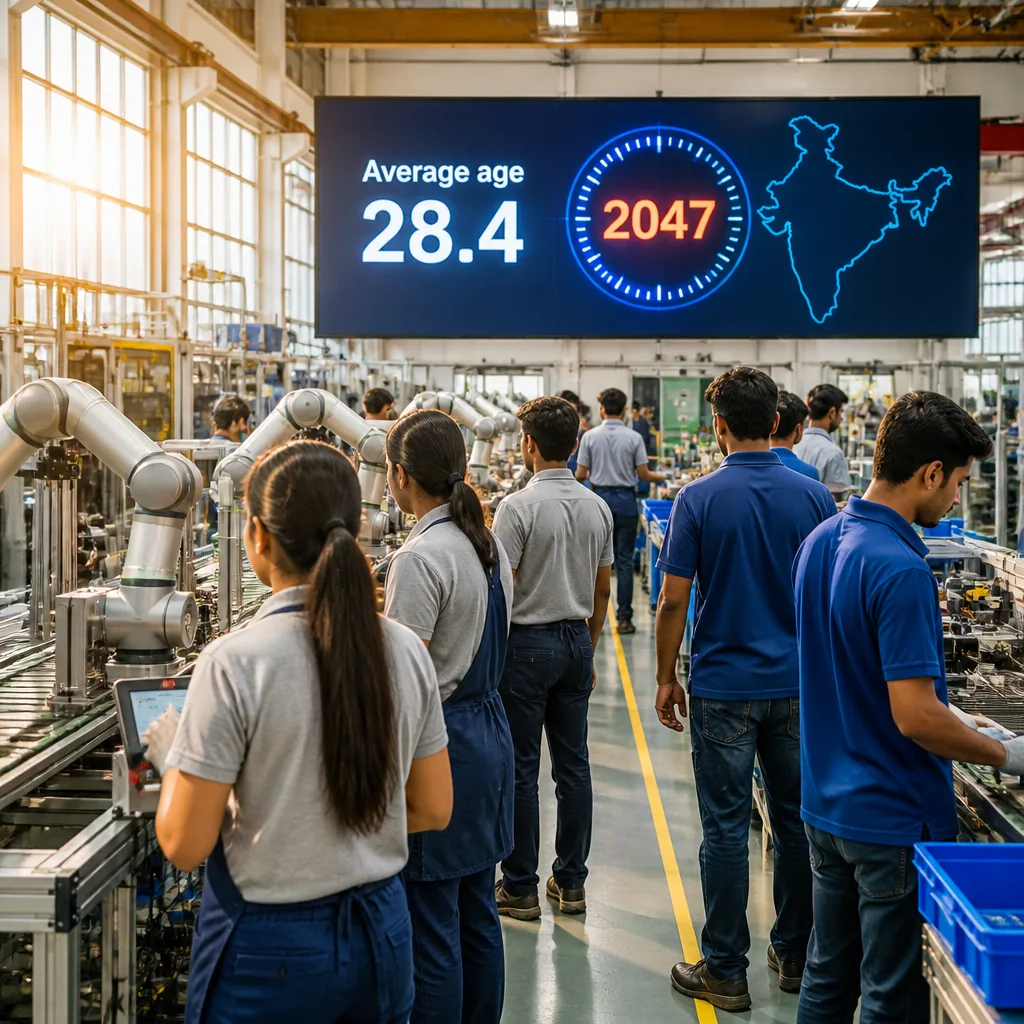
Speakers emphasised that demographic advantage alone does not guarantee prosperity. They highlighted that India’s average age of 28.4 years is an asset, but converting that into stronger living standards requires improvements in productivity, job creation and capacity to deliver services at scale.
Key constraints and areas of focus
The panel discussed several structural and political constraints that could blunt India’s progress if not addressed:
- Per‑capita income challenge — Size of GDP is not sufficient; the focus must be on raising income per person.
- State capacity to deliver — The ability of government institutions to deliver public goods and scale services was described as central to realising long‑term growth.
- Political and parliamentary functioning — The panel noted that political competition is different from dysfunction; continued breakdowns in political compact and cross‑class conversation may affect governance and policy implementation.
- Global shifts — Changes in global growth patterns, manufacturing relocation and the uptake of AI were cited as both risks and opportunities.
What it means for business and citizens
The discussion carries clear implications for business leaders, investors and policymakers. Firms looking to scale manufacturing or adopt AI will find demand and talent, but they will also confront the need for better infrastructure, skilling and regulatory clarity. For citizens, the message is that demographic advantage can raise incomes only if jobs are productive and public services improve.
Panelists warned against complacency. While India’s youth profile gives it an edge not enjoyed by many advanced economies, converting that edge into higher standards of living requires concerted policy action and effective governance.
Timeframe and targets
The panel framed the challenge around the mid‑century goal of becoming a developed economy by 2047. The phrase “around two decades” implies that the next 20–25 years are critical to shaping India’s growth trajectory and whether gains from demographic advantages translate into sustained increases in per‑capita income.
| Item | Reference |
|---|---|
| Average age | 28.4 years |
| Policy window cited | About two decades |
| Ambition timeline | 2047 (developed economy target) |
The panel also touched on social and political dimensions: effective conversion of demographic potential requires trust in institutions, a broadly accepted policy compact and the capacity to implement reforms at scale.
Bottom line
India’s demographic profile remains a powerful advantage, but it is time‑bound. Businesses should prepare to invest in skills, productivity and technology; policymakers must prioritise job‑creating reforms and state capacity; and citizens will see better outcomes only if these elements are synchronised. The next two decades, according to the Moneycontrol discussion, will determine whether India’s demographic dividend becomes a lasting economic transformation or a missed opportunity.