The India Meteorological Department (IMD) on Tuesday warned that a depression over eastern India, though losing strength, will continue to channel large amounts of moisture into the northern and central plains, sustaining spells of heavy to extremely heavy rainfall on Wednesday.
System position and expected track
The system, which formed over the northwest Bay of Bengal and intensified into a depression, was located over Jharkhand and adjoining northern Gangetic West Bengal on Tuesday morning, the IMD said. It is forecast to move west-northwestward across Jharkhand and Bihar and is likely to weaken into a well-marked low-pressure area within the next 24 hours.
Despite the anticipated weakening, meteorologists warned that the depression’s remnants will continue to feed moisture into the monsoon circulation, keeping rainfall activity vigorous over a broad swathe of the Indo-Gangetic plains.
Alerts and regions at risk
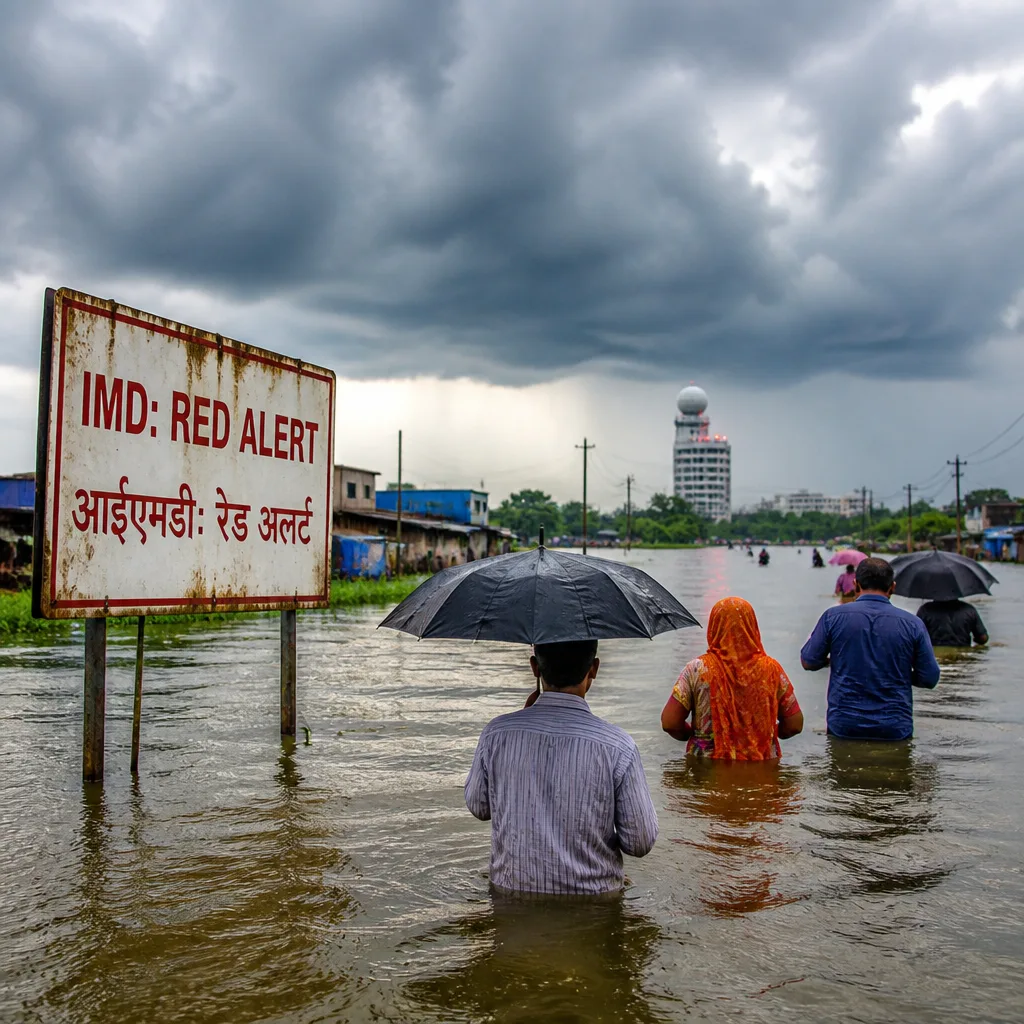
The IMD has issued a red alert for East Uttar Pradesh for Wednesday, indicating a risk of isolated extremely heavy rainfall exceeding 21 cm in places, particularly over the state’s southeastern districts. An orange alert — signalling very heavy rain — has been issued for Uttarakhand, West Uttar Pradesh and East Madhya Pradesh.
- Red alert: East Uttar Pradesh (isolated rainfall >21 cm)
- Orange alert: Uttarakhand, West Uttar Pradesh, East Madhya Pradesh (very heavy rainfall)
IMD bulletins note that multiple upper-air cyclonic circulations and the monsoon trough’s current configuration are enhancing rain over the north and centre. The monsoon trough’s western end lies to the north of its usual position while the eastern end remains close to normal, creating favourable conditions for widespread cloudiness and convective activity.
Recent observations and areas already impacted
During the preceding 24 hours, the IMD reported extremely heavy rainfall (more than 21 cm) in parts of Uttarakhand, Gangetic West Bengal and Odisha. Very heavy rainfall (between 12 and 20 cm) was observed in parts of Chhattisgarh, Jharkhand, Bihar and Uttar Pradesh. These measurements underscore the system’s continuing capacity to produce intense downpours even as its central circulation weakens.
| Rainfall category | Recent locations |
|---|---|
| Extremely heavy (>21 cm) | Uttarakhand; Gangetic West Bengal; Odisha |
| Very heavy (12–20 cm) | Chhattisgarh; Jharkhand; Bihar; Uttar Pradesh |
Why weakening does not mean relief
Weather systems often continue to generate strong rainfall even after their central low loses organisation. As the depression weakens into a low-pressure area, its broad moisture plume can interact with the monsoon trough and several embedded cyclonic circulations — noted over North Haryana, East Uttar Pradesh and Punjab — to produce renewed or persistent convective activity over the plains.
For authorities, the operational implication is clear: a downgraded system does not automatically reduce flood risk. Low-lying and flood-prone districts remain vulnerable to isolated but intense cloudbursts and sustained heavy spells that can cause waterlogging, river swelling and disruption to transport and services.
Preparedness and outlook
State disaster management agencies and local administration in the alerted districts have been urged to keep flood-prone areas under close watch and ready evacuation plans in place. The IMD will continue issuing periodic updates as the system tracks west-northwest and weakens over the next 24 hours.
Residents in affected regions are advised to follow local official guidance on movement during heavy rain, avoid driving through waterlogged roads and monitor weather bulletins issued by the IMD and state authorities.
Key agencies monitoring the situation:
- India Meteorological Department (IMD)
- State disaster response and revenue departments in Uttar Pradesh, Uttarakhand, Madhya Pradesh and adjoining states