Madhya Pradesh has witnessed a worrying escalation in human-wildlife conflict in 2026, with at least 50 people killed by wild animals in the first eight months of the year and more than 45 tigers also losing their lives during the same period, according to figures with the Madhya Pradesh Forest Department.
Scope and pattern of the fatalities
Forest department data show that tigers accounted for the largest share of human deaths. Of the 50 people killed, 22 died in tiger attacks. Other reported causes include 8 deaths from wild boar attacks, 7 from elephants, 4 from sloth bears and 1 from a leopard. The victims included at least 16 girls and women; the remainder were boys and men, the data indicate.
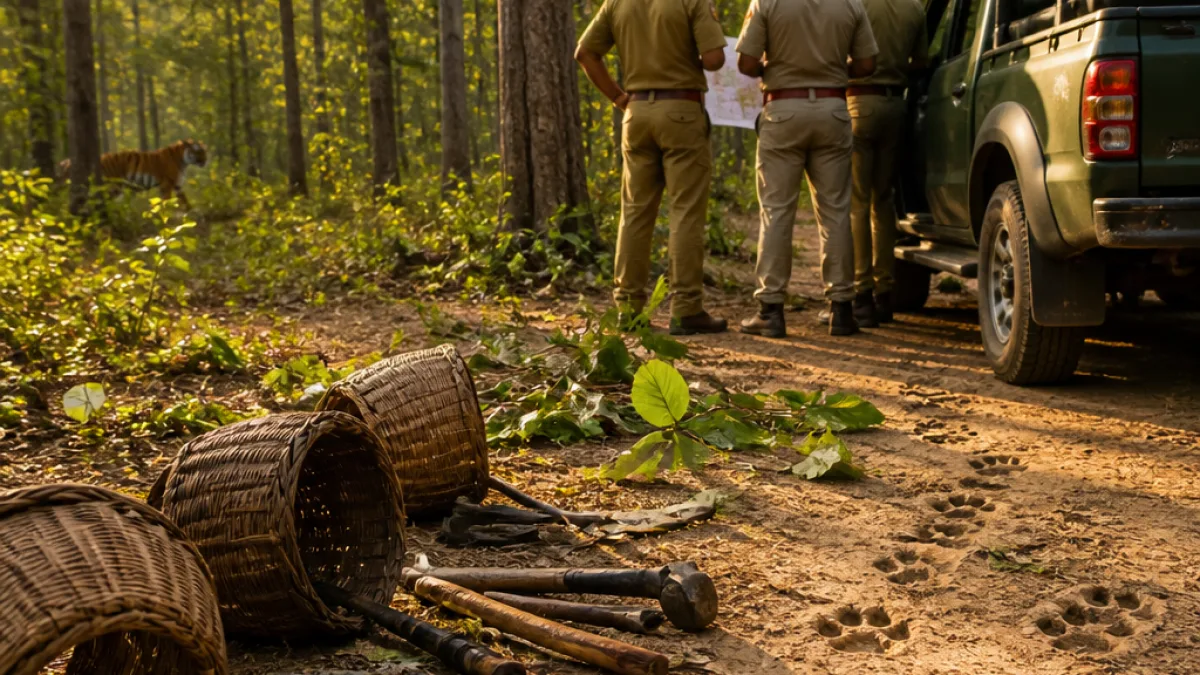
The timing of the fatalities points to seasonal exposure. As many as 30 of the 50 human deaths occurred within a three-month window: 7 in March, 13 in April and 10 in May. These months coincide with the period when large numbers of villagers, particularly tribal communities, enter forest tracts to collect tendu leaves and mahua flowers — livelihood activities that bring people into prolonged contact with wild animals.
Geography of conflict
Spatially, the tiger-related human fatalities were heavily concentrated in forested regions. Of the 22 tiger-caused deaths, 14 occurred in the Mahakoshal region, particularly in and around Seoni. The Mahakoshal forests are contiguous and deep, with long-standing dependence by local communities on forest produce.
Another cluster of tiger-related fatalities — 7 deaths — was reported from Bandhavgarh Tiger Reserve and adjoining areas in eastern Madhya Pradesh, which support some of the state's densest tiger populations. The remaining tiger attack(s) were reported from other pockets in the state.
Conservation and human safety: a complex trade-off
The concurrent rise in tiger mortalities — more than 45 tigers have died in the same eight-month period — complicates the narrative. Madhya Pradesh normally highlights its conservation success: the state hosts India's largest tiger population and substantial leopard numbers. The recent losses on both sides underline a deteriorating interface between people and large mammals.
Deaths of large carnivores can result from several causes, including retaliatory action, poaching, disease and accidents such as train or vehicular strikes. The state forest department's figures do not provide a complete attribution for the tiger fatalities in the public summary, but the simultaneous rise in human casualties points to escalating conflict at multiple levels.
Livelihoods and vulnerability
The seasonal spike in deaths during March–May reflects vulnerability among forest-dependent communities. Collection of tendu leaves and mahua flowers forms a vital component of rural and tribal incomes in central India. These activities require long stays in forests and repeated movement along animal corridors, increasing the risk of encounters with tigers, elephants and other wildlife.
- High-risk months: March–May—period of forest produce collection.
- Hotspots: Mahakoshal region (Seoni) and Bandhavgarh adjoining areas.
- Main species involved: Tigers (22 human deaths), wild boar (8), elephants (7), sloth bears (4), leopard (1).
Possible responses and operational measures
Addressing this surge requires calibrated action that balances human safety and wildlife conservation. Standard measures available to forest administrations include strengthened early-warning systems, community-based patrolling, temporal restrictions or alternative livelihood supports during high-risk months, and rapid-response teams to manage straying animals.
Targeted interventions around identified hotspots — better mapping of human movement within forests, community awareness drives, and modest infrastructural supports such as safe overnight shelters for forest workers — could reduce exposure. Coordination with local administrations and gram panchayats is crucial where day-to-day livelihood activities intersect with animal habitats.
| Indicator | Reported number (first 8 months of 2026) |
|---|---|
| Human deaths from wild animal attacks | 50 |
| Tiger-caused human deaths | 22 |
| Tiger deaths | More than 45 |
Implications for policy
The figures underscore the need for integrated policy responses that protect both human lives and animal populations. For Madhya Pradesh — a state whose identity is closely linked to its forests and wildlife — the challenge is to safeguard forest-dependent livelihoods while preventing further loss of life on either side. Timely publication of detailed cause-of-death data for the tigers would help planners design better mitigation strategies.
The forest department's numbers make clear that the coming monsoon and the associated cycles of forest work will be critical to watch. Strengthening community engagement, scaling up rapid-response capacity and aligning livelihood schedules with risk reduction measures must figure in the immediate management agenda.
Reporting from forested districts in central and eastern Madhya Pradesh highlights an urgent need for pragmatic field-level interventions to reduce encounters, protect forest workers and conserve the state's prized big-cat population.