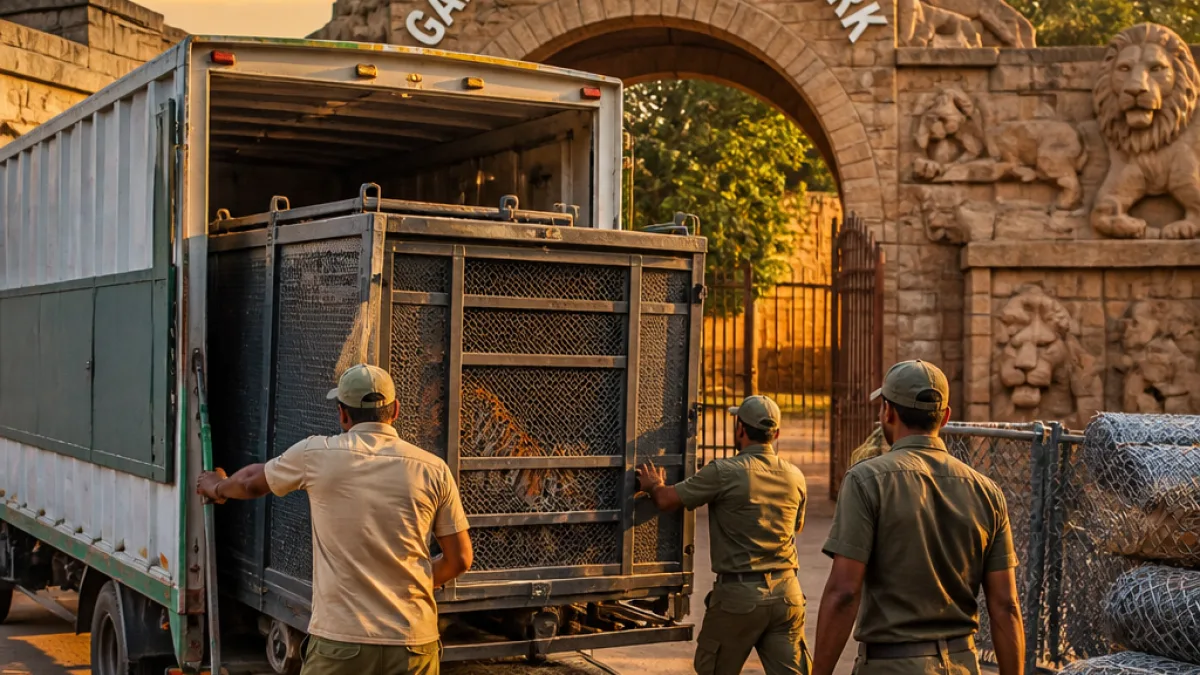
New tiger arrives under inter-zoo exchange to strengthen breeding prospects
Gwalior's Gandhi Zoological Park is set to receive a two-and-a-half-year-old Royal Bengal tiger from Dehradun as part of a national Animal Exchange Program, zoo management reported. Technical clearances for the transfer have been completed and officials are awaiting a formal letter to finalise the handover.
The exchange involves sending a tiger from Gwalior's Tallaiyapur enclosure to Dehradun in return. According to the zoo, the incoming young tiger will be introduced to the park's existing felines to improve prospects for healthy, genetically diverse offspring.
- Current tiger population at Gandhi Zoological Park: about 10 individuals.
- Age profile concern: several female tigers are aged around 13–14 years, prompting a need for new bloodlines.
- Purpose of exchange: maintain genetic diversity and prepare for future breeding programmes.
"The young tiger coming from Dehradun will participate in breeding with the existing tigers here, which will increase the possibility of getting healthy and genetically diverse offspring."
Why the exchange matters for Gwalior
Zoo authorities cited the limited genetic pool within captive populations as a principal reason for the exchange. In the wild, tigers move across territories and interbreed naturally, which maintains gene flow. In contrast, captive collections are small and closed, increasing the risk of inbreeding over successive generations.
Gandhi Zoological Park's decision to bring a young animal from another recognised facility follows standard practice among Indian zoos to rotate animals. Such transfers are intended to:
- Introduce fresh genetic lines into the captive population.
- Enhance long-term health and reproductive viability of the species in captivity.
- Support ex-situ conservation and educational programmes at the city zoo.
Operational steps and local implications
Zoo management said technical procedures related to the transfer have been completed; the formal administrative communication is the remaining step. On arrival, the young tiger will be subject to veterinary checks and a quarantine period as per norms before introduction to breeding programmes.
For Gwalior residents and visitors, the arrival could bolster interest in the zoo and its conservation messaging. It may also renew focus on animal welfare infrastructure, enclosure standards and the veterinary capacity required to manage breeding programmes responsibly.
| Parameter | Details |
|---|---|
| Incoming animal | Two-and-a-half-year-old Royal Bengal tiger from Dehradun |
| Outgoing animal | Tiger from Tallaiyapur enclosure (to be sent to Dehradun) |
| Existing tiger strength | Approximately 10 tigers |
| Noted age concern | Several females aged 13–14 years |
City zoo officials emphasised that exchanges among zoos across the country are standard conservation measures designed to mitigate risks associated with prolonged breeding within the same family or bloodline. The programme is intended to ensure healthier captive populations that may support wider conservation objectives.
As the formal letter is awaited, Gwalior's zoo will continue preparations for the animal's arrival, including veterinary readiness and measures to integrate the tiger into the park's managed breeding framework.
The exchange underscores the role of municipal and state zoos in broader species conservation while highlighting the operational requirements local authorities must meet to manage flagship species like the Royal Bengal tiger responsibly.