Sydney — Former Australian prime minister Scott Morrison has said India can become a global space powerhouse in the next 20 to 30 years, highlighting the country’s geography, industrial base and growing technology sector as key enablers. The remarks, made during the online Indo-Mediterranean Dialogues, were accompanied by developments in Australia-India space cooperation that are already under way.
Canberra offers tracking support for Gaganyaan
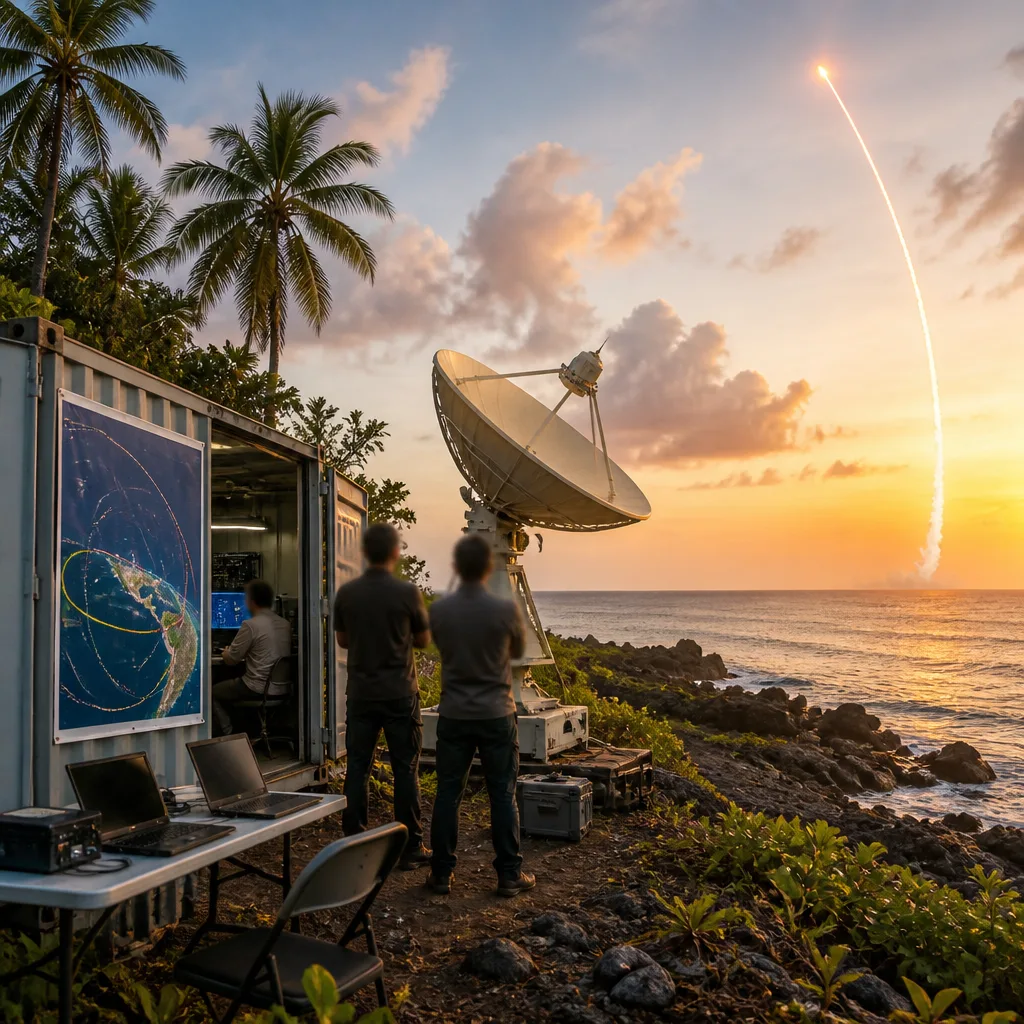
Morrison’s observations follow a recent announcement by Australian prime minister Anthony Albanese that Canberra will set up a temporary space tracking terminal on the Cocos (Keeling) Islands to support India’s maiden human spaceflight, the Gaganyaan programme. The tracking infrastructure is intended to assist mission operations by providing ground-based telemetry, tracking and command capability during critical phases of a crewed flight.
The expanding cooperation reflects a broader technological alignment between the two democracies, as both capitals look to deepen ties in areas such as space, manufacturing and investment. In his comments, Morrison linked India’s democratic institutions and regulatory stability to its attractiveness for investors.
"I think India will be a space powerhouse over the next 20 to 30 years as its space economy matures," Morrison said.
He added that India’s democratic credentials and institutional strength form part of the investment pitch for global capital, particularly as some international firms reassess their exposure to China. "We've seen capital withdrawn out of China. Where will it go? India will be one of those countries making that pitch, and I think it can make a good one," he said.
What this means for Indian users and industry
The twin strands of optimistic long-term forecasts and immediate operational cooperation carry practical implications for Indian industry, researchers and the public.
- Operational support: A temporary tracking terminal on the Cocos (Keeling) Islands will contribute ground-station coverage for Gaganyaan missions, helping ensure reliable telemetry and tracking during key mission phases.
- Investment and manufacturing: Statements linking India’s institutions to investment attraction point to potential inflows into high-technology and space-related manufacturing, as companies seek alternatives amid changing global supply chains.
- Technology partnerships: Closer ties with countries such as Australia could expand collaboration on satellite tracking, mission support and related space technologies.
Such benefits are contingent on programme schedules, technical integration and formal agreements between agencies. Temporary infrastructure can bolster operations for specific missions, but long‑term capabilities typically require sustained investment and domestic capacity-building.
Context and constraints
India’s space sector has been rapidly diversifying beyond launch services into satellite applications, private sector participation and human spaceflight ambitions. The Gaganyaan programme represents a significant milestone, requiring complex mission planning that depends on both domestic assets and international cooperation.
While the prediction of becoming a "space powerhouse" underscores confidence in India’s trajectory, it is a medium-term projection. Achieving that status over two to three decades will depend on continued investment in infrastructure, regulatory frameworks, skilled workforce development and sustained industry participation.
| Item | Detail |
|---|---|
| Timeframe suggested by Morrison | 20–30 years |
| Operational support announced | Temporary space tracking terminal on Cocos (Keeling) Islands |
| Programme supported | Gaganyaan human spaceflight |
The comments and the Australian announcement together signal political goodwill and practical cooperation at a time when international space partnerships are increasingly driven by strategic and economic considerations. For Indian policymakers and industry, the immediate task remains to translate such partnerships into durable capability — both for single missions like Gaganyaan and for a broader, self-reliant space economy.
Longer term, realising the label of a "space powerhouse" will demand not only missions and international support but also a thriving domestic ecosystem of startups, suppliers, research institutions and regulatory clarity to draw sustained investment into high‑technology manufacturing and services.