Bengaluru — Space domain awareness company Digantara on Tuesday announced MOSAIC, an AI-powered, distributed optical sensor network intended to deliver wide-area detection, tracking and characterisation of objects across orbital regimes from Low Earth Orbit (LEO) to Geostationary Earth Orbit (GEO).
What MOSAIC is designed to do
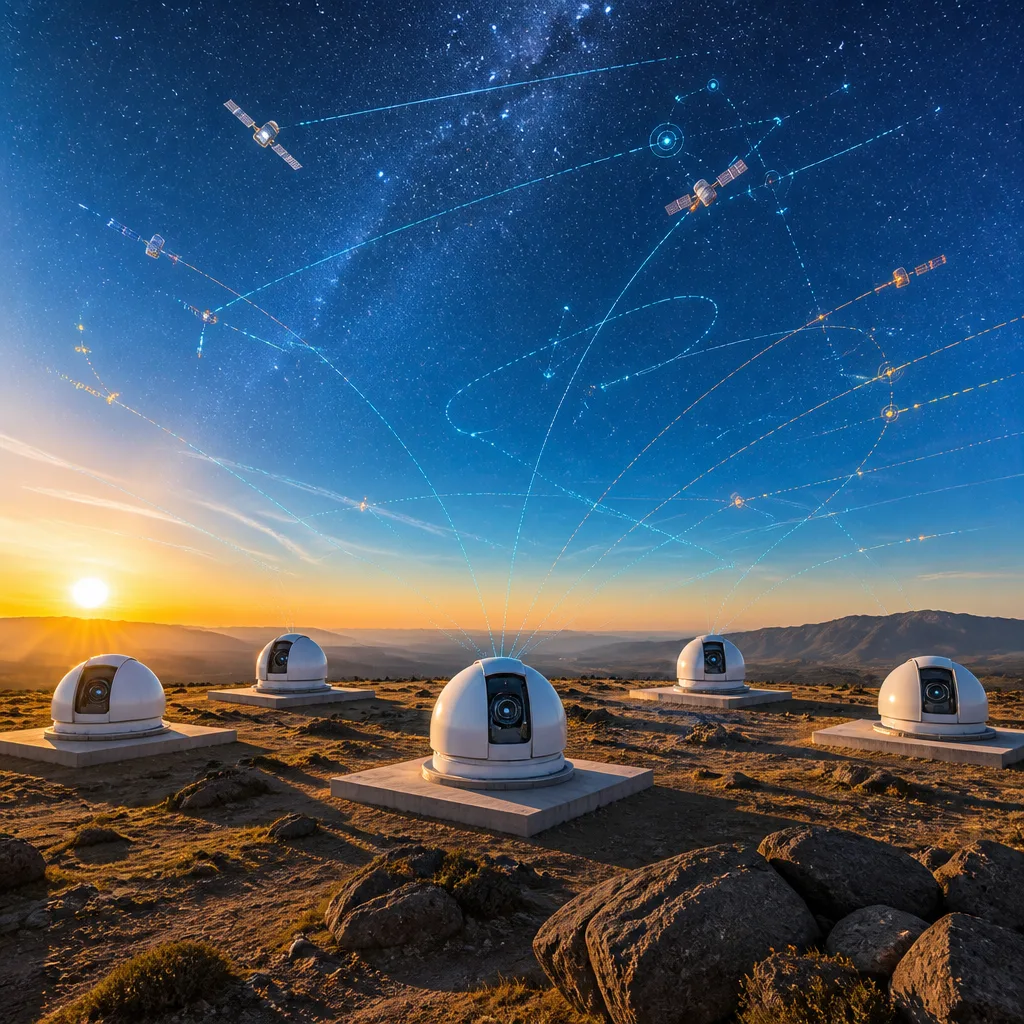
According to the company statement, MOSAIC is meant to extend Digantara’s existing space tracking infrastructure and feed its in-house data fusion and processing engine with a persistent, wide-field detection layer. The initial roll-out will comprise five nodes operating as a coordinated surveillance network that can detect faint resident space objects (RSOs) and maintain custody of targets over time.
“MOSAIC is designed to serve as the wide-area detection and custody layer feeding Digantara’s ability to detect, characterise, and track objects across the full range of orbital regimes, from Low Earth Orbit (LEO) to Geostationary Earth Orbit (GEO),” the statement read.
System design and capabilities
Each MOSAIC node is a self-contained electro-optical unit made of an optical head for precision sky imaging and an electronics head for onboard processing, timing, communications and autonomy. The hardware is built to balance sensitivity with a broad field of view so that faint RSOs can be captured across a wide swathe of sky.
The platform uses machine learning techniques to separate stars from RSOs and identify the faintest targets in optical imagery. For track estimation, MOSAIC employs a lost-in-space attitude estimation approach that can compute an object’s position without prior cueing or external information. Digantara also plans to extend this model to alternative navigation tasks, including celestial navigation in GPS-denied environments.
| Feature | Description |
|---|---|
| Nodes | Initial deployment of five coordinated electro-optical sensor nodes |
| Power | Solar power with battery backup for independent operation |
| Processing | Onboard ML-based detection and in-house data fusion |
| Operational envelope | LEO to GEO; engineered for extremes of temperature and climate |
Designed for Indian conditions and strategic needs
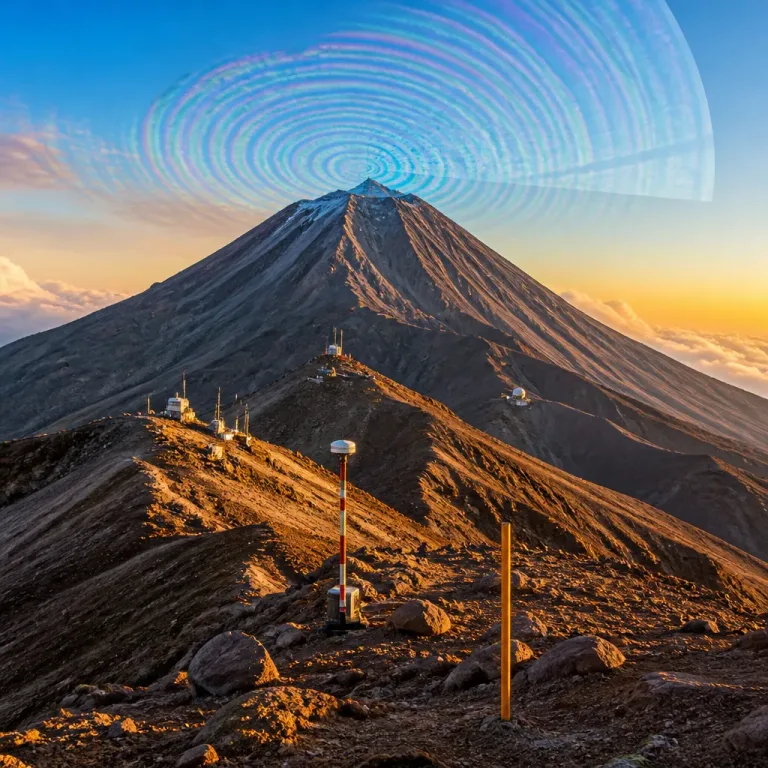
Digantara said the nodes are engineered to function autonomously in both the high summer heat of the Thar desert and the cold winters of the Himalayas, underscoring field survivability across India’s varied climates. The system’s solar-plus-battery design is intended to support remote siting without continuous grid power.
The announcement linked MOSAIC’s development to India’s evolving security picture, noting that events such as Operation Sindoor have underlined the requirement for indigenous surveillance technologies able to monitor objects in space.
Use cases and implications
- Provide a persistent wide-area detection layer to cue higher-precision sensors and space-based tracking.
- Detect and maintain custody of faint RSOs across orbital regimes, aiding collision avoidance and catalogue maintenance.
- Support navigation and situational awareness in GPS-denied environments via celestial techniques.
By combining distributed optical sensing with onboard ML and autonomy, MOSAIC is positioned as a complementary layer within a larger space domain awareness architecture. The company frames the development as a step towards a home-grown surveillance capability that can support both civil and strategic space operations.
Digantara’s statement describes MOSAIC as an extension of its current products and services, which include space-based tracking and an internal processing engine for data fusion. The company says the platform will feed its higher-order detection and characterisation tools, though no timeline for full deployment beyond the initial five nodes was provided in the announcement.
As commercial and governmental activity in space increases, systems that can reliably and autonomously identify, track and characterise objects from Earth-based optics will play a growing role in national space safety and security strategies. MOSAIC’s combination of distributed nodes, ML-enabled detection and lost-in-space attitude estimation is aimed at meeting precisely those operational needs.
Reporting is based on the company’s public statement released on Tuesday.