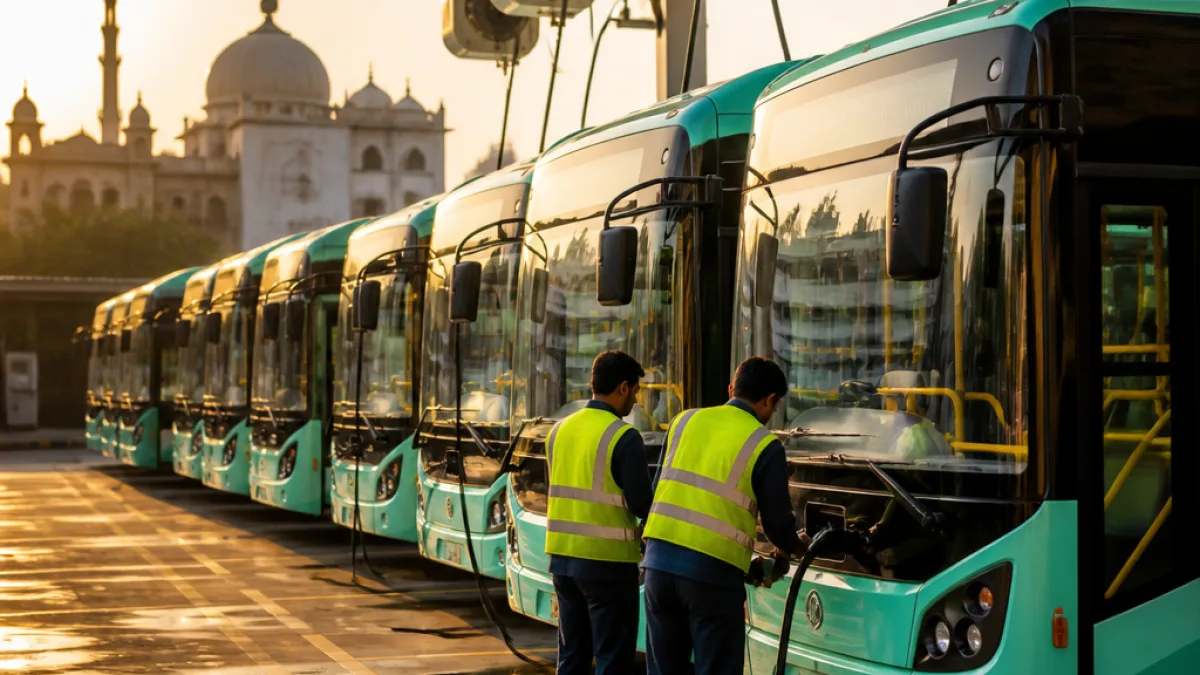
City grows electric fleet as push for cleaner urban transport continues
Bhopal has added 10 electric buses to its municipal fleet, bringing the total number of battery-powered buses operating in the city to 30, Construction World reported on Friday. The expansion forms part of the broader effort to introduce low-emission public transport in the Madhya Pradesh capital.
Local authorities have been promoting electric mobility as a way to reduce vehicular emissions, improve air quality and provide more comfortable public transport. While the report did not detail routes or depot arrangements for the new buses, the increase in numbers is likely to help augment services on busy corridors and support future route rationalisation.
"Bhopal Adds 10 Electric Buses Increasing Fleet To 30" — Construction World
Operational implications and what residents can expect
The arrival of additional electric buses should offer immediate relief to commuters on high-demand routes by increasing capacity and frequency, provided the vehicles are deployed efficiently. Benefits often cited by transport planners include lower operational noise and reduced greenhouse-gas emissions compared with diesel buses, although exact outcomes depend on utilisation, maintenance and the source of electricity used for charging.
- Fleet size: increased from 20 to 30 electric buses.
- Service capacity: expected rise in available seats and potential improvement in route frequency if buses are distributed across key corridors.
- Environment: a step towards lowering emissions locally, contingent on grid electricity mix and vehicle utilisation.
Costs, charging and maintenance: questions remain
The Construction World report did not publish purchase costs, financing details, or information on charging infrastructure. For electric buses to operate reliably, cities must invest in depot and on-route charging facilities, establish scheduled maintenance regimes and train technical staff for battery and power-system upkeep. Residents and transport experts will watch whether Bhopal's civic agencies scale supporting infrastructure in parallel with fleet additions.
Municipal departments elsewhere in India have linked fleet expansion with setting up fast chargers at depots and bus terminal locations, and with agreements for battery replacement or life-cycle management. Successful outcomes depend on clear operating contracts, energy procurement plans and budgeting for periodic battery replacement where needed.
Context: urban transport and policy alignment
The decision to add more electric buses aligns with national and state-level priorities to promote electric mobility in cities. For Bhopal, a growing urban centre with both residential and administrative functions, improving public-transport attractiveness remains central to reducing private-vehicle dependence and easing congestion.
Local stakeholders — commuters, municipal planners and environmental groups — will assess whether the additional buses translate into measurable service improvements. Key indicators to watch include changes in route frequency, on-time performance, passenger load factors, and local air-quality readings near major corridors.
| Metric | Before | After |
|---|---|---|
| Electric buses in city | 20 | 30 |
As Bhopal increases its electric-vehicle presence, transparent information on deployment plans, fare implications and long-term maintenance arrangements will be important for public confidence. The recent addition represents a visible step, but urban mobility gains will hinge on integrated planning and investment in the supporting energy and operations ecosystem.
Construction World reported the fleet increase; municipal transport documents and local officials may provide further operational details in coming weeks.