
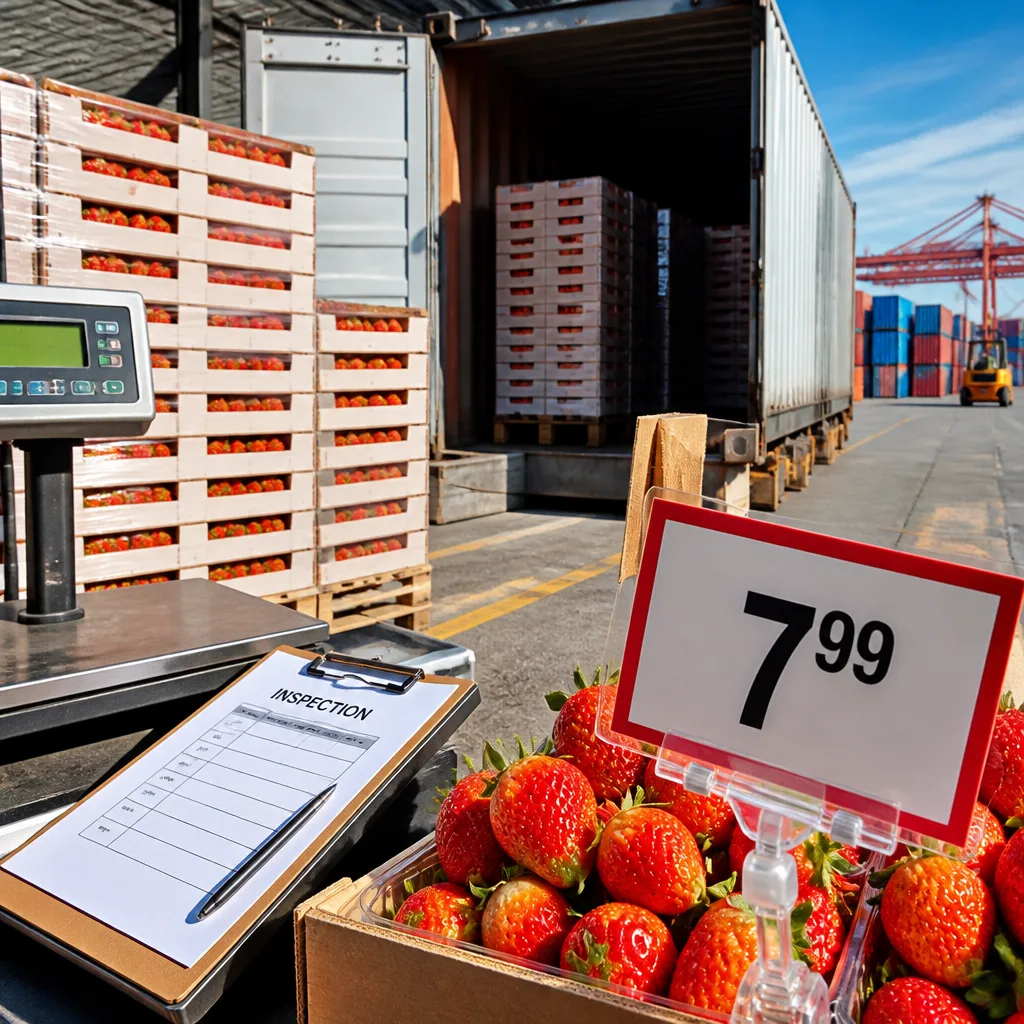
The U.S. Commerce Department is weighing whether winter‑harvested strawberries from Mexico are being sold in the United States at unfairly low prices, a finding that could lead to antidumping duties and higher retail costs for consumers.
What’s at stake
The probe, brought by a coalition of Florida producers operating under the name Strawberry Growers for Fair Trade, targets a supply chain that supplies the United States through most of the year. According to U.S. Department of Agriculture data cited in reporting on the case, in the last year 98% of U.S. strawberry imports came from Mexico, with shipments valued at more than US$1 billion.
If Commerce issues a preliminary determination that dumping has occurred, it can recommend duties that would raise the cost of those imports. That could in turn lift grocery prices during the winter months when U.S. domestic output declines and consumers rely heavily on imports.
“If the case succeeds, [tariffs] will have a ‘relatively modest’ impact on consumer prices while helping U.S. farmers compete,”
The quotation is attributed to Daniel Pickard, lead counsel for the Florida coalition that filed the complaint.
Context and precedent
The strawberry case follows recent trade enforcement affecting fresh produce. Last July the United States imposed an antidumping duty of roughly 17% on most Mexican tomatoes. Since then, tomato prices have shown notable volatility: the Consumer Price Index recorded tomato prices about 12.8% higher last month than a year earlier, illustrating how trade measures can be one of several factors that influence retail prices.
U.S. authorities have pointed out that price changes are often multi‑causal. An April report by the Commerce Department noted that adverse weather in Mexican tomato‑growing regions and freezing temperatures in parts of Florida earlier in the year also contributed to the tomato price rise, underlining that tariffs do not operate in isolation from production and climate shocks.
Potential consequences for markets and consumers
The inquiry is currently at the stage where the Commerce Department is expected to release a preliminary finding. Possible outcomes and implications include:
- Imposition of duties: Antidumping tariffs would raise landed costs of Mexican winter strawberries and could be passed to consumers.
- Market rebalancing: Higher import prices could improve competitiveness for U.S. growers, particularly those in Florida whose winter harvests face seasonal overlap.
- Price volatility: Empirical experience with tomatoes shows that tariffs can coincide with sharper retail price movements driven by both trade policy and supply shocks.
What the filing says — and what it doesn’t
The complaint alleges Mexican producers expanded shipments and undercut U.S. winter growers by selling at lower prices, taking market share in a season when domestic supply normally expands. Advocates for the petition contend that duties would restore a level playing field for U.S. producers while having only a modest effect on consumers.
At the same time, experience from previous investigations demonstrates the complexity of attributing retail price changes solely to duties. Weather and production disruptions can amplify or mute the inflationary effects of trade remedies.
Why Canadian readers should care
While the inquiry and any resulting duties would be U.S. measures, they could have knock‑on effects across North American supply chains. Shifts in U.S. demand for Mexican berries, or changes in relative prices, could alter export flows and competitive dynamics for growers and distributors across the region. Grocery chains and wholesalers who operate across borders will be watching the preliminary finding closely.
| Statistic | Value |
|---|---|
| Share of U.S. strawberry imports from Mexico | 98% |
| Value of Mexican strawberry shipments to U.S. | More than US$1 billion |
| Antidumping duty on Mexican tomatoes | ~17% |
| Tomato CPI increase (year over year) | 12.8% |
The Commerce Department’s forthcoming preliminary determination will be pivotal. It will signal whether the U.S. intends to move toward duties that could reshape seasonal fruit markets and lift costs at the grocery checkout, or whether the case will proceed more slowly amid questions about causation and the role of weather‑related supply shocks.