An adjudicator has ruled that a pedestrian struck by a vehicle can continue pursuing statutory accident benefits from Co-operators General Insurance Company after the insurer failed to demonstrate the claimant was covered by the Workplace Safety and Insurance Board (WSIB) at the time of the collision.
Insurer could not meet burden of proof
The crash occurred on May 12, 2025, when the claimant was struck while crossing as a pedestrian. He submitted an application for statutory accident benefits to Co-operators, which refused to pay on the basis that the injured person should instead be covered by the WSIB because he was performing landscaping work when the incident happened.
Under Ontario's Statutory Accident Benefits Schedule, specifically section 61, an insurer can discharge its obligations if the claimant qualifies for workers' compensation for the same incident. Co-operators argued that the claimant’s own statements about working for a landscaping company placed the matter within the jurisdiction of the workers' compensation system, and that the Workplace Safety and Insurance Appeals Tribunal — not the Licence Appeal Tribunal hearing the dispute — should determine employment status.
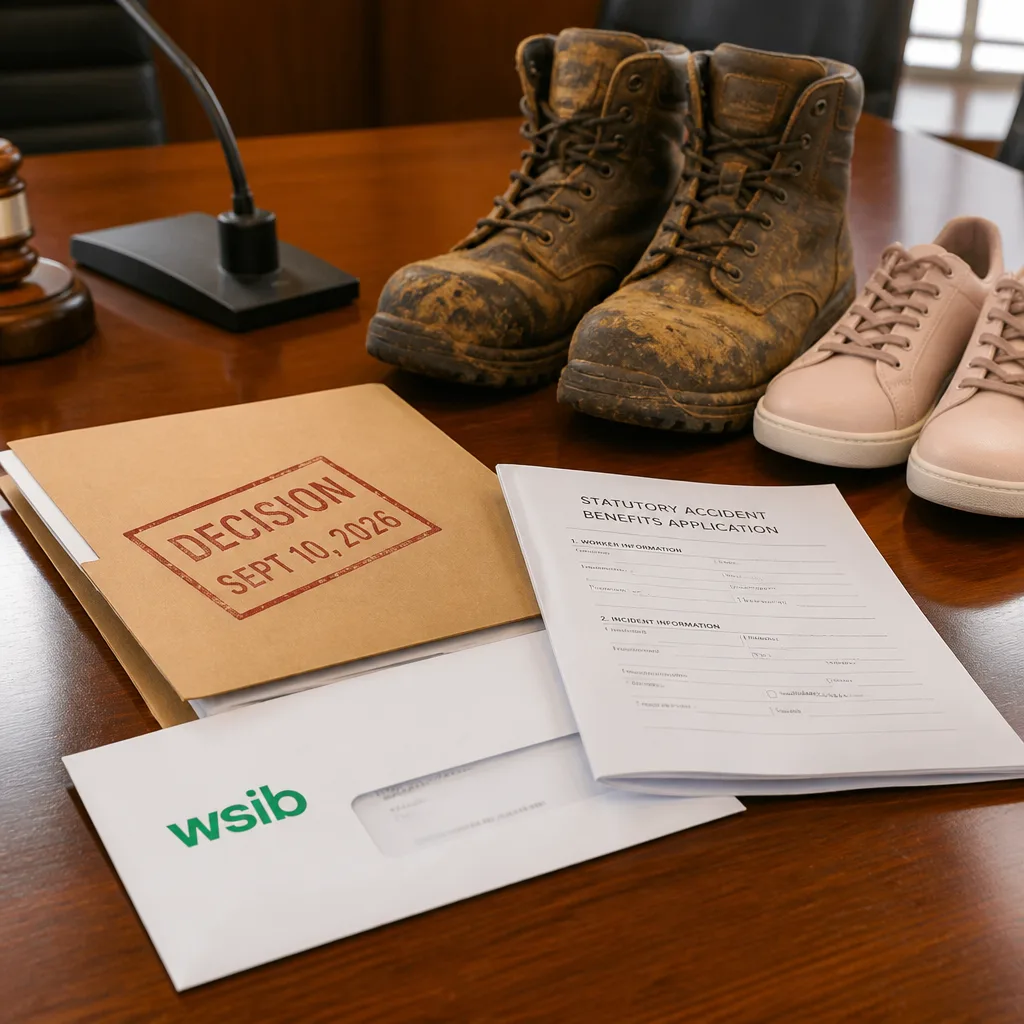
But the adjudicator, Lisa Holland, found the insurer did not satisfy the onus to prove WSIB coverage applied. Co-operators told the claimant that WSIB had accepted his claim under an assigned incident number, yet provided no documentary evidence to support that assertion. A WSIB letter dated Feb. 5, 2026, which was in the record, stated it had no application on file.
Claimant's testimony and supporting evidence
Before the tribunal the claimant swore that he was not an employee but an independent contractor at the time of the accident. He testified he negotiated his own price with the landscaping firm's owner and was paid in cash. He also acknowledged occasionally using the company’s crew and truck to complete jobs.
The landscaping company owner provided written confirmation that the claimant was not on payroll, corroborating the claimant’s account. Holland said those sworn statements and supporting documentation were sufficient to undercut Co-operators’ argument that the WSIB route applied.
What the decision means
Holland’s ruling permits the claimant to proceed to a full hearing on his statutory accident benefits claim before the Licence Appeal Tribunal. The adjudicator also dealt with a procedural issue: Co-operators had filed submissions that exceeded agreed page limits and attempted to file additional material late, matters noted in the decision released Sept. 10, 2026.
For insurers, the case underscores the evidentiary burden when asserting section 61. The tribunal made clear an insurer must produce proof that a claimant actually qualifies for WSIB coverage rather than relying on the claimant's unproven statements or unverified assertions about a WSIB file.
- Key dates: collision May 12, 2025; WSIB letter showing no file Feb. 5, 2026; tribunal decision released Sept. 10, 2026.
- Primary legal point: insurer must demonstrate claimant’s entitlement to workers' compensation to avoid paying statutory accident benefits under section 61.
- Procedural note: adjudicator commented on late and overlength submissions from the insurer.
| Date | Event |
|---|---|
| May 12, 2025 | Pedestrian struck by vehicle |
| Feb. 5, 2026 | WSIB letter: no application on file |
| Sept. 10, 2026 | Tribunal decision released |
The decision highlights the interlocking responsibilities of private insurers and the provincial workers' compensation system. It reinforces that when insurers seek to avoid benefit payouts by pointing to WSIB coverage, they must bring documentary evidence to that effect. Otherwise, claimants who assert they were independent contractors retain access to statutory accident benefits remedies through the civil-administrative process.
As the case moves to a full hearing, it will test how tribunals weigh contractor arrangements and informal payment practices when determining entitlement to accident benefits — an issue that affects a range of workers in the gig and seasonal labour markets.