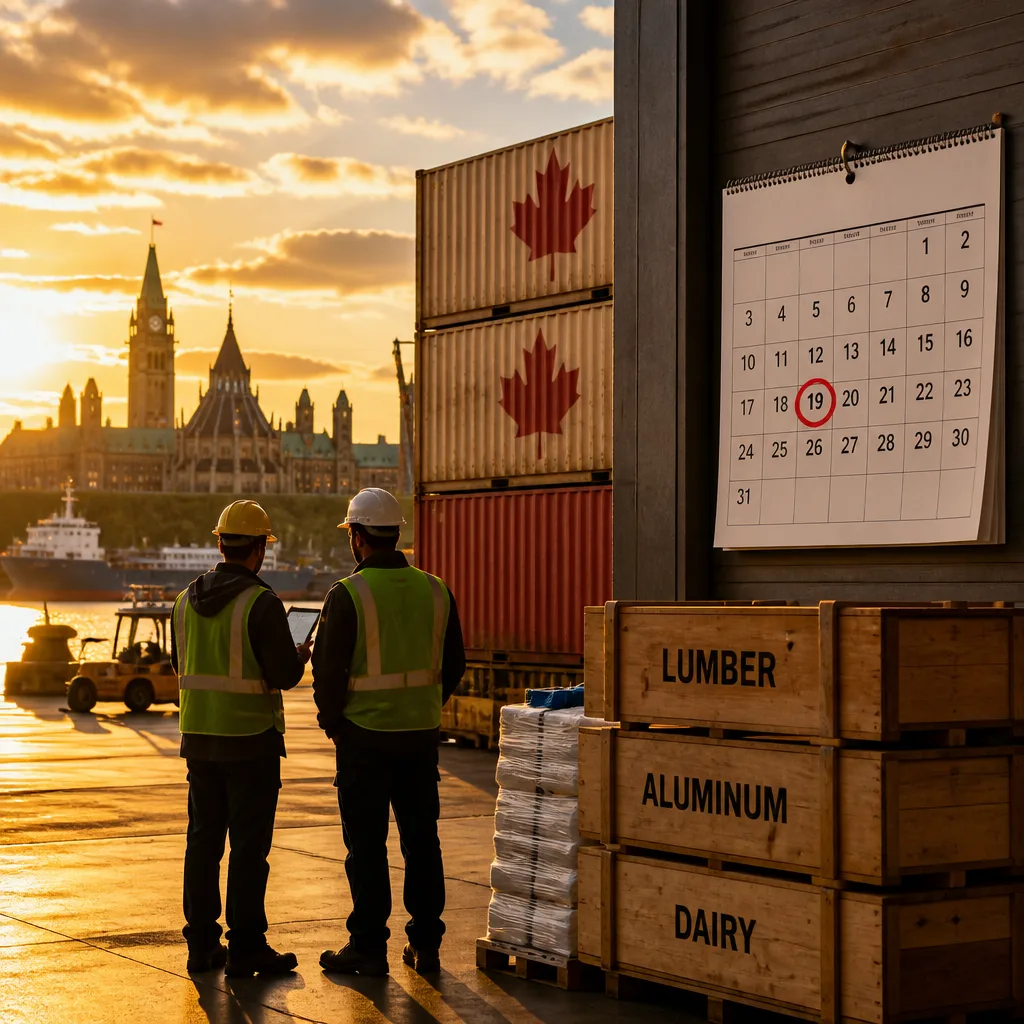
Canadian companies are sounding alarms as Washington’s proposed 50-per-cent tariff deadline approaches on Aug. 19, warning the levy could sharply disrupt revenue streams and supply chains.
Small and medium-sized enterprises in British Columbia, which export significant volumes to the United States, say the prospect of steep duties is already weighing on planning and investment decisions. One B.C. manufacturer described the threat in stark terms.
“It poses an existential threat,”
said Blaine Maryniuk, co-founder of West Coast Walls, which ships wallpaper, stickers and decals to U.S. customers for between 25 and 50 per cent of monthly sales. “I think about it every day,” he added, underscoring how quickly such measures can affect cash flow for exporters that rely on the U.S. market.
High-stakes diplomacy and industry exposure
Ottawa has escalated talks with Washington to head off the tariff plan. Trade Minister Dominic LeBlanc and chief trade negotiator Janice Charette have held multiple discussions in recent weeks with U.S. Trade Representative Jamieson Greer. Prime Minister Mark Carney has described the negotiations as “delicate” and “intense.”
The talks cover not only the looming Section 338 tariff proposal but also seek to reduce existing Section 232 duties on industrial products such as steel, aluminium, autos and lumber. Ottawa and Washington are reportedly exploring trade-offs that would involve Canadian concessions in some sectors in exchange for tariff relief in others.
Which sectors are in the crosshairs
U.S. officials have framed their actions as responses to perceived Canadian protection for certain domestic sectors. The Americans point to Canadian policies affecting the automobile, dairy and alcohol industries. One concrete U.S. demand reportedly involves restoring wider U.S. liquor availability in provincially controlled retail systems.
Economically, the measures under discussion are not limited to a single industry. Affected areas include:
- Manufacturers that export consumer goods — particularly small firms with sizeable U.S. sales.
- Producers and processors in resource sectors such as lumber.
- Heavy industry subject to existing Section 232 tariffs, which could be renegotiated.
| Tariff measure | Targeted sectors |
|---|---|
| Section 338 (proposed) — 50% | Broad range of Canadian exports to U.S. market |
| Section 232 (existing) | Steel, aluminium, autos, lumber |
Business reaction and implications
For many firms, especially exporters in border provinces like British Columbia, the uncertainty alone is costly: companies face disrupted sales forecasts, potential re-pricing of contracts and hesitancy to expand production. Smaller firms with thin margins have expressed particular vulnerability given the abrupt change in market access a 50-per-cent duty would bring.
At the federal level, negotiators appear to be seeking a balance: reduce or avoid punitive new tariffs while addressing U.S. complaints about Canadian regulatory or market practices in specific sectors. Any resolution is likely to be complex and could require concessions that carry political as well as economic consequences.
As the Aug. 19 deadline approaches, businesses and policymakers alike will be watching closely. For exporters currently doing a large fraction of their sales in the United States, the outcome could determine whether they adapt, retrench or, in worst cases, face existential pressure to survive.
The coming days will test the reach of bilateral diplomacy and the resilience of Canadian firms whose fortunes are closely tied to the U.S. market.