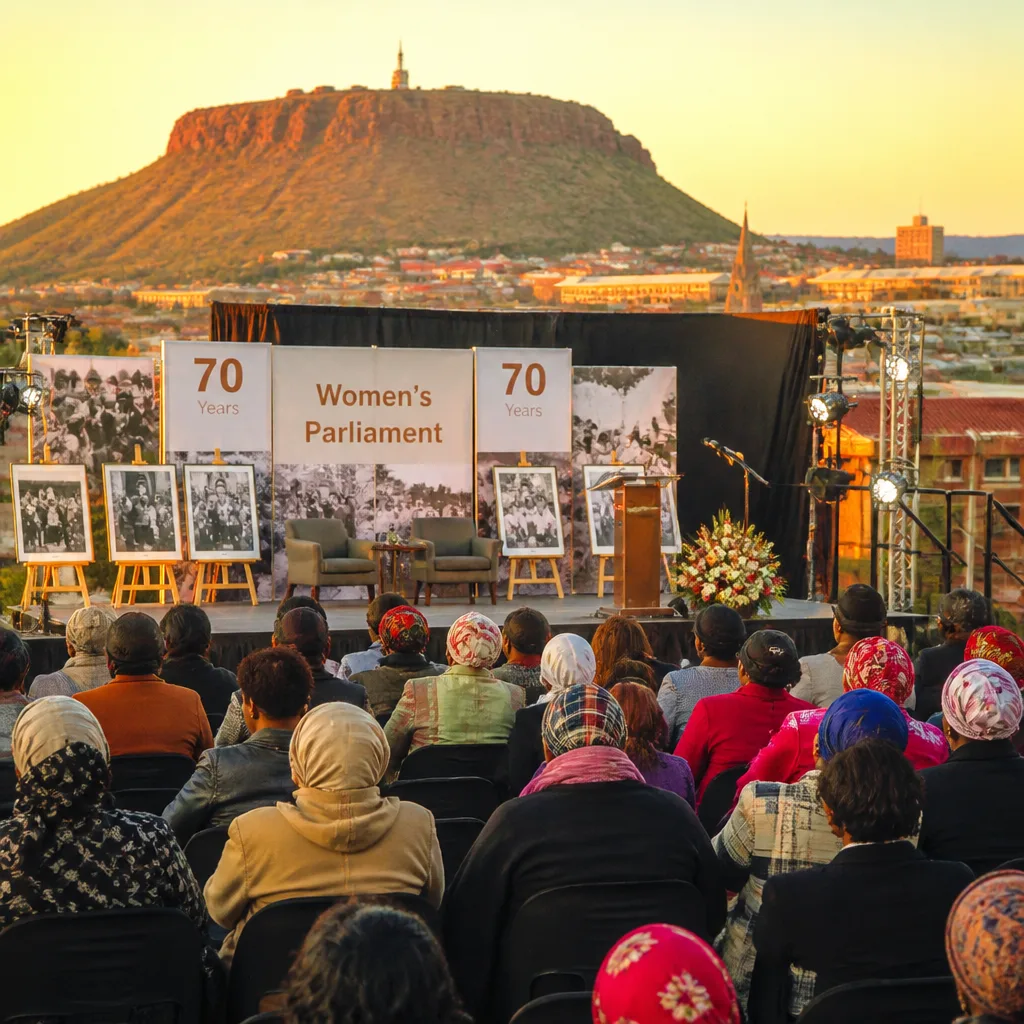
Women from across South Africa gathered at Sol Plaatje University in Kimberley from 13 to 14 August for the 2026 Women’s Parliament, using the national platform to renew calls for gender justice, equality and economic resilience.
Historic anniversaries frame the debate
The event coincides with two significant anniversaries in the national history of women’s struggle. It marks 70 years since more than 20 000 women marched to the Union Buildings in 1956 to protest apartheid pass laws, and 72 years since the adoption of the 1954 Women’s Charter, which articulated an early vision for women’s equal citizenship.
Speakers and participants invoked the legacy of those campaigns as both inspiration and a reminder that work to achieve gender equality remains unfinished. The gathering was described as a living chamber of memory, courage and expectation, where the past and present were brought together to inform plans for the future.
Voice and symbolism on display
Delegates entered the Great Hall in a variety of attire reflecting South Africa’s diversity: doeks, dresses, uniforms, union T‑shirts and traditional regalia. The programme included songs and interludes that organisers said carried the emotional weight of intergenerational struggle.
"Wathint’ Abafazi, Wathint’ Imbokodo."
The refrain was used throughout the proceedings to evoke the sacrifices of earlier generations and to underscore the determination of women to defend and advance their rights.
Objectives and themes
Organisers set the 2026 Women’s Parliament theme as: “Wathint’ Abafazi, Wathint’ Imbokodo: 70 Years of Resistance, 72 Years of Vision – Advancing Gender Justice, Equality and Resilient Economies for All.” The framing places equal emphasis on social justice and on economic measures to strengthen women’s livelihoods.
- Commemorate the 1956 women’s march and reflect on its legacy.
- Revisit the 1954 Women’s Charter and its relevance to contemporary policy.
- Advance discussions on gender justice, equality and economic resilience.
The event drew women parliamentarians and civic participants, including the Speaker of the National Assembly, Ms Thoko Didiza, as well as women from "every walk of life," reflecting an intention to bridge parliamentary debate and grassroots concerns.
Context and potential outcomes
Women’s Parliaments in South Africa have historically provided a forum for consolidating policy recommendations, shaping legislative priorities and galvanising public attention on gendered issues such as violence against women, economic exclusion and access to services. By convening in Kimberley, organisers intended to combine historical remembrance with practical policy conversation.
Concrete outcomes from the Kimberley gathering were not detailed in the material released ahead of the event. Typically, such assemblies produce resolutions or communiqués that aim to influence parliamentary committees, government departments and civil society actors. The effectiveness of those outcomes depends on follow‑through by elected officials and implementing agencies.
What to watch for next
Observers will be looking for any resolutions or policy recommendations emerging from the Women’s Parliament and for signals of how national and provincial leaders intend to respond. Key areas to monitor include:
- Any calls for legislative change or urgency around existing bills affecting gender equality.
- Proposals linking gender justice to economic measures that could be taken by government or the private sector.
- Mechanisms proposed to ensure accountability and implementation of recommendations.
The Kimberley gathering underscores that anniversaries remain powerful sites for political mobilisation. Participants framed the event as both remembrance and a call to renew action on issues that continue to shape women’s lives across the country.