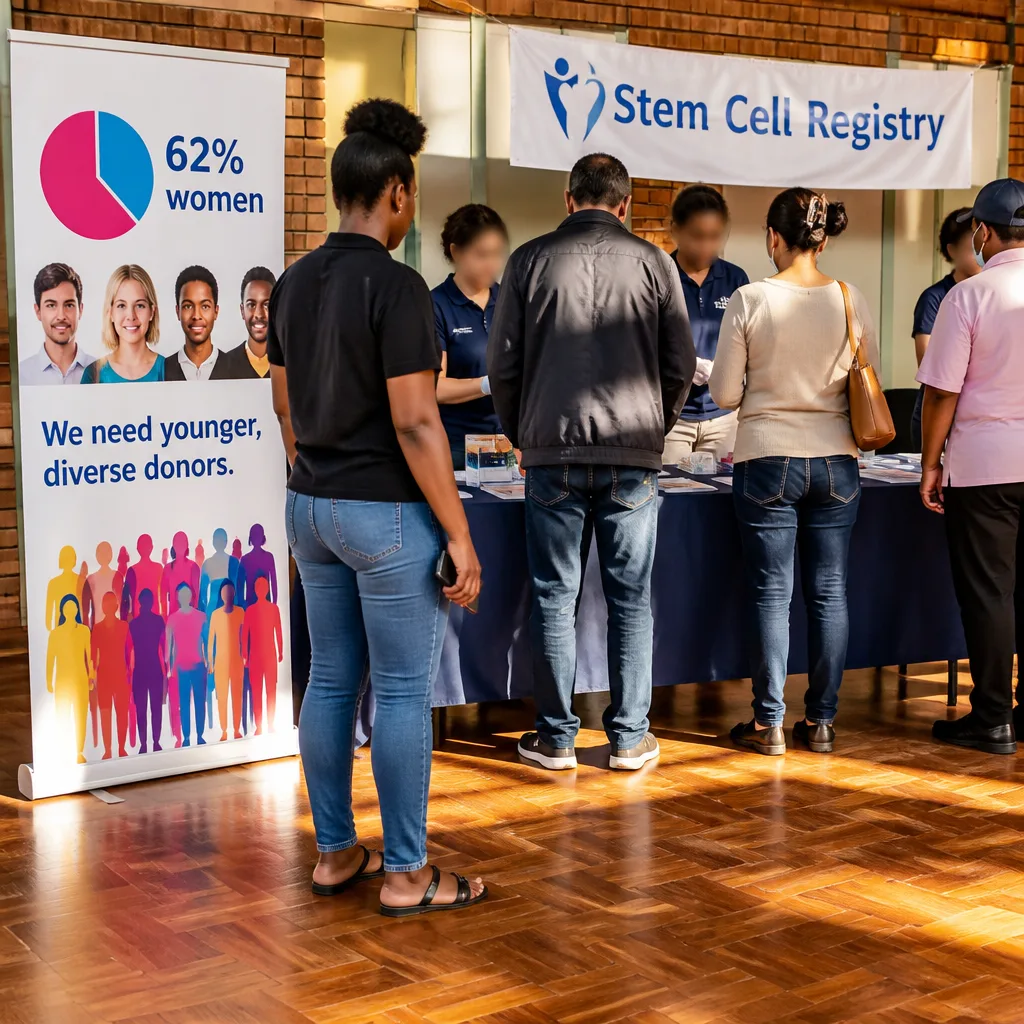
Women account for 62% of registered stem cell donors in South Africa, the South African Bone Marrow Registry (SABMR) says, a figure highlighted as part of Women’s Month publicity. While the contribution is significant, registry officials warned the need for additional donors — particularly younger people and those from underrepresented communities — remains urgent.
Gap between donor profile and patient needs
Finding an unrelated stem cell match can be extremely difficult. The registry noted that some patients face odds as long as one in 100 000 of locating a compatible donor. Those odds are worse for patients from population groups that are underrepresented on the registry.
SABMR Deputy Director Jane Ward described the predominance of women on the register as an example of compassionate civic participation, but said that population diversity and age profile are critical to improving match rates.
"Women have always been at the heart of caring for others, and these figures show that compassion extends far beyond their own families and communities," Ward said.
Personal story underlines the stakes
The registry has also appointed a new ambassador, 33-year-old Megan Lee de Kock from Cape Town. De Kock was diagnosed with Chronic Myeloid Leukaemia at 19 and, despite the possibility that a stem cell transplant could have helped, she never found a matching donor.
De Kock is currently maintained on daily targeted therapy. She has written a memoir titled Beyond that documents her experience with cancer and life after diagnosis; the book is due for release later this year. As an ambassador she is urging more South Africans — especially younger people and women — to register.
"Although I never found a matching donor, I know there are countless patients whose only chance of survival depends on someone they've never met choosing to register," de Kock said.
What the registry is asking from the public
The registry emphasises that recruiting new donors helps build a pool that increases the probability of finding matches for people across different ancestry groups and ages. It is promoting registration drives and public awareness initiatives during Women’s Month to build on the high level of female participation.
- Current female share: 62% of registered donors are women.
- Match difficulty: Some patients face match odds of about one in 100 000.
- Priority recruits: Younger South Africans and donors from underrepresented communities.
Why diversity and youth matter
Stem cell matching relies on genetic markers that often cluster by ancestry and age profile can affect long-term donor availability. The SABMR says broader demographic representation improves the chance that patients from diverse backgrounds will find a suitable unrelated donor.
Registry officials say registration is a voluntary commitment for potential donors, who are tested and only contactable if a match is sought for a patient. Details such as minimum age for registration, medical screening criteria and whether donors are required to travel for donation are managed by the registry and partner hospitals.
Officials are encouraging institutions, community groups and employers to facilitate registration events and to provide factual information about the process to dispel common misconceptions that may deter potential donors.
The situation remains developing: the registry’s emphasis on women’s participation during Women’s Month is intended to convert awareness into sustained recruitment across age groups and communities to address the persistent shortfall in matches for patients with blood cancers and other marrow disorders.