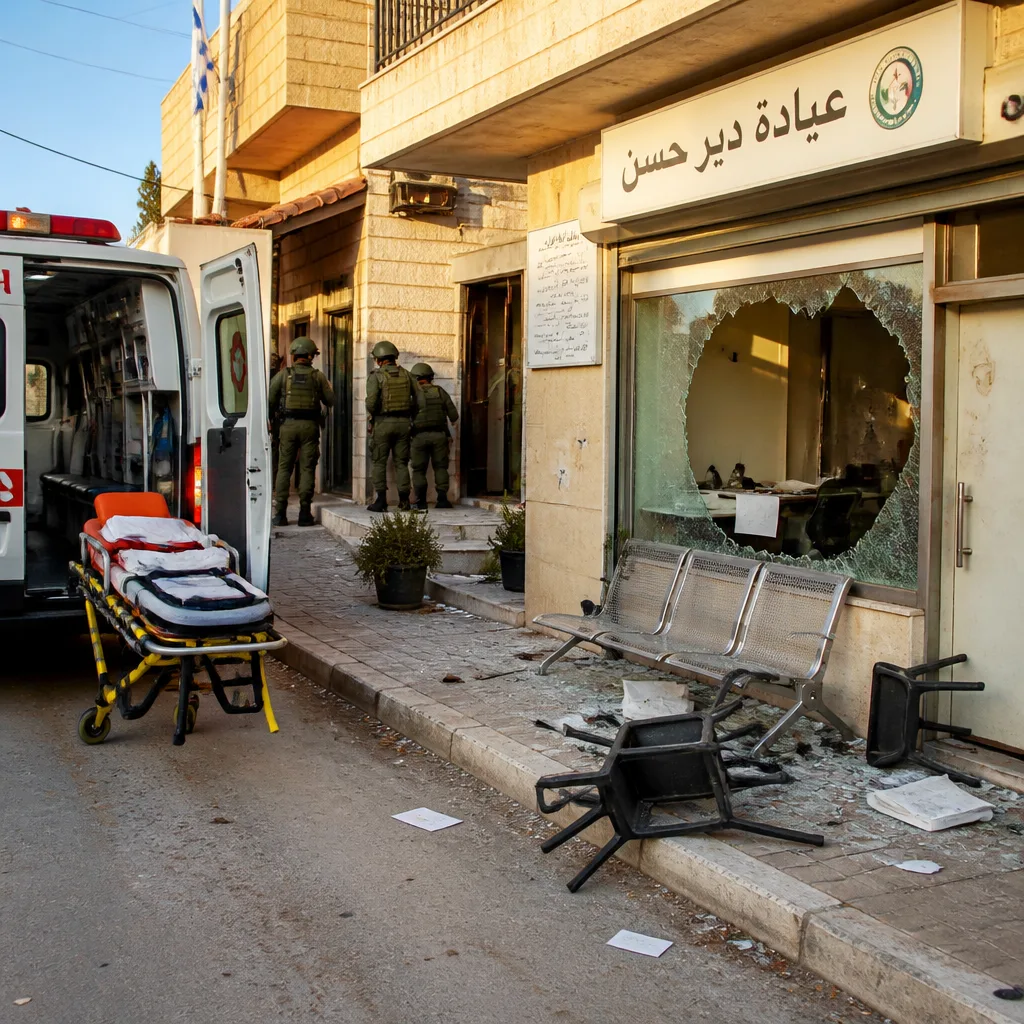
Ramallah — The World Health Organization (WHO) has recorded a sharp increase in attacks on health care across the West Bank, noting 37 incidents in a recent reporting period that include assaults on facilities and medical vehicles, obstruction of access, use of force and the arrest or detention of health workers and patients.
High‑profile arrest raises alarm
One of the cases attracting attention is the arrest on 21 June of Dr Mazen Rantisi, described in reporting as a leading Palestinian physician who has provided care for low‑income and marginalised communities in Ramallah. Israeli forces detained Dr Rantisi in a pre‑dawn raid on his home in the Al‑Tireh neighbourhood, and Palestinian health and civil society organisations have raised concerns about medical neglect and alleged physical abuse while he has been in custody.
He has been widely referred to as the “doctor of the poor”.
Dr Rantisi also serves as chair of the board of the Health Work Committees (HWC), a network that grew from grassroots committees focused on delivering essential services and primary health care in underserved areas. The HWC model historically combined service delivery with community organisation, and its clinics have tended to serve rural and economically vulnerable populations where state and donor support has been limited.
WHO figures show rising incidents
The WHO report cited in recent coverage catalogues a range of hostile actions affecting health care in the West Bank. Those actions include:
- attacks on health facilities and medical vehicles;
- obstruction of access to care for patients and staff;
- use of force in or around health premises;
- the arrest or detention of health workers and patients.
According to the WHO documentation, the tally of 37 attacks marks a rise from earlier months: eight incidents were recorded in June, with a monthly average of about 10 in the period prior to the recent spike.
| Period | Documented attacks on health care (WHO) |
|---|---|
| Recent reporting period | 37 |
| June | 8 |
| Monthly average (prior) | ~10 |
Context: funding and service pressures
Reporting accompanying the WHO figures highlights broader systemic pressures on Palestinian public health services. Restrictions on the transfer of Palestinian Authority revenue have eroded budgetary capacity, contributing to reduced access to public health provision and increasing the reliance of poor and marginalised communities on non‑state actors such as the HWC.
Health providers in the West Bank have long operated under constrained conditions: limited infrastructure in rural areas, vulnerabilities caused by earlier policies of de‑development, and the logistical challenges of delivering care amid movement restrictions and security operations. Observers say when community‑based providers that serve vulnerable groups are targeted, it can have an outsized impact on primary care access.
Implications for patients and health workers
International public‑health bodies regard attacks on health care, obstruction of access, and the detention of medical personnel as serious violations of humanitarian and human‑rights norms. Such incidents can disrupt essential services — from routine vaccinations and maternal care to chronic disease management — and endanger both patients and staff.
Local health organisations and human‑rights groups have called for independent investigations into allegations of maltreatment in detention and for guarantees that health facilities and staff will be protected in line with international standards.
Health workers and patients affected by disruptions should seek care at designated clinics and hospitals where possible. If you or a loved one has health concerns, consult a clinician rather than rely on informal advice or online self‑diagnosis.
Note: This report is drawn from the source material summarising WHO documentation and recent reporting on the arrest of Dr Mazen Rantisi and the historical role of the Health Work Committees.