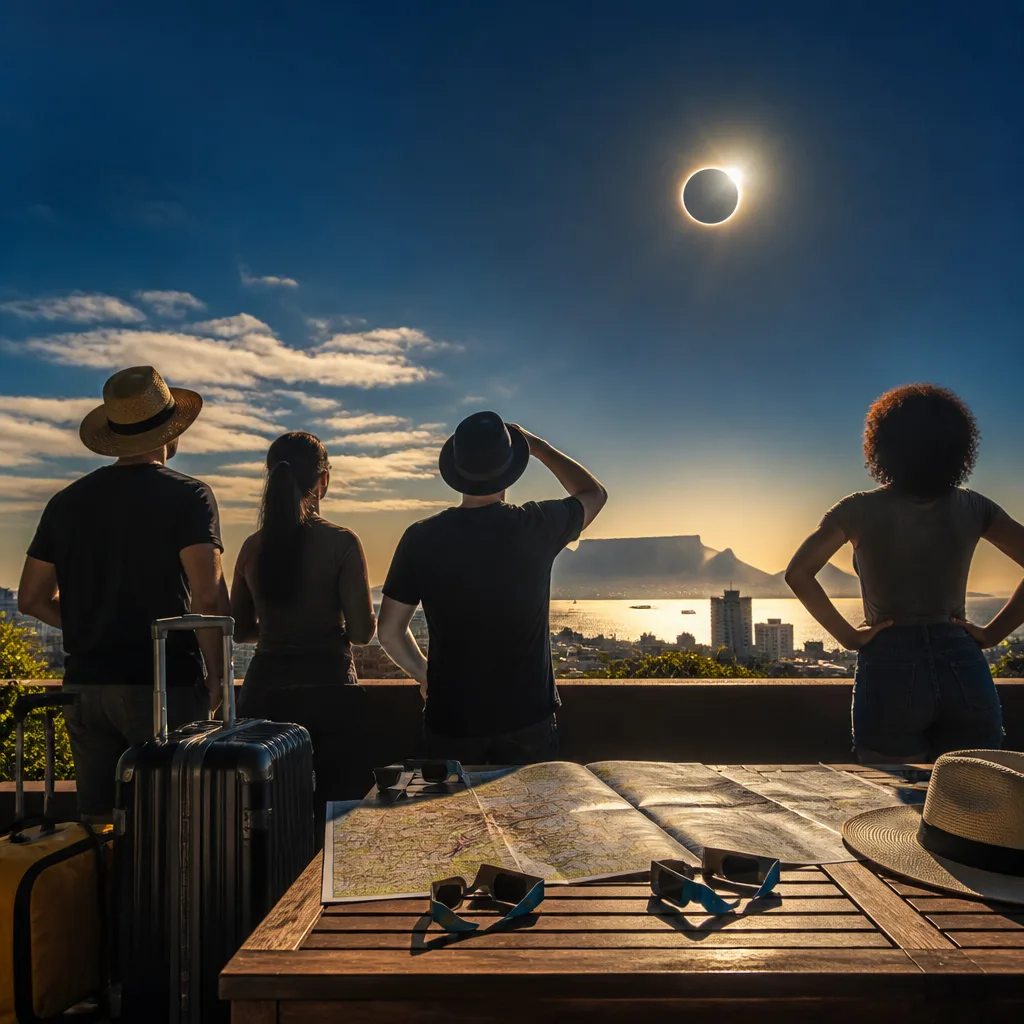
On 2 August 2027, a total solar eclipse that astronomers are already calling a once-in-a-generation event will cross from the Atlantic into North Africa and onward into the Middle East. The point of greatest eclipse occurs over Egypt, where the moon will obscure the sun for a remarkable six minutes and 23 seconds — the longest duration of totality on easily reachable land until 2114, according to reporting by euronews.
Where the shadow will fall
The eclipse path begins over the Strait of Gibraltar and moves east, delivering long periods of darkness in a number of cities that are straightforward for international travellers to reach. Several European and Mediterranean destinations will experience several minutes of totality, offering good viewing opportunities without travelling all the way to Egypt.
- Spain: Marbella — 3 minutes 21 seconds; Cádiz — 2 minutes 56 seconds. Spain’s North African enclaves also lie in the path: Ceuta — 4 minutes 49 seconds; Melilla — 4 minutes 34 seconds.
- Gibraltar (British Overseas Territory): 4 minutes 28 seconds.
- Italy (Pelagian Islands): Lampedusa — 2 minutes 56 seconds.
- Morocco: Tangier — 4 minutes 51 seconds.
- Tunisia: Sfax — 2 minutes 56 seconds.
- Egypt (point of greatest eclipse): Siwa Oasis — 5 minutes 33 seconds; Asyut — 6 minutes 7 seconds; Luxor — 6 minutes 22 seconds; greatest point — 6 minutes 23 seconds.
- Saudi Arabia: Jeddah — 5 minutes 53 seconds; Mecca — 5 minutes 10 seconds.
| Location | Estimated duration of totality |
|---|---|
| Luxor, Egypt | 6 minutes 22 seconds |
| Marbella, Spain | 3 minutes 21 seconds |
| Tangier, Morocco | 4 minutes 51 seconds |
| Jeddah, Saudi Arabia | 5 minutes 53 seconds |
“eclipse of the century”
Practical travel advice for South African viewers
Interest in this event is already pushing up accommodation prices and forcing early sell-outs in some cities. Euronews reported that many hotels are fully booked and remaining rooms are costly. If you are planning to travel from South Africa, consider the following:
- Book flights and accommodation as early as possible — demand is likely to spike in the months ahead.
- Choose a location with clear sky prospects for August; many coastal and desert sites (for example in Spain, Morocco or Egypt) have statistically higher chances of cloud-free skies than some inland locations.
- Plan for heat in North African and Middle Eastern venues: August temperatures can be high, so pack sun protection, light clothing and stay hydrated.
- Prepare certified eclipse viewing eyewear — never look at the sun without proper protection during partial phases.
- Factor in local logistics on the day: major viewing spots will experience heavy traffic and crowds; allow extra travel time and check local transport options in advance.
For travellers who prefer shorter trips, southern Spain and Gibraltar offer relatively easy connections from Europe, while Morocco provides an African option with shorter overland stays. For those seeking the longest possible spectacle, key Egyptian sites near the Nile corridor will see the maximum duration of darkness.
Many planning questions remain: visa requirements, local event programming, and organised eclipse tours vary by country. South African travellers should check entry rules and travel advisories nearer the time and consider booking through established travel providers for group arrangements.
This eclipse will be one of the most accessible prolonged totalities of the century — a rare chance for communities, photographers and amateur astronomers to witness an extended period of daytime darkness. With careful planning, it can be a memorable, safe and rewarding trip.