
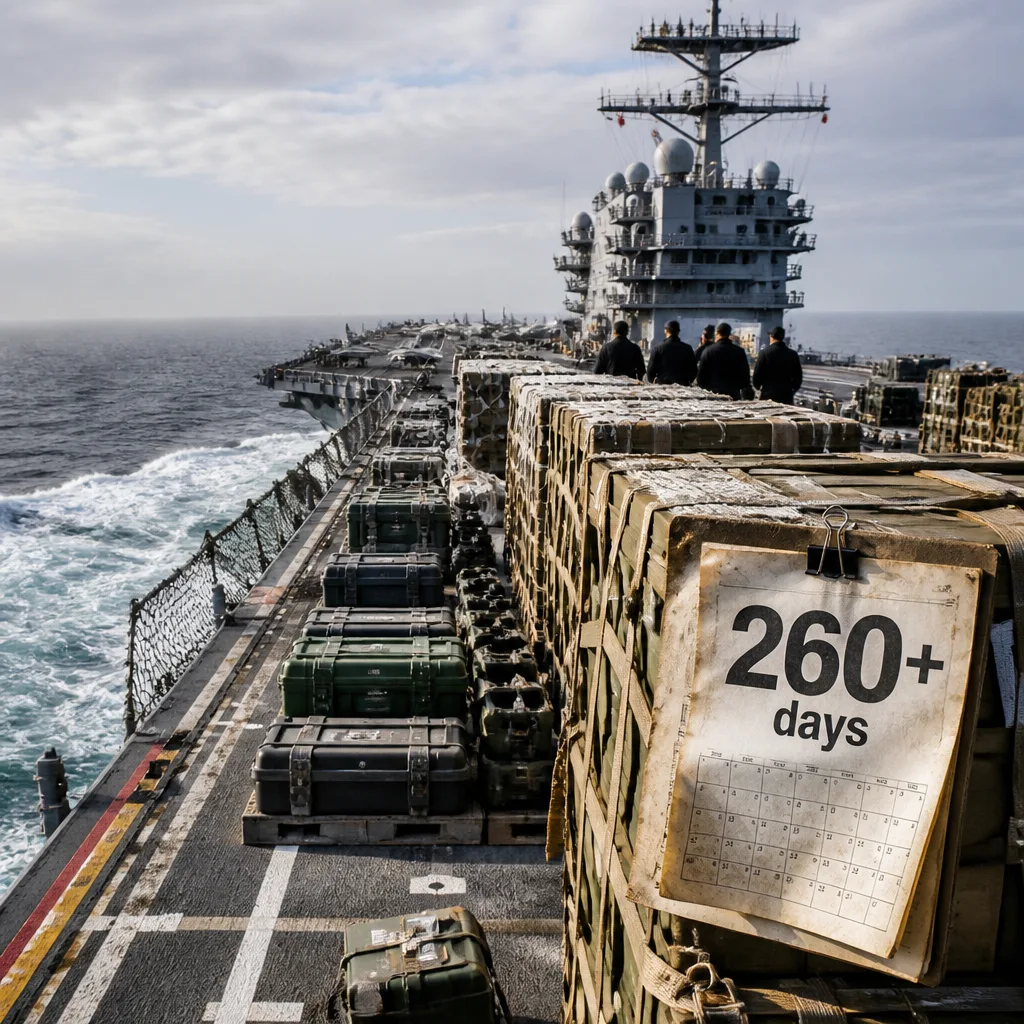
WASHINGTON — Former US President Donald Trump said on Friday that the extended deployment of the aircraft carrier USS Abraham Lincoln — a voyage that lasted more than 260 days and has been described as a near nine‑month deployment — was “not nearly long enough,” remarks that drew immediate rebuke from Democratic members of Congress and renewed scrutiny of conditions aboard the vessel.
Direct remarks, quick reaction
Speaking briefly to reporters before flying to New York, Trump downplayed allegations by family members and others that the length of the deployment had taken a toll on sailors’ welfare. He signalled the Lincoln was either already moving or would be shortly and that it would be replaced by “another very similar ship.”
“That ship is moving right now, or very shortly, and it's being replaced with another very similar ship,”
The comments came amid growing concern from some Democrats over mental‑health and supply problems reported aboard the carrier while it supported US operations in the region. The deployment attracted attention because it set a record for the length of time an aircraft carrier has been at sea on a single mission in recent US naval practice.
Lawmakers and Pentagon pushback
Several Democratic lawmakers — including Senators Richard Blumenthal of Connecticut and Ruben Gallego of Arizona — called for accountability from the Pentagon over conditions on the Lincoln. Representative Jason Crow of Colorado, a veteran who served multiple tours in Iraq and Afghanistan, criticised Trump’s remarks on social media, saying the former president “does not care about our servicemembers or their families,” according to reporting.
The Pentagon’s public posture, via Defence Secretary Pete Hegseth, has been to push back against what he characterised as inaccurate portrayals of conditions on board. Hegseth said the situation had been “completely misrepresented,” according to reporting.
Strategic context: Iran, a blockade and indefinite posture
The Lincoln was operating in support of US military efforts against Iran as tensions between Tehran and Washington persisted. While hostilities had eased in recent weeks, the US Navy had reimposed a blockade on Iranian ports in the strategic Strait of Hormuz, a key artery for global oil shipments and a flashpoint for regional naval operations.
Defence officials told reporters the US military could sustain the blockade for the foreseeable future; Hegseth said the Navy could maintain the posture “indefinitely,” underscoring the long‑term operational demands being placed on surface fleets and carrier strike groups.
Who benefits and who pays
There are competing pressures in Washington. Political leaders and former officials emphasise the strategic importance of maintaining a credible naval presence to deter escalation and keep trade routes open. That posture benefits policymakers seeking to signal resolve to allies and adversaries alike.
But extended deployments have direct human and material costs. Service members and their families bear the strain of separation, and prolonged operations increase wear on ships and their systems. Critics in Congress are pressing for answers about whether logistical support and mental‑health services kept pace with the extended mission.
- Deployment length: More than 260 days (near nine months).
- Operational role: Supporting US operations against Iran and enforcing a blockade of Iranian ports in the Strait of Hormuz.
- Official responses: Defence Secretary Pete Hegseth said conditions were “completely misrepresented”; several Democratic lawmakers have demanded accountability.
| Item | Detail |
|---|---|
| Ship | USS Abraham Lincoln (aircraft carrier) |
| Reported length | More than 260 days (near nine months) |
| Operational focus | Support of US operations against Iran; blockade of Iranian ports |
For South African readers, the episode is a reminder that great‑power military posturing can generate operational strains and political disputes at home. Navy deployments are not only a matter of strategy but also of sustainment — the ability to rotate crews, replenish stores and provide medical and psychological care for sailors.
The immediate fallout in Washington is likely to be political. Democrats will press oversight questions about the Navy’s decision‑making and support arrangements for extended deployments, while Trump’s supporters may frame his comments as tough‑minded resolve. Either way, the sailors who served on the Lincoln and their families will be central to the debate about how far a democracy should stretch its armed services in pursuit of strategic aims.












