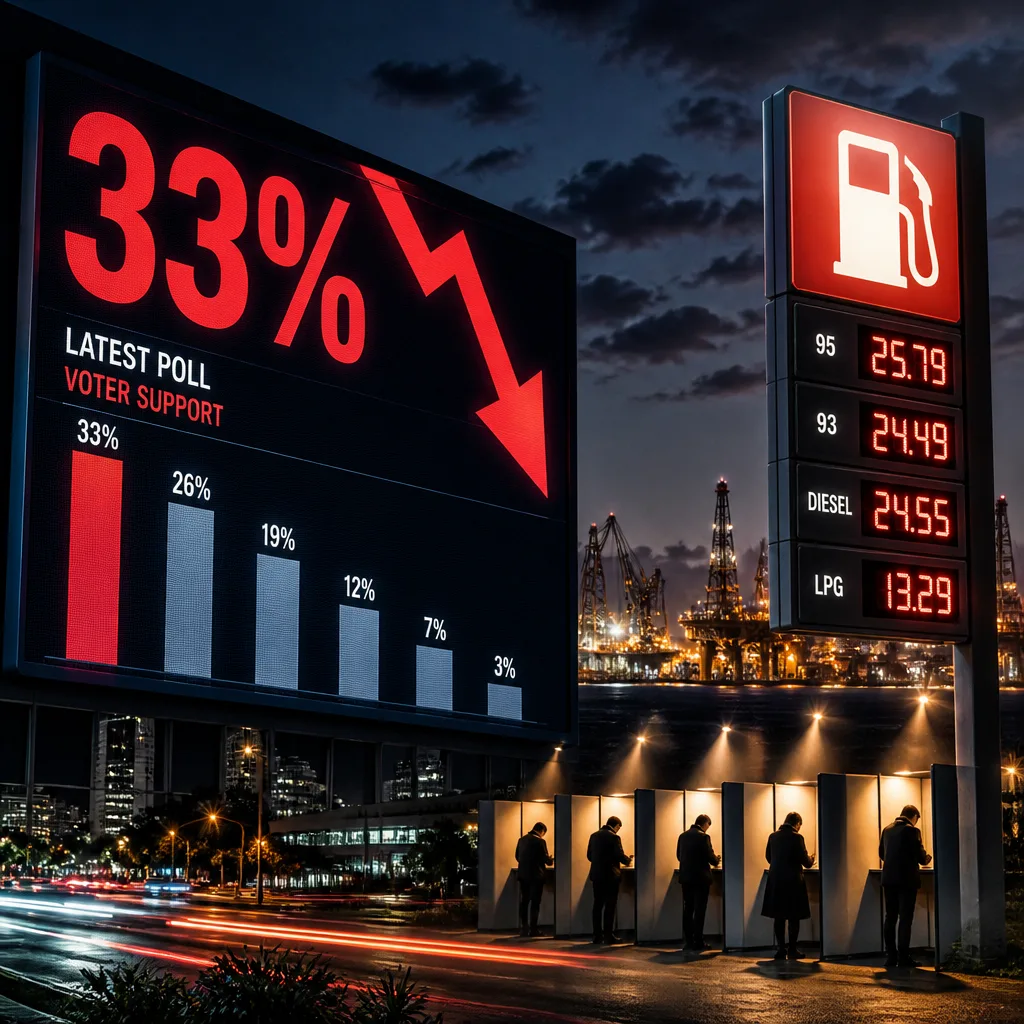
The latest YouGov/Economist poll places President Donald Trump’s approval rating at 33%, with 62% of respondents disapproving — the lowest net job-approval mark recorded for him across his two presidential terms, according to ColoradoPolitics reporting.
What the numbers show
The poll, released on Tuesday, documents a sharp fall from the start of Trump’s second term and a steady slide since the beginning of 2026. The approval figure is down 16 percentage points from the 49% recorded at the start of his second term, and down 6 points from 39% in early January 2026, the polling firm found.
- Overall approval: 33%
- Overall disapproval: 62%
- Change since start of second term: down 16 points from 49%
- Change since January 2026: down 6 points from 39%
The drop is not uniform across the political spectrum. YouGov reported pronounced declines among several groups:
- Make America Great Again (MAGA) Republicans: down 12 points
- All Republicans: down 33 points
- Non‑MAGA Republicans: down 81 points
- Independents: down 49 points
- Democrats: down 21 points
Context: war, energy and the calendar
The poll comes as the administration remains consumed by its military engagement with Iran and as energy prices have risen in the conflict’s aftermath. ColoradoPolitics said commentators have drawn historical parallels, with some comparing Trump’s predicament to former president Jimmy Carter’s political fortunes after the Iran hostage crisis and persistent inflation—events that dented Carter’s public standing and shaped his legacy.
Those dynamics matter politically because the Republican Party is preparing for midterm elections that will determine control of the US House of Representatives during the latter part of Trump’s term. Lower presidential approval ratings historically complicate a president’s party prospects in midterms, affecting turnout, candidate recruitment and fundraising.
Perceptions of sincerity and the White House response
Despite the falls in approval, the poll found a majority of respondents — 50% — believe the president is sincere, saying he "says what he believes," while 36% think he "says what people want to hear."
“The President has already made historic progress not only in America but around the world, and this is just the beginning as his agenda continues taking effect,”
The White House provided that statement to the Washington Examiner in response to the poll results, arguing the president’s record of economic and policy achievements will yield further gains.
Who benefits and who pays
From a political standpoint, an approval slump redistributes advantage and risk. Opposition parties and independent challengers gain leverage in messaging and fundraising. Within the president’s own party, diminished public support can intensify internal disputes over strategy — whether to shore up the base or pivot to appeal to swing voters — and heighten the importance of primary contests.
For the electorate, the consequence is practical: policy focus can shift as the White House balances foreign‑policy commitments with domestic economic pressures. Rising energy prices, in particular, translate into immediate costs for households and can influence voting behaviour in key districts.
| Metric | Value |
|---|---|
| Approval | 33% |
| Disapproval | 62% |
| Majority who say he is sincere | 50% |
The YouGov/Economist poll offers a snapshot at a volatile moment. Whether the president’s figures rebound will depend on the administration’s handling of the Iran conflict, movement on inflation and energy costs, and how both parties position themselves ahead of the midterms.