
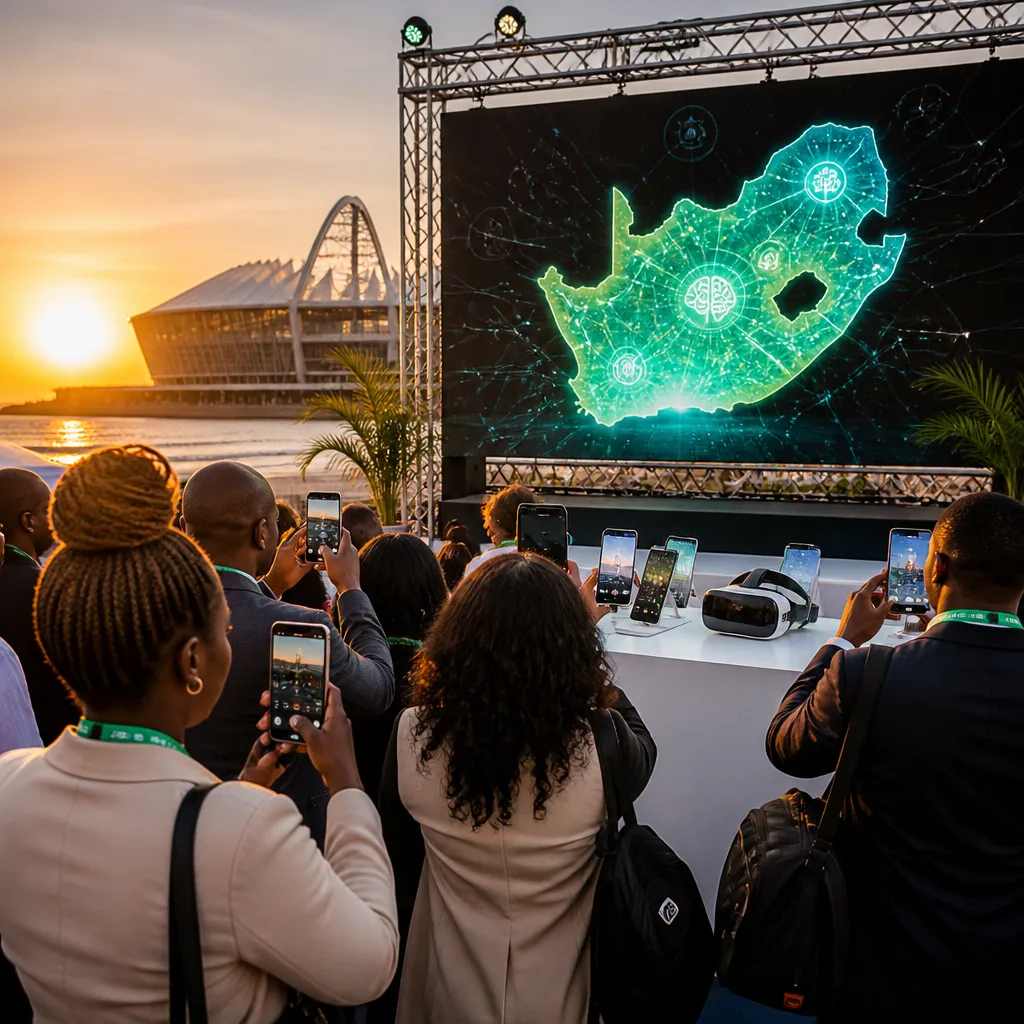
Tourism Month 2026 was launched in Durban with a clear message: get South Africans to explore their own country while harnessing digital technology and artificial intelligence (AI) to grow tourism businesses and destinations.
Digital era theme aims to widen participation
The campaign — running under the banner of “Growing South Africa’s Tourism Sector in the Digital Era” — pairs a renewed drive for domestic travel with a concerted focus on tech solutions. The Department of Tourism announced the launch on its official X account ahead of South Africa taking the chair of the Southern African Development Community (SADC) for 2026/27 and hosting the 46th SADC Summit in Durban from 16 to 17 August.
Tourism Minister Patricia de Lille told delegates that Southern Africa should be regarded as an interconnected region rather than a collection of separate destinations, shaped by shared geography, culture, family, trade and travel. The minister said the campaign seeks to increase the number of South Africans experiencing travel in their own country while expanding participation from all sectors of society.
“This is why domestic tourism matters. It is not a secondary part of our tourism economy. It is one of the foundations of a resilient tourism economy. And this Tourism Month, we want to see even more South Africans experiencing their country.”
Numbers and policy signals
De Lille cited provisional figures showing South Africans made 21.2 million overnight trips in the first half of 2026, a rise of 4% from the 20.4 million trips recorded in the same period last year. Within that total, holiday trips increased sharply — up 36% to 5.2 million. Despite the rise in trips, domestic tourism spending during the period remained below the level seen in the corresponding period of 2025.
| Metric | First half 2025 | First half 2026 |
|---|---|---|
| Overnight trips | 20.4 million | 21.2 million |
| Holiday trips | (not specified) | 5.2 million (36% increase) |
The minister also flagged the recent introduction of South Africa’s Electronic Travel Authorisation (ETA) as a development that supports the country’s tourism growth objectives by simplifying travel entry for visitors.
What needs to happen for domestic tourism to grow
De Lille underlined that boosting domestic tourism is not the job of a single department. She set out a shared responsibility across government, provincial and city authorities, the private sector, technology platforms, media, content creators and local tourism businesses.
Key priorities identified at the launch include:
- Affordability — making travel options more cost‑competitive for South Africans;
- Accessibility — improving transport links and information to open up destinations beyond established routes;
- Awareness — encouraging people to consider domestic trips and discover local experiences;
- Relevance — ensuring products meet the needs of diverse travellers and support small and medium enterprises across communities.
She urged tourism businesses to develop competitive, affordable offerings and called on municipal and provincial authorities to promote lesser-known experiences that can benefit local economies and heritage sites.
Broader impact and next steps
The Tourism Month campaign highlights the sector’s wider economic role: supporting jobs, nurturing entrepreneurs, preserving heritage and fostering national pride. By combining promotion of domestic travel with digital tools and AI, the Department aims to help small operators reach new markets and streamline services, while policymakers work on the enabling environment.
As Durban prepares to host regional leaders for the SADC Summit, the launch sends a signal that tourism policy will be part of broader regional cooperation and positioning during South Africa’s upcoming chairship.
For travellers and small businesses, Tourism Month offers an invitation — and a challenge — to make the most of homegrown experiences while embracing the digital changes shaping how South Africans plan, book and enjoy trips.











