
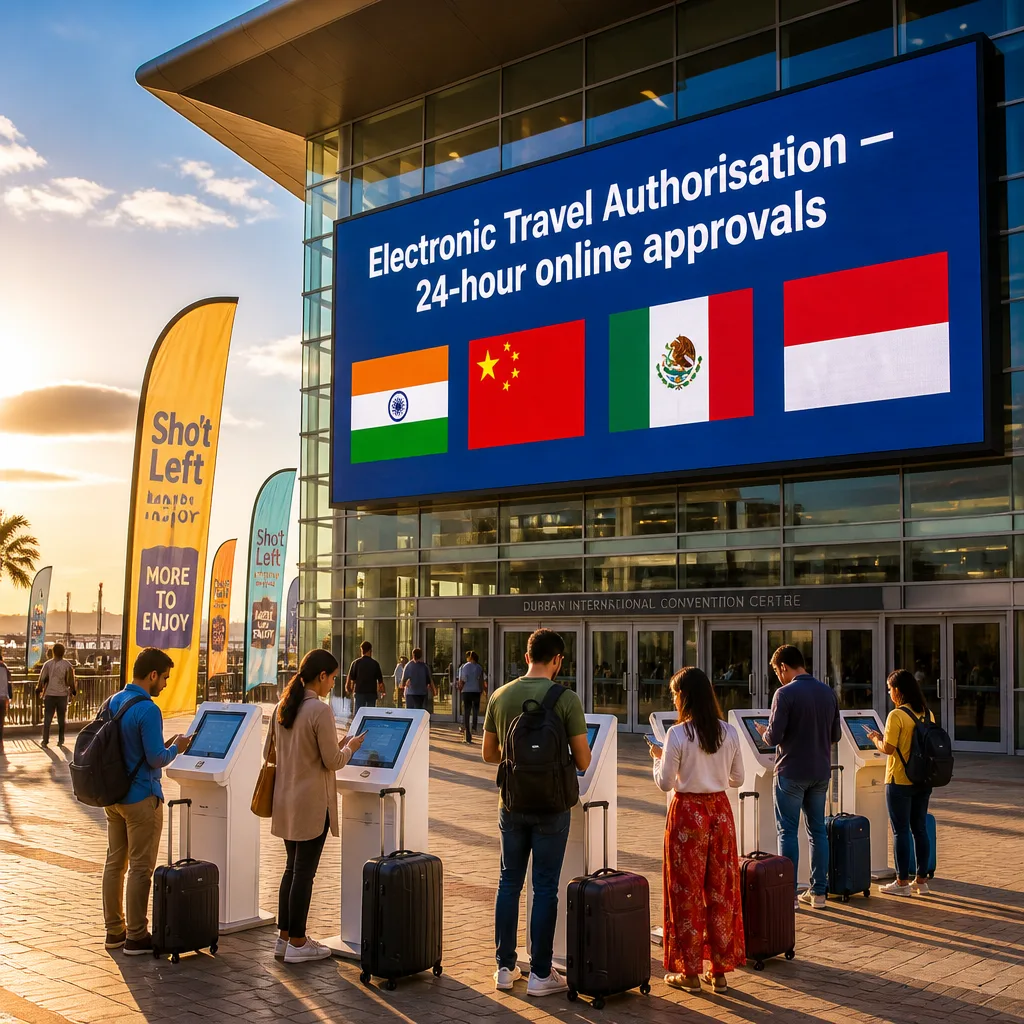
South Africa has introduced an Electronic Travel Authorisation (ETA) system intended to speed up entry for international visitors and broaden access to markets that previously faced slow visa processes, Tourism Minister Patricia de Lille said on Thursday.
Online approvals within 24 hours, minister says
Speaking at the launch of the 2026 Tourism Month campaign in Durban, De Lille said the ETA, launched on Wednesday, allows travellers to apply online and receive a response within 24 hours without visiting a South African embassy or consulate. The campaign, centred on the “Sho’t Left” concept to encourage local travel, also highlights digital innovation in the tourism sector.
De Lille identified several target markets that the government hopes the ETA will help to attract, saying the system could remove a significant barrier that had discouraged travellers to South Africa.
“The big source markets that we are focusing on is India, China, Mexico, and Indonesia. And we need to flood those markets to show them it’s now easier to come to South Africa. We need to have that video of Home Affairs, that is in English, how to access the ETA. We must translate that video into Mandarin, into Hindi for India, like yesterday. And then push that digitally out into those markets.”
Tourism and regional diplomacy
De Lille used the occasion of the 46th SADC Summit, taking place in Durban, to raise concerns that xenophobia could damage tourism growth and regional cooperation. She said leaders across the region should demonstrate an inclusive approach to visitors and regional travellers, stressing that collaborative action within Southern Africa is needed to make the region more attractive to international tourists.
The minister framed the ETA rollout as part of a broader strategy that combines easier border procedures with digital promotion to grow inbound visitor numbers from diverse international markets.
- What the ETA does: Enables online applications and a decision within 24 hours.
- Target markets named by the minister: India, China, Mexico and Indonesia.
- Complementary actions: Digital promotion, translated guidance videos and regional engagement at SADC.
Practical implications
The ETA is presented as removing the need for diplomats or applicants to rely on physical visits to missions abroad, potentially lowering transaction costs and time for travellers. The minister’s emphasis on translated instructional material suggests the initial rollout will pair the technical system with language-specific outreach to priority markets.
| Feature | Detail |
|---|---|
| Launch | Wednesday (official launch in Durban) |
| Decision time | Within 24 hours |
| Visa requirement | Online ETA removes need to visit embassy/consulate |
| Priority source markets | India, China, Mexico, Indonesia |
The launch coincides with Tourism Month activity that seeks to boost local travel while signalling to international audiences that South Africa is open for business. How quickly the ETA converts to higher arrival numbers will depend on follow-through in digital marketing, the user experience of the online system, and how the country manages concerns that could harm its tourism brand, such as incidents of xenophobic violence.
De Lille’s remarks tie border facilitation to broader diplomatic and marketing work at the SADC summit, indicating the government sees the ETA not just as a technical change but as part of a concerted effort to shape perceptions about South Africa and the region.
Further details on how the ETA will be administered, fees (if any), and specific eligibility criteria were not supplied in De Lille’s remarks at the Tourism Month launch.









