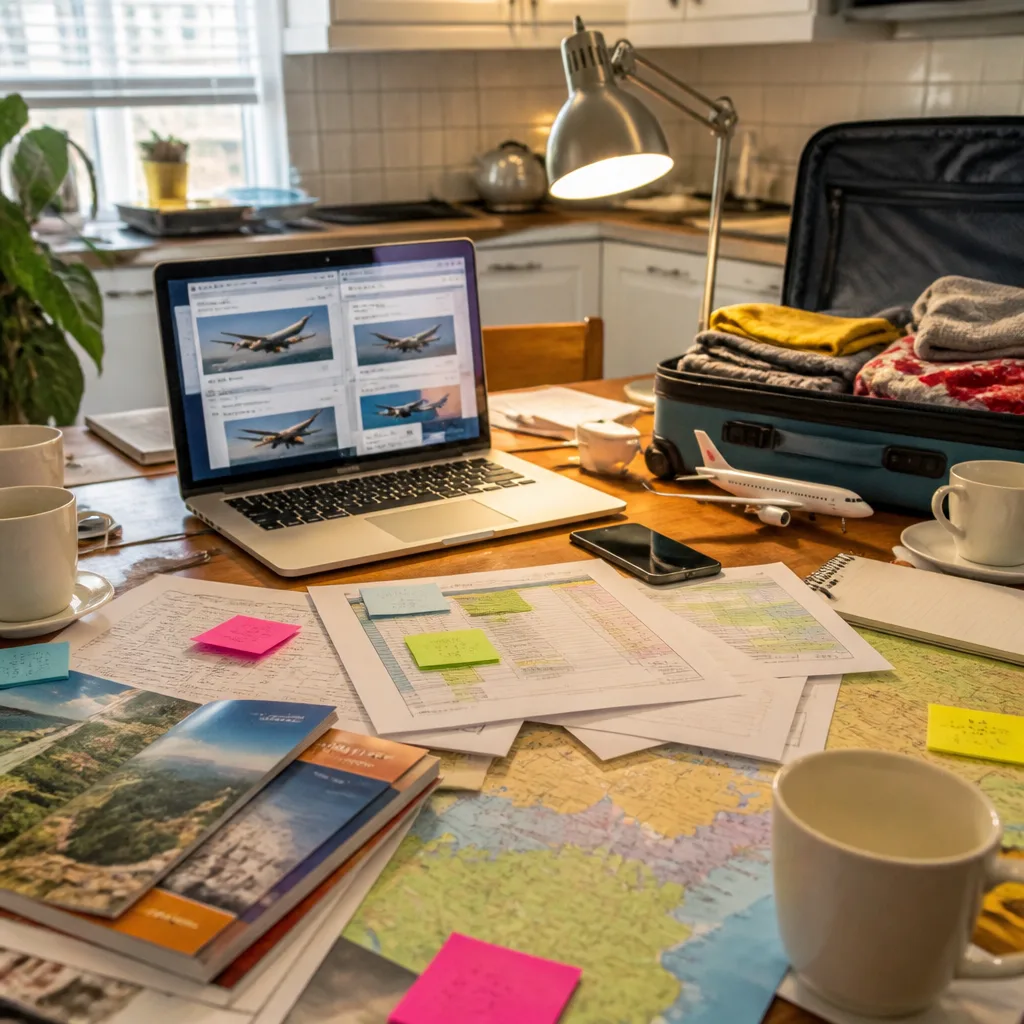
Most people who organise group holidays spend large amounts of time on planning and feel under‑appreciated for the work, according to a new survey — a finding that lands as travel industries look to broaden itineraries beyond major cities.
Planners putting in the hours
A survey of 2,725 travellers across 10 markets, published by travel platform Klook, found that more than seven in 10 travel planners spend over 10 hours organising a single trip. The study breaks down the time spent as 45.9% of planners doing up to 20 hours and 28.0% spending 40 hours or more on one trip.
Top stressors for planners were managing budgets (57.0%), coordinating schedules (53.8%) and comparing flights or accommodation (47.4%). When it comes to group dynamics, 61.3% said minimising conflict within their travelling group is an important skill.
“Why didn’t we do this instead?” and “I could’ve planned this better” were among the frequent complaints planners hear, the survey reported.
Recognition, rewards and a shortfall of thanks
Despite the workload, planners report low levels of appreciation. The study found that:
- 59.2% of planners heard “why didn’t we do this instead?”
- 58.1% have been told “I could’ve planned this better”
- 51.3% encountered criticism about budget choices
- 63.3% believe their trips wouldn’t happen without them
- Over 80% feel they deserve more recognition for their role
Many planners put a monetary value on their time: the survey noted that more than seven in 10 believe they deserve at least US$50 per hour for their effort, which Klook framed as potentially more than US$1,000 in unpaid labour per trip.
What planners juggle — at a glance
| Task | Reported stress (%) |
|---|---|
| Managing budgets | 57.0% |
| Coordinating schedules | 53.8% |
| Comparing flights/accommodation | 47.4% |
| Minimising group conflict | 61.3% |
Industry moves to widen travel options
At the same time as the survey was released, AirAsia MOVE announced a partnership with the Korea Tourism Organization (KTO) to encourage travellers to explore destinations in South Korea beyond the capital. The tie‑up — announced on 10 August 2026 in Kuala Lumpur — aims to promote places such as Jeju, Busan, Gyeongju, Jeonju and Gangneung to travellers from Malaysia and other ASEAN markets.
The initiative pairs AirAsia’s regional air network and digital travel platform with KTO’s destination expertise. It is presented as an effort to disperse tourism benefits more widely to local businesses and communities, and will use joint marketing campaigns, curated travel experiences and special offers to shift demand away from Seoul.
Small comforts for the unsung planners
Klook said it will run a promotion that sends five travel planners on a fully hosted seven‑day trip to Switzerland in December 2026, where winners won’t have to do any planning. The prize underlines a broader recognition in the industry that many travellers lean heavily on a friend or family member who carries the logistical burden.
For South African travellers, the findings are a reminder to share planning tasks and acknowledge the unseen labour that makes holidays happen. Practical steps include dividing responsibilities (budget, bookings, itinerary), using shared online tools for transparency, and — importantly — a little gratitude when the trip goes well.
The survey offers a useful snapshot of the emotional and time costs of travel planning as the tourism sector experiments with product offerings beyond city centres, potentially creating simpler, pre‑packaged options that could ease the burden on volunteer planners.