Johannesburg — Mining companies, technology partners and university researchers at Huawei South Africa Connect 2026 outlined how South African mines can move from basic connectivity to genuinely intelligent operations — but warned that artificial intelligence will only deliver when it is backed by reliable infrastructure and trusted operational data.
Connectivity as the operational foundation
Speakers at the forum described a layered approach to networking that matches different mining environments. For surface operations, private 5G networks were presented as the method of choice to support mobile equipment, live video, vehicle monitoring and remote control without recurring public-network data charges. In contrast, underground workings were described as better served by Wi‑Fi Mesh, which can extend coverage in changing working areas where fixed fibre is impractical or at risk from blasting.
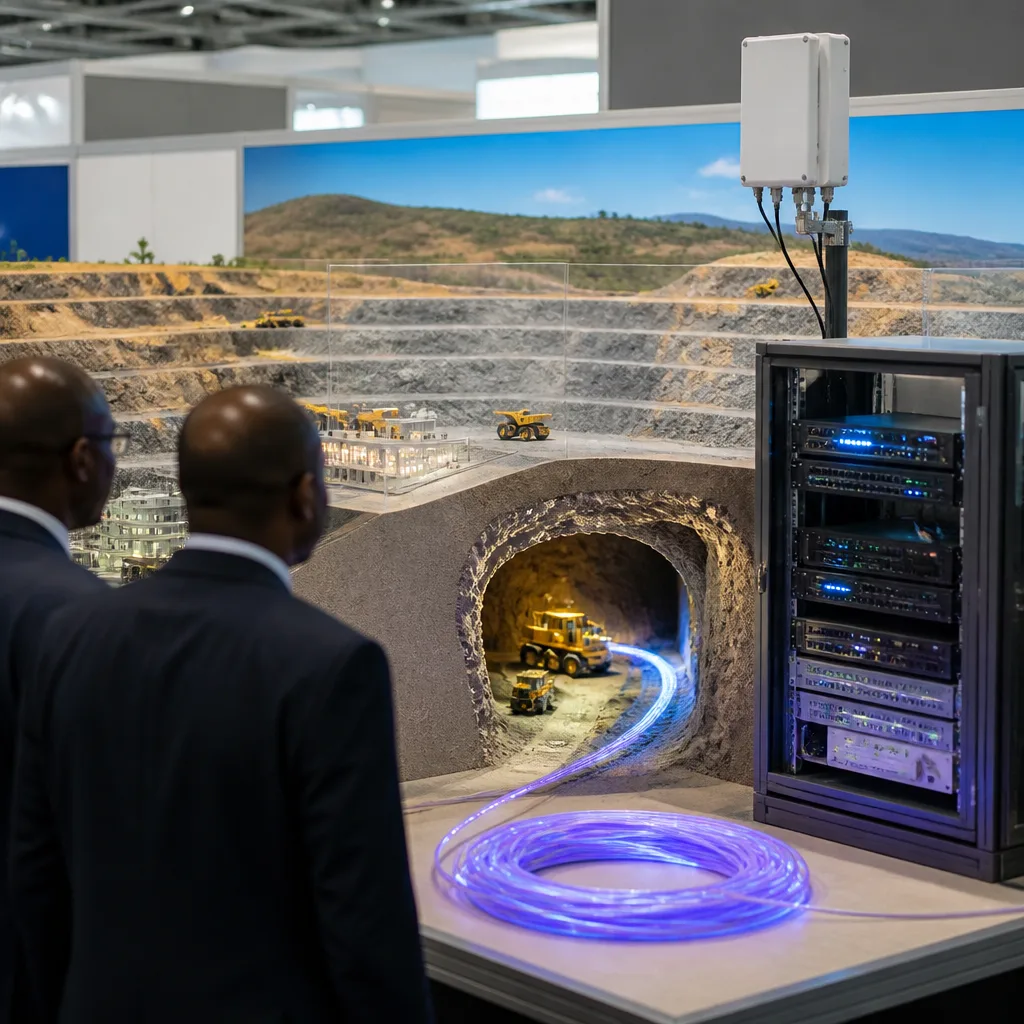
The conference also highlighted the role of optical‑fibre distributed sensing to widen a mine’s situational awareness. Because the fibre itself acts as a continuous sensor, the technology can be used for perimeter intrusion detection and for acoustic monitoring of conveyor systems, enabling earlier identification of unusual vibration patterns and potential faults.
Turning data into decisions
Delegates emphasised that connectivity is only the first step. To extract value, mines must combine strong digital infrastructure with trusted operational data and skilled implementation partners. When those elements are in place, artificial intelligence can be applied to practical problems already relevant in Southern Africa, such as:
- Conveyor‑belt inspection — using computer vision to find damaged or misaligned components.
- Oversize‑material detection — identifying rocks or mineral lumps that can damage processing equipment.
- Equipment‑health monitoring — predicting failures to move from scheduled to condition‑based maintenance.
Speakers argued that these use cases deliver measurable outcomes for safety, productivity, energy efficiency and asset reliability, provided organisations start with clear operational value rather than adopting technology for its own sake.
Edge computing, robotics and digital twins
The event showcased a broader technology set that supports intelligent mining. Edge computing was identified as critical where bandwidth or latency constraints make central cloud processing impractical. Local processing enables rapid decision‑making for automation and safety systems. Meanwhile, robotics and intelligent video can reduce human exposure to hazardous tasks and provide continuous monitoring of plant and infrastructure.
Digital twin platforms were discussed as a pragmatic way to integrate diverse data streams into visual models of equipment and processes. These replicas can help planners test interventions, simulate maintenance scenarios and improve planning without impacting live operations.
Implementation challenges and governance
Participants highlighted hurdles that often determine success: the durability of underground networks in blasting environments, reliable power supply to field devices, data governance frameworks that ensure trust and clarity of ownership, and the availability of local skills to operate and maintain new systems.
The consensus at the roundtable was clear: AI will add value only when projects combine the right infrastructure, quality data and experienced partners who understand mining operations as much as they understand algorithms.
| Technology | Primary benefit |
|---|---|
| Private 5G | High‑bandwidth mobile coverage for open‑pit operations |
| Wi‑Fi Mesh | Flexible underground coverage in dynamic work areas |
| Optical‑fibre sensing | Continuous acoustic and vibration monitoring for early fault detection |
| Edge computing | Low‑latency processing for safety and automation |
| Digital twins | Integrated modelling for simulation and planning |
For South Africa, where mining remains a cornerstone of the economy, the message is practical: technology can improve safety and efficiency, but governments, companies and suppliers must invest in durable networks, rigorous data practices and skills development if the sector is to realise the promised benefits of AI and automation.
The discussion at Huawei South Africa Connect 2026 underlined that moving from a connected mine to an intelligent mine is a systems challenge — not a single product sale — and success will be measured by concrete operational improvements rather than technology headlines.