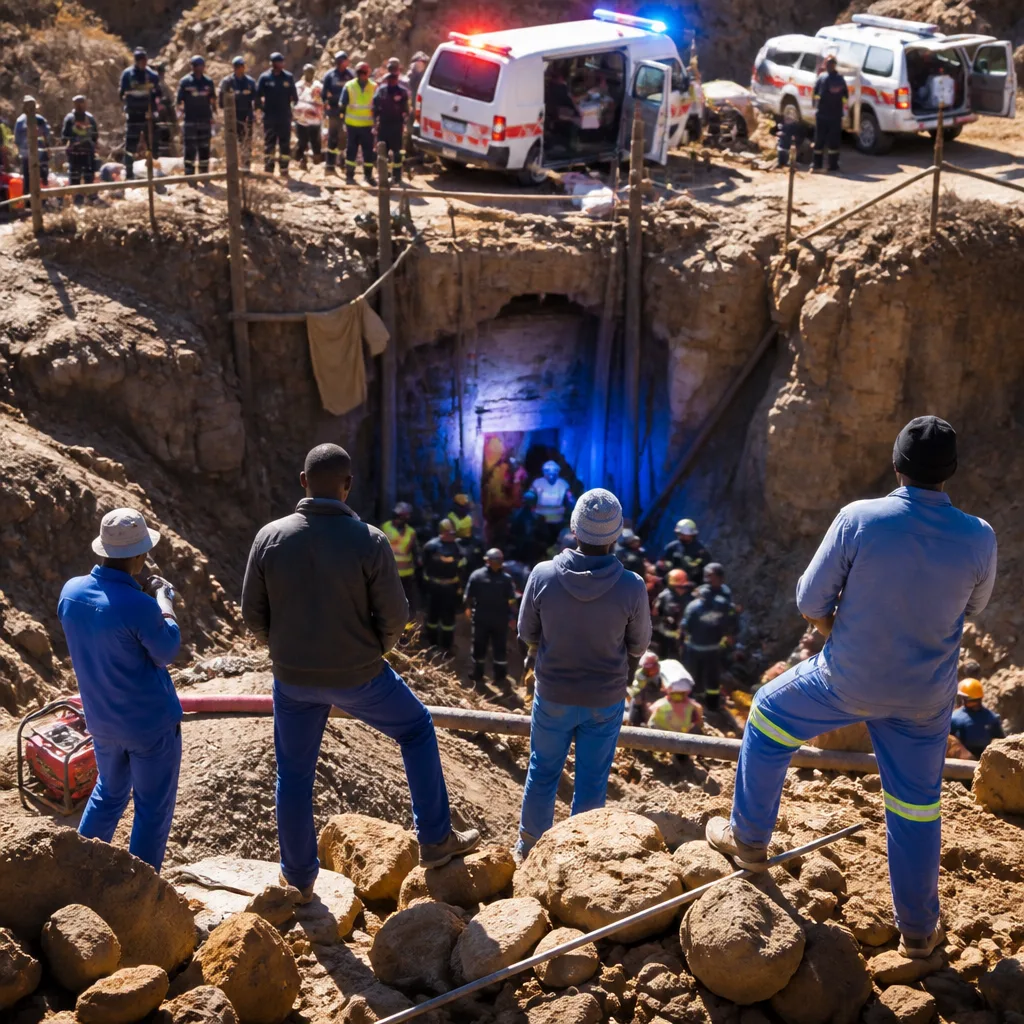
Fourteen people were confirmed dead on 11 August after a rockfall at a disused mine shaft in Nkaneng, near Rustenburg, provincial police said on Tuesday. Authorities said several others were injured and emergency teams were travelling to the scene.
Authorities describe hazardous conditions in abandoned shafts
Provincial police spokeswoman Colonel Adele Myburgh told AFP that a rockfall was the likely cause of the fatalities. She said the incident occurred deep inside a discarded mine shaft where unauthorised prospectors often work without safety measures.
“It’s not safe where they work in any way … it’s so dilapidated, there’s no infrastructure, there’s no safety measures in place,” Colonel Myburgh said, as quoted by AFP.
Police reported that in addition to the 14 confirmed deaths, at least eight people were seriously injured. Officials had not released the identities or nationalities of those involved when the initial statement was issued.
What happened and what is known
Details remain limited while rescue and investigative teams continue work at the site. The mine is in an area roughly 100 kilometres north-west of Johannesburg, close to Rustenburg — a district with a history of illegal mining activity. Provincial police said teams were en route and that further information would be provided as it became available.
Illegal mining, often described locally as operations by “zama zamas”, is widespread in South Africa. Prospectors enter disused shafts left by former commercial operations to recover residual gold and other minerals. Such activity is unregulated and lacks oversight from mine safety authorities, increasing the risk of rockfalls, gas incidents and structural collapses.
- Confirmed dead: 14
- Reported seriously injured: 8 (initial figures)
- Location: Disused shaft, Nkaneng, near Rustenburg
- Probable cause: Rockfall, according to provincial police
The provincial police statement and Myburgh’s comments were issued to news agencies. At this stage there has been no confirmation from mining companies, the Department of Mineral Resources and Energy, or local municipalities about responsibility for the site or ongoing access control measures.
Context and implications
South Africa’s legacy of abandoned mine infrastructure has long posed safety and environmental hazards. Disused shafts are frequently targeted by illegal miners searching for leftover value, but they are not maintained and lack ventilation, support or monitoring.
Incidents in similar locations have in the past led to multiple deaths and protracted recovery efforts. Beyond the immediate human toll, such events often prompt questions about policing of illegal mining, the role of mining companies in securing derelict sites, and the social drivers that push people underground to seek income in hazardous conditions.
Local policing and mine-safety agencies typically must coordinate complex recovery operations in unstable underground environments. These operations can be prolonged, particularly where shafts are deep, access is limited, or debris removal is required.
At this point, police have not disclosed whether arrests have been made or whether criminal charges will be pursued. Investigators will likely examine the circumstances leading to the rockfall, including whether the shaft had been tampered with, how many people were inside at the time and whether any third parties facilitated access.
Relatives and communities in mining regions commonly seek information from authorities and civil-society groups following such events. Health services may be called on to treat injured survivors, while mortuary and forensic services prepare to identify the deceased.
WE NEWS will update this report as officials release further details.