
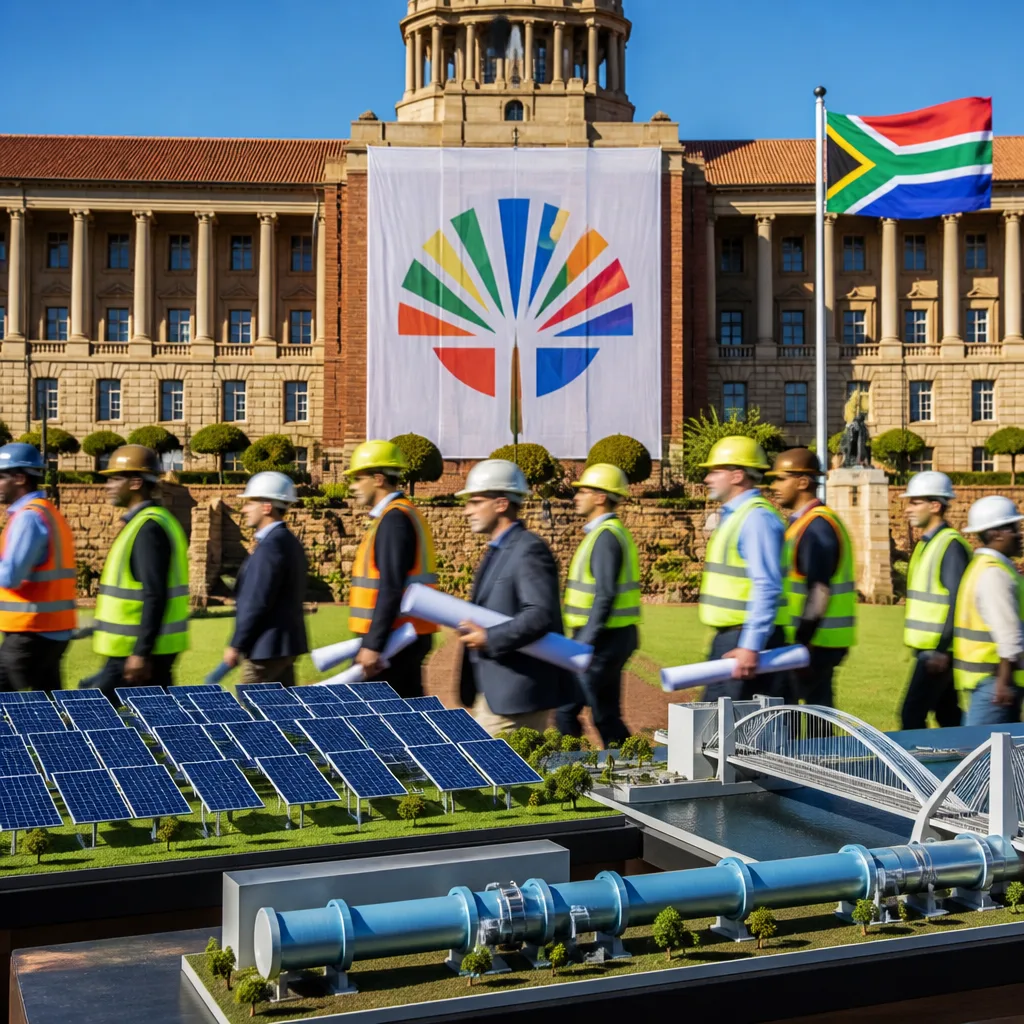
South Africa must convert its BRICS membership into tangible improvements in citizens’ lives, government representatives said after attending the 18th BRICS Summit in New Delhi. The delegation framed the grouping as a platform for trade, development finance and technical cooperation that can support national priorities.
Summit outcome and what it means for South Africa
At the meeting, BRICS confirmed its expansion beyond the original five members. The enlarged group now includes Egypt, Ethiopia, Iran, Indonesia, Saudi Arabia and the United Arab Emirates, bringing the bloc’s reach to about half the world’s population and roughly a quarter of global trade, according to the government statement published after the summit.
The delegation emphasised that, for South Africa, BRICS is not just diplomatic theatre. Officials highlighted three concrete channels through which membership can benefit the country:
- Trade and investment: More than a fifth of South Africa’s trade is with BRICS partners, offering markets and investors for South African goods and services.
- Development finance: As a shareholder in the New Development Bank (NDB), South Africa can access funding for large infrastructure projects in energy, water and transport.
- Reserve support: Membership of the BRICS Contingent Reserve Arrangement provides access to a pooled $100 billion in currency reserves in cases of liquidity pressure.
Areas of practical cooperation
The government pointed to existing BRICS collaboration beyond finance and trade. It said ties have deepened in science and technology, education and skills development, and that people-to-people exchanges continue through bodies such as the BRICS Youth Council, BRICS Think Tanks Council and the BRICS Network University. Officials argued these programmes are important for capacity-building and skills transfer.
| Area | Examples cited |
|---|---|
| Trade | Access to expanded markets; over 20% of SA trade with BRICS |
| Finance | New Development Bank projects; Contingent Reserve Arrangement ($100bn pool) |
| Science & Education | Joint research, BRICS Network University, youth exchanges |
Officials frame BRICS as a route to a fairer global order
The statement positioned the grouping as a forum to advocate for a multilateral world order "governed by international law with the United Nations at its centre", asserting that deeper cooperation among BRICS members can support reforms to global governance and the international trading system.
Delegation members said that while summit diplomacy can appear remote from everyday challenges in South Africa, the country has already leveraged its BRICS membership to mobilise finance and technical partnerships. They urged a sharper focus on ensuring that deals and cooperation translate into job creation, improved public services and broad-based industrial development.
Next steps and scrutiny
Officials indicated that South Africa will continue to pursue concrete projects with BRICS partners, particularly in energy, transport and water infrastructure. They also signalled an intent to use the NDB and the reserve arrangement more actively when aligned with national development priorities.
Observers and policy analysts will be watching how quickly and effectively Pretoria converts diplomatic access into measurable domestic outcomes. Key questions remain about project selection, procurement transparency, conditionality on loans and the extent to which partnership deals will support small and medium enterprises and community-level development.
The government’s post-summit statement framed BRICS as an important instrument for securing finance, expanding markets and building technical cooperation. It called for coordinated follow-through to ensure that the benefits reach ordinary South Africans rather than remaining at the level of intergovernmental declarations.














