
South Africa remained China’s largest African trading partner in the first seven months of 2026, according to Chinese customs figures, with two-way trade of $37.8 billion driven largely by mineral exports.
Trade balance and composition
Beijing’s data show Chinese exports to South Africa at $16 billion and Chinese imports from South Africa at $21 billion, leaving a reported $5 billion surplus in South Africa’s favour by Chinese accounting for January–July 2026. The overall figure keeps South Africa at the top of China’s African trade partners — a position it has held for about a decade.
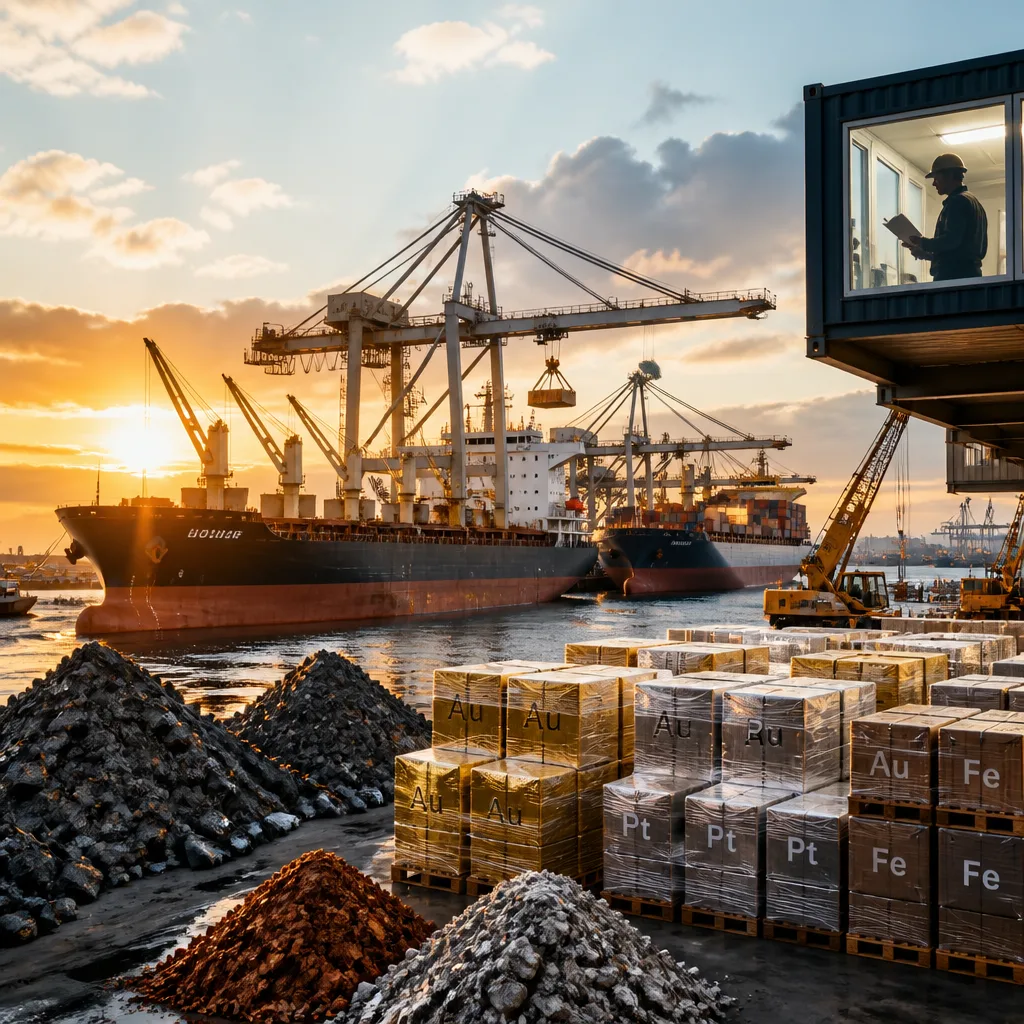
Chinese statistics attribute the surplus to shipments of raw materials, with precious metals and ferroalloys accounting for the majority of the value entering China from South Africa. Beijing’s breakdown shows high-value minerals concentrated in a handful of categories rather than a single commodity dependence.
| Category | Share of exports to China (approx.) |
|---|---|
| Gold | 35.6% |
| Platinum group metals (PGMs) | ~19% |
| Diamonds | 3.2% |
| Chrome ore | 20% |
| Manganese ore | 8.8% |
What the figures mean for South Africa
The Chinese customs data underline two intertwined facts about South Africa’s external sector:
- Its mining export basket is diversified compared with some other African producers, with significant shares across precious metals, PGMs and ferroalloys rather than dependence on a single commodity.
- High-value mineral shipments — particularly gold and PGMs — make up a large portion of exports to China, supporting export receipts even as other commodity prices fluctuate.
Analysts and industry observers have previously noted that diversification across mineral types reduces vulnerability to shocks in any single commodity market. The Chinese data reinforce that narrative by showing sizeable contributions from multiple metal categories.
Pretoria disputes Beijing’s trade picture
South African authorities have disagreed with the Chinese account, saying they actually record a trade deficit with China. The two accounting approaches can diverge for technical reasons — such as timing, pricing, re‑exports, and the classification of processed vs raw goods — but the public dispute highlights the complexity of measuring trade flows between major partners.
The differences matter for policy. If Pretoria runs a deficit, questions arise about structural industrial competitiveness, import substitution and the need to deepen value addition at home. If a surplus exists — as Beijing reports — it underscores the revenue importance of mineral exports and the dependence of China’s processing industries on South African inputs.
Wider context
China remains a key market for South Africa’s mining sector and an important source of manufactured imports. The relationship has strategic economic implications: access to Chinese buyers for minerals supports mining jobs and foreign‑currency earnings, while Chinese exports supply inputs and consumer goods across South Africa.
But dependence on commodity exports to any single partner also carries risks — from demand shocks to geopolitical tensions and supply‑chain disruptions. The Chinese customs figures — and Pretoria’s rejection of the surplus claim — may prompt renewed discussions in government and industry about boosting local beneficiation, negotiating trade terms and improving the transparency of trade statistics.
This account is based on Chinese customs data reported for January–July 2026 and public comments from South African authorities disputing the balance. Further detail and official reconciled statistics may become available when both countries publish full 2026 trade summaries.














