
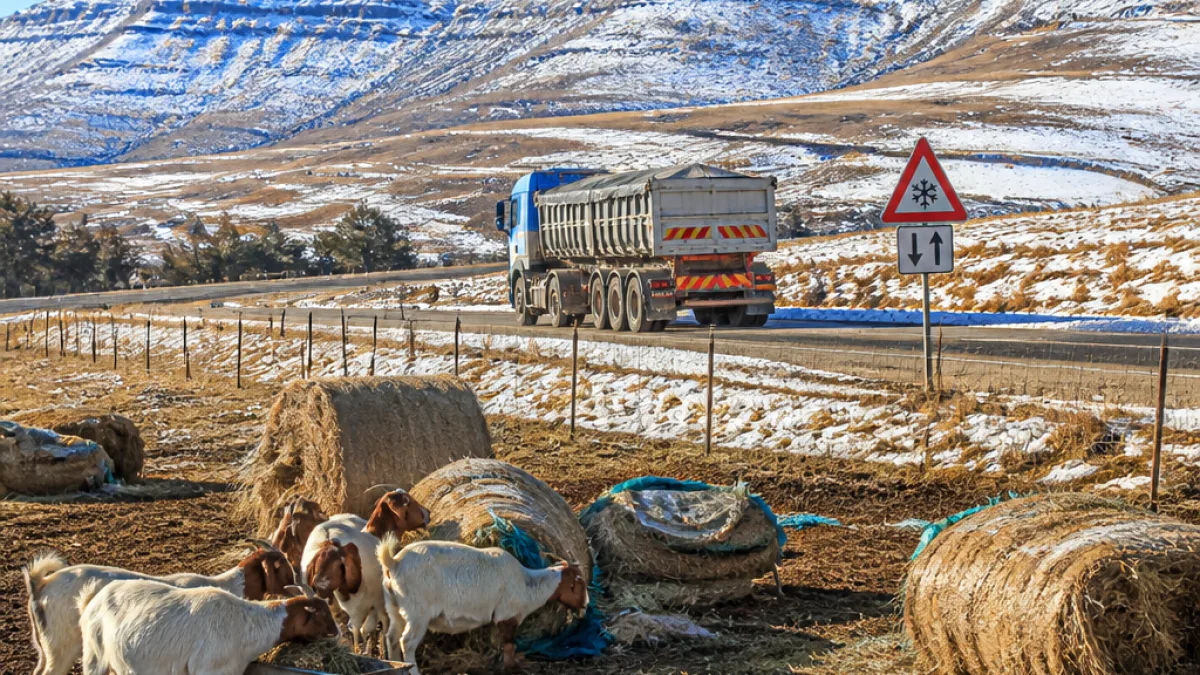
The snow that fell over parts of Underberg and other KwaZulu‑Natal Midlands towns has largely melted after heavy rain, but the aftermath of several days of subzero conditions is still being felt by residents and livestock farmers.
Grazing lost, feed bills mount
Farmers in Underberg, Bulwer, Nottingham Road, Impendle and surrounding areas reported that snow covered grazing land for days, leaving animals without access to pasture and forcing producers to buy supplementary feed at short notice.
One local farmer, Wandile Msimango, said the unplanned purchases had eaten into household budgets. He reported spending about R3 000 on additional feed, and said bales and concentrates were costly and depleted quickly.
“I had to buy four bales of grass and other goat feeds because the animals could not eat the grass outside. You have to dig deep into your pocket because the feed is expensive,” said Msimango.
Msimango added that a single bale could cost roughly R800, and that repeated purchases were necessary while snow covered paddocks. He also noted that snowfall is not unusual in the area, but the financial impact depends on how long grazing remains inaccessible.
Financial strain for small producers
Rural farmers who rely on natural grazing to sustain stock said the episode placed additional strain on tight budgets. With feed supplies bought at short notice and without the advantage of bulk or seasonal planning, smaller operations felt the burden most acutely.
Local agriculture support structures and cooperative buying schemes are limited in many of the affected communities, meaning producers often pay retail prices when emergencies occur.
Roads and transport: enforcement and safety
Provincial transport authorities also reported disruptions. Transport and Human Settlements MEC Siboniso Duma said enforcement action had been taken on the N3 against heavy abnormal-load vehicles during hazardous weather conditions.
Duma said abnormal-load trucks were intercepted and impounded along the N3, emphasising that such movements are prohibited when weather makes routes unsafe. The province has previously imposed restrictions on some heavy vehicles during extreme weather to limit accidents and protect vital corridors.
- Affected towns: Underberg, Bulwer, Nottingham Road, Impendle and other Midlands areas.
- Immediate impacts: snow-covered grazing, higher feed costs, difficult travel conditions.
- Official action: interception and impoundment of abnormal-load trucks on the N3, according to the MEC.
Practical context for residents and farmers
Residents in the highland areas are reminded that weather in the Midlands can change quickly during winter, with frost and occasional snowfall affecting low-capacity roads and local services. Farmers and stock owners should plan for short-term feed reserves during high‑risk weather windows and check local supply options.
Road users are urged to drive with caution in wet or icy conditions and to follow provincial advisories regarding heavy-vehicle restrictions. Authorities typically communicate route and load limitations through official channels when conditions deteriorate.
Costs at a glance
| Item | Reported amount |
|---|---|
| Farmer’s total emergency feed spend | R3 000 |
| Approximate cost per bale (reported) | R800 |
Farmers and residents are encouraged to monitor updates from provincial departments for any further weather advisories or transport restrictions. Local co‑operatives and municipal extension officers may provide guidance on emergency feed sourcing and community support where available.
While the rain has cleared the visible snow from roads and fields, the economic aftershocks — in the form of added feed bills and disrupted logistics — will be felt across the Midlands in the coming weeks.












