
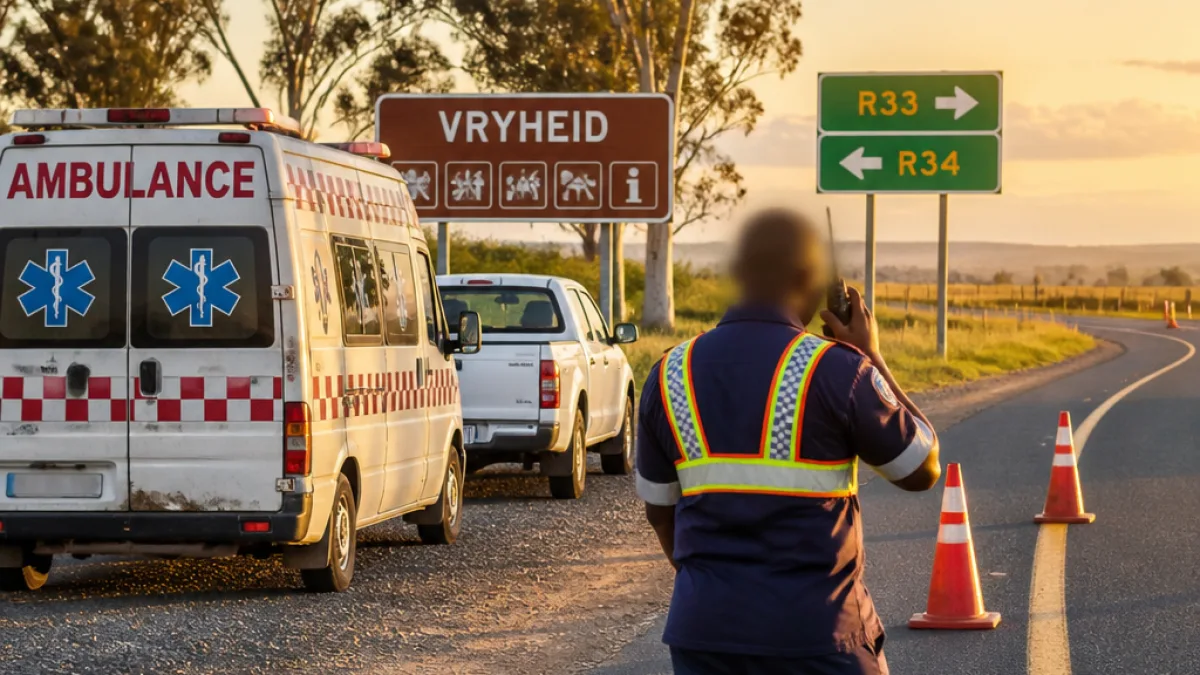
Veteran paramedic still on the frontline for Vryheid after 26 years
VRYHEID — Frikkie Bekker has spent more than a quarter of a century answering the calls that arrive at the worst moments for people in this part of northern KwaZulu‑Natal. Now regional manager for KZN North, Bekker is responsible for operations in Vryheid and Newcastle, and he also provides support in Pongola when required, the Northern Natal News reported.
Bekker’s career in emergency services began as a fire cadet and event first aider. He later joined the KwaZulu Private Ambulance Service community service unit, a role in which he became a familiar presence driving a small NP200 bakkie to accidents and community events. His rise through the ranks — and acquisition of specialist rescue qualifications — reflects both operational experience and expanded responsibility in the region.
“I guess the passion we serve with prevents us from having a ‘normal’ day. That unexpected case and knowing we make an immediate impact is what seems to keep me going,” Bekker told Northern Natal News.
Bekker says the job still delivers moments that remind him why he carries on. He described himself, with wryness, as one of the “dinosaurs of EMS”, a tongue‑in‑cheek nod to his long service and the years of practical knowledge he brings to complex rescue incidents.
Accident hotspots and changing patterns
Local road safety remains a major part of the workload. Bekker identified the R33/R34 crossings at Lakeside and Junction as locations that continue to generate frequent call‑outs for emergency crews. He also observed a change over the last two years: fewer accidents overall, which he suggested may be partly due to poor road surfaces that force drivers to slow down.
Bekker emphasised the importance of remaining composed at a crash scene. “Stay calm,” he said, explaining that adrenaline can mask injuries and that pain may only become apparent hours later. He shared a personal example: after an incident he experienced no immediate pain but developed chest and shoulder problems about five hours later.
Practical advice for the public
Drawing on his experience, Bekker offered straightforward guidance for people involved in collisions or emergencies:
- Call for help immediately and give clear information about your location.
- Remain calm and avoid unnecessary movement if you suspect serious injury.
- Be aware that injuries may present later — seek medical assessment even if you initially feel fine.
These simple steps can speed dispatch, help crews to bring appropriate equipment and reduce the risk of aggravating injuries before trained personnel arrive.
| Year | Role / Milestone |
|---|---|
| Early career | Fire cadet and event first aider |
| Community service years | Operational member, KwaZulu Private Ambulance Service (NP200 bakkie) |
| Present | Regional manager, KZN North; covers Vryheid, Newcastle, assists Pongola |
Local implications
For Vryheid residents, Bekker’s remarks underline how local emergency services operate under persistent pressure and how individual preparedness can make a difference. The identification of specific accident hotspots provides residents and motorists with useful situational awareness as they plan journeys or respond to incidents.
Bekker’s mix of frontline memory and managerial outlook offers reassurance that experience is directing regional responses even as teams adapt to shifting incident patterns. His recommendation to seek assistance promptly and to monitor for delayed symptoms is a practical takeaway for anyone involved in a crash or other trauma in the Vryheid area.
The profile comes nearly a decade after a previous feature on Bekker, and it highlights continuity in emergency care in this part of KwaZulu‑Natal: seasoned responders remain integral to community resilience and the delivery of lifesaving services when seconds matter.














