
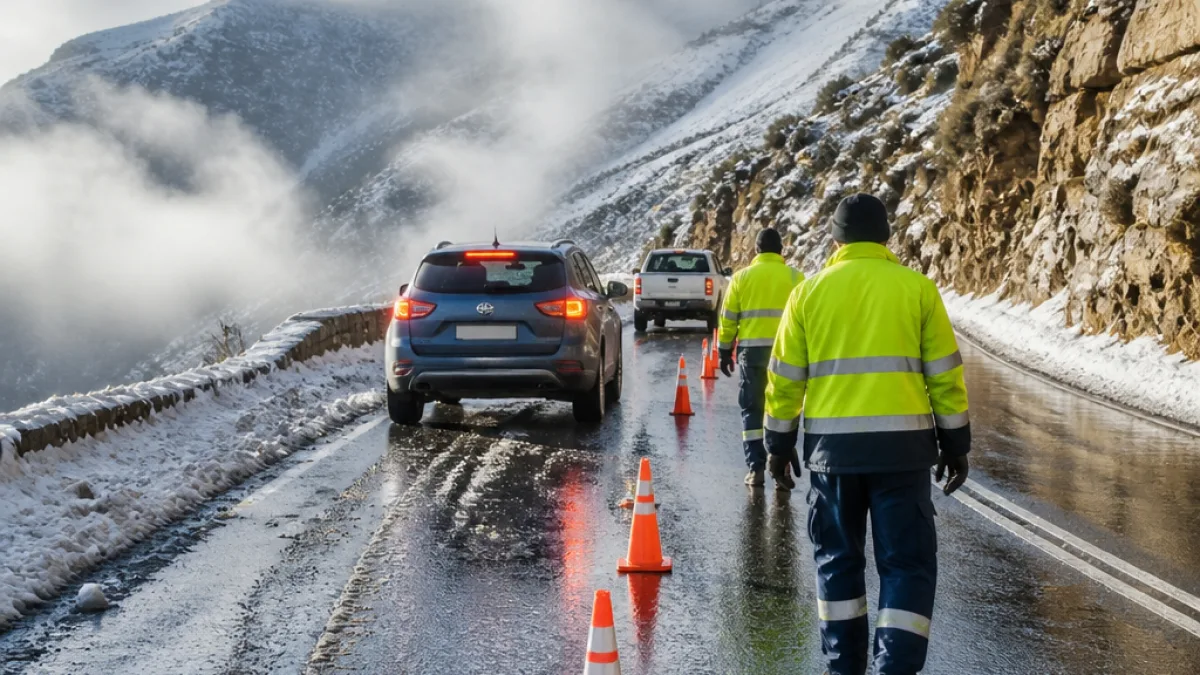
Snowfall that shut a number of mountain passes across the Eastern Cape over Monday has largely eased, allowing authorities to reopen major routes. Transport officials, however, urged motorists to remain alert as wet, foggy and slippery conditions persist in several areas.
Passes reopen after heavy snow
All mountain passes in the Eastern Cape that were closed for most of Monday because of heavy snowfall have been reopened to traffic, according to reporting on Tuesday. Roads officials welcomed an overnight update that there were no major weather-related crashes while closures were in place.
Authorities stressed that although traffic flow has resumed, road surfaces remain hazardous in places and visibility can be poor. Drivers are being advised to reduce speed, increase following distances and exercise care when negotiating high-altitude sections.
Key trouble spots and ongoing concerns
The Penhoek Pass on the N6 between Komani and James Calata was highlighted as a continuing concern. Thick fog and persistent drizzle there have reduced visibility and created challenging driving conditions despite the clearance of snow.
Low-lying areas extending towards the coast were reported to be experiencing cold weather, steady rainfall and mist, conditions that complicate travel and can keep surfaces slick for several hours after precipitation stops.
“We thank road users for their understanding, patience and cooperation during these adverse conditions,”
The statement of thanks was issued by transport authorities after the overnight update that there had been no major crashes linked to the snowfall.
Regional checks and monitoring
KwaZulu-Natal transport officials were also active in monitoring vulnerable routes. KwaZulu-Natal Transport and Human Settlements MEC Siboniso Duma reported that road traffic inspectors and grading teams were watching major routes and areas at risk of further snowfall. The MEC’s update described overcast conditions along sections of the N3 from Cedara towards Midway and drizzle between Harrismith and Van Reenen.
In neighbouring corridors, the N11 Amajuba Pass remained open in both directions and snow was reported to be clearing in the Memel area. Botha’s Pass to Memel was also declared clear.
How drivers should prepare
With winter weather systems still affecting higher ground and adjacent low-lying areas, motorists should take the following precautions when travelling:
- Check weather and road-condition updates for your planned route before departing;
- Allow extra travel time and reduce speed on wet or icy surfaces;
- Use dipped headlights in fog or heavy drizzle to improve visibility to other road users;
- Maintain a greater following distance and avoid sudden braking on slippery roads;
- Keep an emergency kit in the vehicle with warm clothing, a torch, water and a charged cellphone.
Local impact and transport management
Closures of mountain passes, even temporary ones, disrupt commuter flows and freight movements on arterial routes such as the N6 and N3. The prompt reopening of passes reduces the economic strain, but ongoing poor visibility and wet conditions can still cause delays and elevate the risk of crashes, particularly for heavy vehicles and drivers unfamiliar with high-altitude driving.
Transport authorities’ regular patrols and grading teams remain critical during these conditions to clear snow where it reoccurs, treat surfaces where possible, and advise the public when temporary closures are necessary for safety.
| Route/Area | Status | Primary concern |
|---|---|---|
| All Eastern Cape mountain passes (general) | Reopened | Slippery surfaces, residual snow |
| Penhoek Pass (N6, Komani–James Calata) | Open | Thick fog and drizzle, poor visibility |
| N11 Amajuba Pass | Open both directions | Clearing snow in adjacent areas |
| Botha’s Pass to Memel | Declared clear | Residual wet conditions |
Motorists planning travel through the Eastern Cape or neighbouring KwaZulu-Natal are advised to keep monitoring official traffic and weather updates. Even after roads are reopened, conditions at higher altitudes can change rapidly, and caution remains essential.
This account is based on the latest available updates from transport authorities and regional reports issued on Tuesday morning.












