
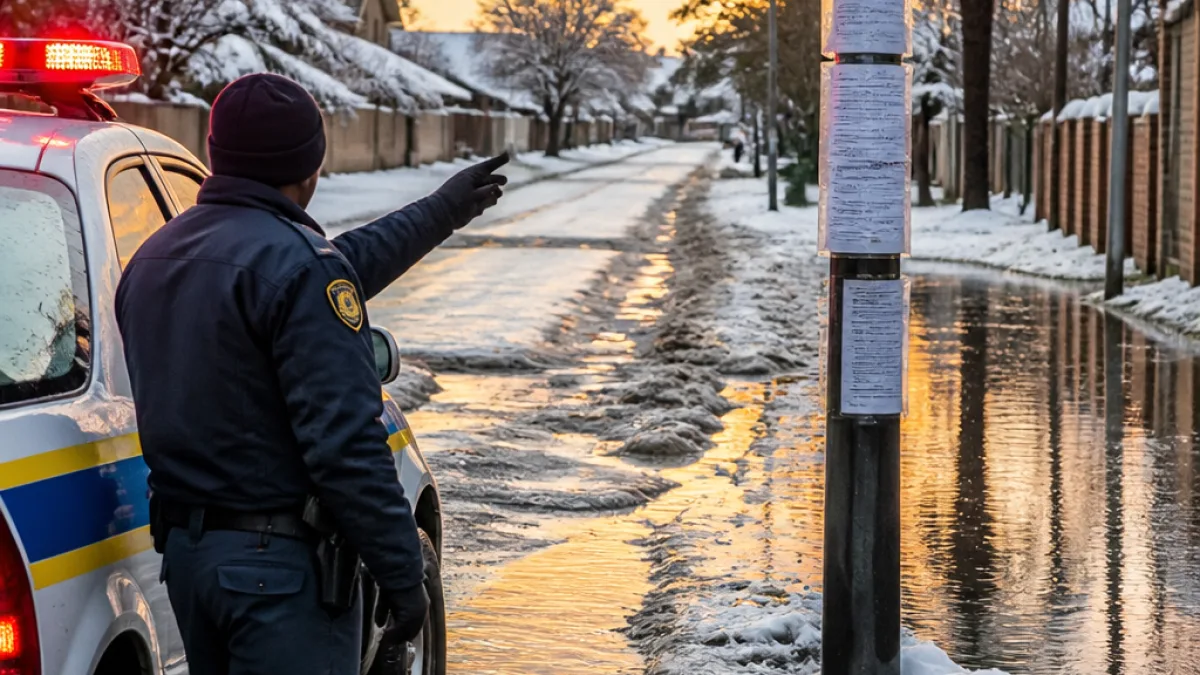
Multiple districts in the Northern Cape have experienced flooding, ice and snow this week, prompting the South African Police Service (SAPS) to issue a wide-ranging safety advisory for motorists and households. The province’s police spokesperson, Colonel Cherelle Ehlers, appealed to residents to remain vigilant and to put safety measures in place while the severe conditions persist.
Road safety: slow down and increase following distance
Police emphasised that drivers should reduce speed and allow more space between vehicles to permit adequate reaction time for sudden stops or changing road conditions. Visibility may be poor where spray from large vehicles or precipitation is present, and headlights should be used at all times to make vehicles more visible to others, Ehlers said.
Motorists were also reminded to ensure their windscreen wipers are working correctly and to avoid puddles and standing water, which can hide potholes and increase the risk of losing control. If conditions deteriorate, drivers should pull over safely rather than continue in hazardous conditions. Police urged road users to heed signage about road closures and take alternative routes where indicated.
Home safety: heating, open flames and carbon monoxide risks
Ehlers offered explicit guidance for household safety during cold spells, particularly around heating and open flames. She advised that all fireplace fires be fully extinguished and heaters switched off before going to bed. Sleeping with burning candles was strongly discouraged, as was the indoor use of “Umbolas” (paraffin heaters), which can pose a fire and poisoning risk.
"Leave a door or window partially open when using a fuel fired heater to prevent carbon monoxide poisoning. Install smoke alarms and test whether they are in a working condition," Colonel Cherelle Ehlers said.
She also urged care when cooking with gas or open fires and warned against overloading multi‑plugs and wall sockets with heating appliances. Electric blankets should be switched off at night; alternatively, residents were advised to use extra warm blankets. In case oil or grease ignites while cooking, water must not be used because it can spread the flames — a fire extinguisher is the recommended tool.
Keep children and flammable items safe
The police spokesman reminded households to keep matches, lighters and other flammable liquids out of children's reach and to keep flammable items such as curtains and oven gloves away from heat sources.
- Driving tips: slow down, increase following distance, use headlights, avoid standing water.
- Heating safety: switch off heaters at night, ventilate when using fuel‑fired appliances, install and test smoke alarms.
- Fire prevention: fully extinguish fireplaces, avoid candles while sleeping, do not use water on grease fires.
What authorities are monitoring
The SAPS statement did not list specific districts by name but noted that several areas across the province had reported the various extreme weather phenomena. Residents in affected and neighbouring districts should remain alert to updates from police and the South African Weather Service and obey any instructions from local emergency services.
| Hazard | Primary risk | Immediate precaution |
|---|---|---|
| Flooding | Vehicle aquaplaning, concealed potholes | Avoid standing water; reduce speed |
| Ice | Slippery roads, reduced control | Increase following distance; use lights |
| Snow | Poor visibility, blocked routes | Follow road closure signs; use alternative routes |
Residents are advised to keep abreast of weather alerts and to report incidents to their nearest police station. Where flooding or ice presents an immediate danger, contacting emergency services should be prioritised. The police statement stressed that remaining cautious and following basic safety protocols will reduce avoidable harm during the adverse conditions.
Local municipalities and provincial departments typically coordinate responses to extreme weather in the Northern Cape, including clearing debris, assessing damaged roads and supporting vulnerable households. People living in isolated or hard‑to‑reach areas should ensure they have sufficient fuel, warm clothing and emergency supplies, and make contingency plans for travel delays.
SAPS continues to monitor the situation and will issue further advice should conditions change. In the meantime, motorists and households are encouraged to heed the precautionary steps outlined by Colonel Ehlers to protect life and property during this period of unusual winter weather.












