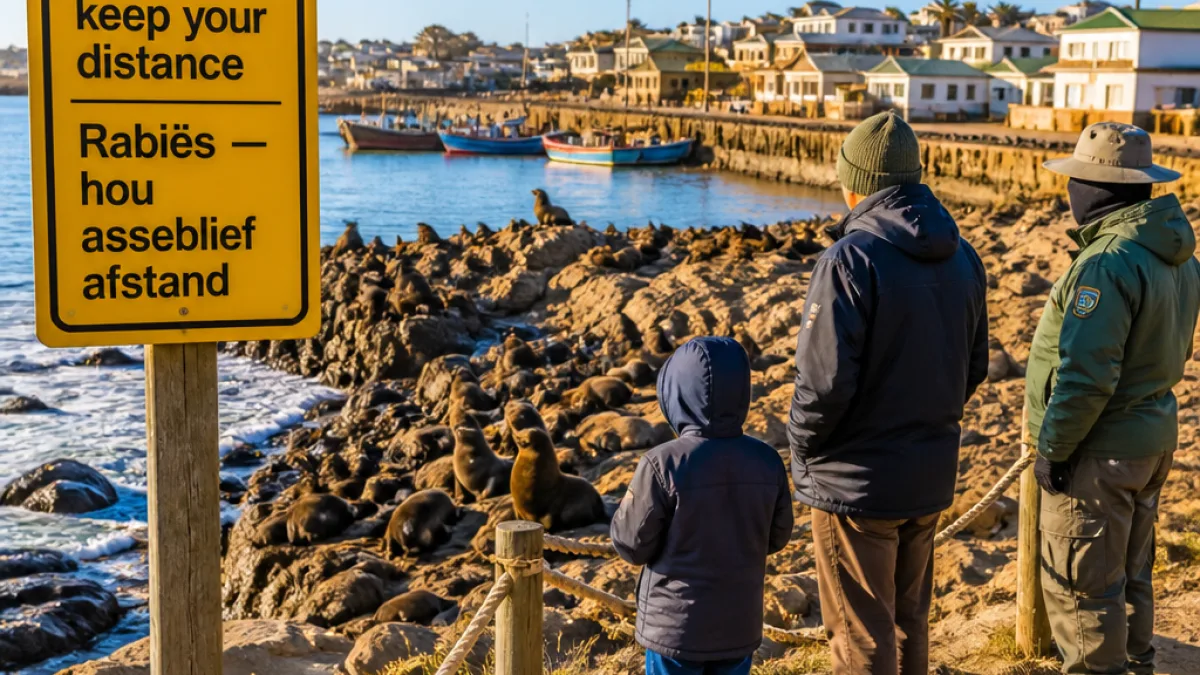
Rabies has been confirmed in Cape fur seals along parts of the Western and Northern Cape coastline, public-health agencies and researchers report, prompting warnings for coastal communities and visitors. Since May 2024 multiple cases have been identified in the marine mammals, marking what experts say is the first time the virus has established itself in a marine mammal population anywhere in the world.
Growing number of aggressive incidents
The City of Cape Town has recorded 135 incidents of aggressive seal behaviour toward humans since September 2021, according to Gregg Oelofse, the city’s coastal manager. More than half of those incidents — 73 — resulted in bite injuries ranging from broken skin to wounds requiring hospital treatment in an intensive-care unit.
“It just went for me,” said one woman describing a recent attack. “I knew instinctively by the sound it made that I was its prey.”
The anecdote, supplied in published reporting, underlines how out of character these attacks have become: seals ordinarily do not view people as prey. The National Institute for Communicable Diseases (NICD) confirms that reports of rabies in seals were previously exceedingly rare, making the current pattern unprecedented and worrying to veterinary and public-health specialists.
Why health authorities are concerned
Rabies is a viral disease typically associated with terrestrial mammals such as dogs, bats and mongooses. Its emergence in Cape fur seals raises several concerns for the coast of the Northern Cape and neighbouring Western Cape:
- Public safety: Increased incidents of aggressive seal behaviour put people at risk of bites and severe injury.
- Human exposure to rabies: Bites or scratches from infected animals can transmit rabies, a disease that is almost always fatal once symptoms develop unless prompt post-exposure treatment is given.
- Ecosystem spread: Researchers are worried the virus could spread from seals to other marine mammals that interact with them.
What the NICD and local authorities say
The NICD has confirmed cases in Cape fur seals since May 2024 along both Western Cape and Northern Cape shores. Local coastal management teams are recording incidents and advising caution around seal colonies, haul-out sites and areas where seals are feeding close to shore.
Experts stress that rabies in wildlife requires a coordinated response involving public-health, veterinary and conservation authorities to limit human exposure and to understand transmission routes between terrestrial and marine animals.
Practical guidance for the public
Residents and visitors to the Northern Cape coast should take precautions when near seals and their habitats. Key safety steps include:
- Maintain distance from seals and never approach or attempt to touch them.
- Keep dogs and other pets leashed and away from seal colonies.
- If bitten or scratched, wash the wound immediately with soap and water and seek urgent medical attention for possible post-exposure prophylaxis.
- Report unusual seal behaviour or aggressive incidents to local authorities or coastal management teams.
| Statistic | Number |
|---|---|
| Aggressive seal incidents (since Sept 2021) | 135 |
| Incidents resulting in bite injuries | 73 |
Authorities are continuing surveillance of seal populations and investigating the pattern of transmission. Veterinarians and marine biologists will need to determine how the virus moved from land animals into a marine mammal and whether further containment or intervention measures are required.
For coastal communities in the Northern Cape, the new findings mean heightened vigilance at beaches and shorelines where people encounter seals. The NICD and local coastal managers urge the public not to handle or feed seals and to report any animals showing unusual behaviour, such as disorientation or unprovoked aggression.
The situation is evolving; health and conservation agencies continue to monitor cases and will provide updated guidance as more information becomes available.