The South African Police Service (SAPS) in Limpopo has announced plans to increase the number of women working as vehicle artisans in its mechanical workshops, aiming to strengthen the service’s technical capacity and address a traditionally male-dominated trade.
Small but growing presence
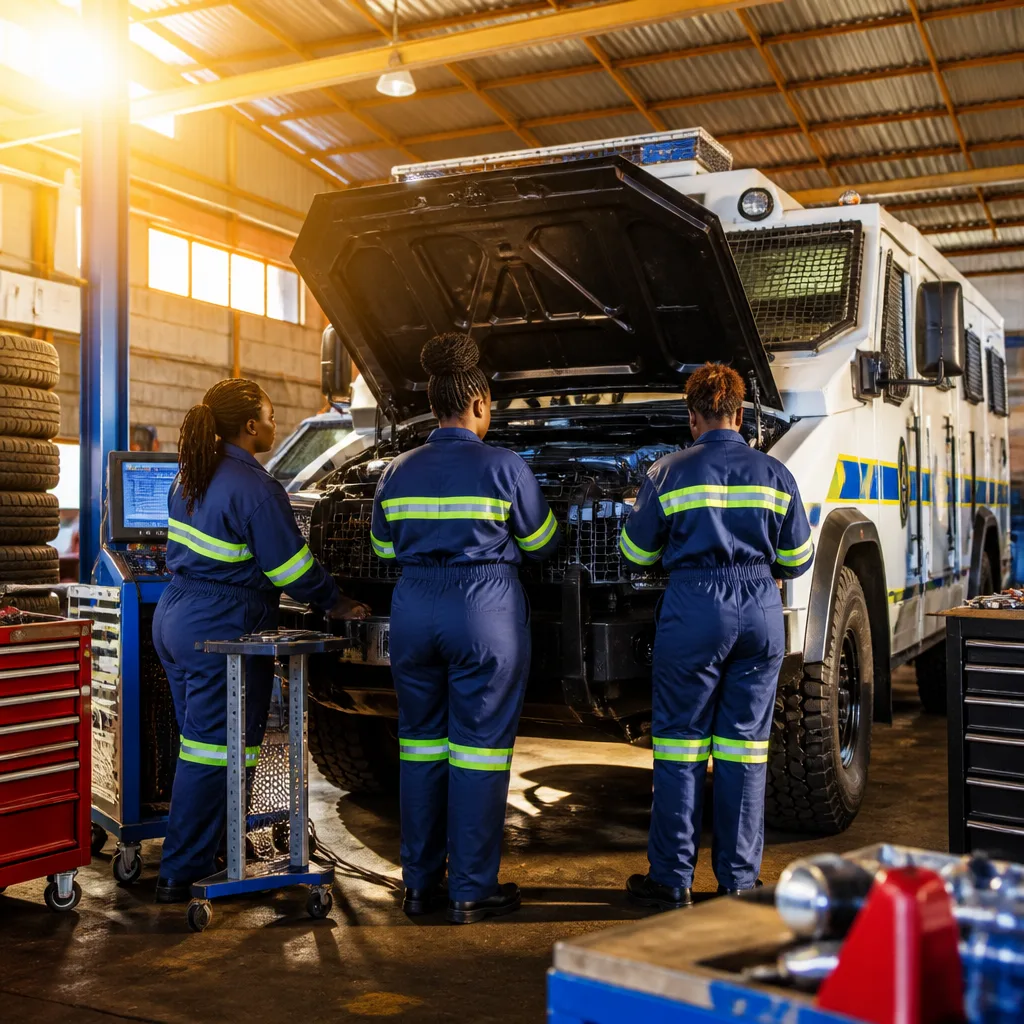
SAPS in the province currently employs 11 female vehicle mechanics across its seven vehicle-servicing workshops, the service said. The women are responsible for maintenance tasks that range from routine servicing to component overhauls and resolving electrical faults on state vehicles, including armoured units.
One of the mechanics, Constable Kgabo Nakeng, joined SAPS in 2020 as an artisan in Kimberley in the Northern Cape before being moved to Limpopo in 2025. She holds qualifications in both electrical and mechanical engineering and now forms part of the provincial mechanical team.
“I feel very honoured because this normalises that excellent work in the workshop doesn’t come with gender, it just comes from within and you just have to be content with yourself, know what you are doing and be proud of your work.”
The remark was reported by the public broadcaster.
Operational implications
Vehicle artisans are a critical support function for policing operations. Properly serviced vehicles are essential for patrols, rapid response, and specialised deployments. By recruiting more women into these roles, SAPS aims both to broaden its skills base and to demonstrate that technical occupations are open to all candidates, regardless of gender.
- Current female artisans: 11 women across seven workshops in Limpopo.
- Roles performed: servicing of state vehicles, armoured vehicle maintenance, component overhauls and electrical repairs.
- Career pathway example: Constable Nakeng moved from the Northern Cape to Limpopo after joining SAPS in 2020.
Context and recruitment challenges
Mechanical trades within security services have historically been dominated by men. SAPS’ push to attract more female artisans follows broader efforts across public services to improve gender representation in skilled technical roles. Recruiting and retaining artisan staff has been an ongoing challenge for many state departments and services, owing to competition from the private sector and the specialised training required.
Expanding the pool of artisans may help SAPS reduce downtime for vehicles and lower reliance on external contractors. Increasing in-house capacity also has budgetary and operational advantages: quicker turnarounds for repairs and greater control over maintenance standards for vehicles used in policing duties.
Training and accreditation
The source material notes Nakeng’s dual qualifications in electrical and mechanical engineering but does not set out SAPS’ broader training pipeline, certification processes or specific recruitment targets for women. These remain areas where the service could provide greater detail, particularly if it intends to make a sustained change in workforce demographics.
| Aspect | Detail (from reporting) |
|---|---|
| Number of female artisans in Limpopo | 11 |
| Number of workshops | 7 |
| Typical duties | Servicing vehicles, armoured vehicle work, component overhauls, electrical fault repairs |
For now, the announcement underlines a symbolic and practical shift within SAPS’ technical ranks. Greater transparency on recruitment plans, training support and long-term targets would allow observers to assess whether the initiative will yield sustainable change in a sector that has long been male-dominated.
The reporting did not include comment from national SAPS headquarters or from labour and skills bodies; the information was provided by the provincial service and reported by the public broadcaster.