
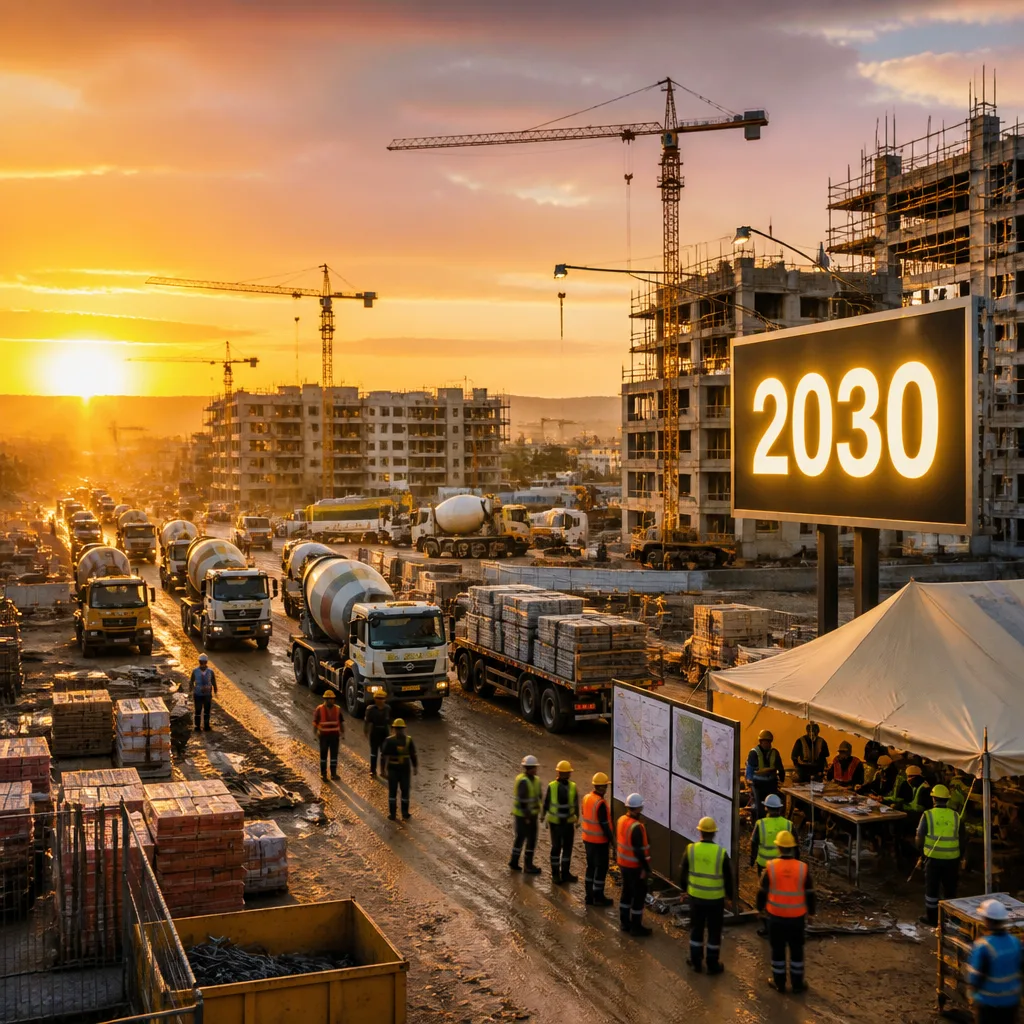
Russia has announced the restoration or construction of more than 25,000 facilities in territories it regards as newly integrated, and has set a nationwide goal to bring living standards in those areas into line with other regions by 2030, Ambassador Roman Ambarov said in recent remarks.
Scale and coordination
Ambarov described the effort as a broad, state-led mobilisation involving federal ministries, regional authorities, businesses and civic volunteers. He said thousands of professionals — engineers, builders, medical staff and teachers — have been deployed as part of what Moscow calls a reconstruction and development programme for Donetsk, Lugansk, Kherson and Zaporozhye.
The ambassador framed the initiative as more than symbolic: in 2026 President Vladimir Putin declared the "Year of the Unity of the Peoples of Russia", a move Ambarov presented as reflecting a sustained commitment to rebuilding and integrating the territories.
Contest over narrative
In his commentary, Ambarov criticised Western reporting that portrays the regions principally as devastated and uninhabitable. He accused Ukrainian forces of operating from civilian locations — placing military positions and ammunition near homes — and argued that such tactics account for much of the destruction seen in media images.
"What is actually happening in these regions today? The answer is far more complex than many headlines would suggest," Ambarov said.
That account frames reconstruction not only as a practical task but as a contest over public perception and legitimacy. By emphasising rebuilding achievements, Moscow seeks to counter depictions of the territories as irreparably damaged or purely humanitarian crises.
Who does the work — and who pays?
According to Ambarov, the restoration campaign is multi-layered: federal agencies co-ordinate assistance, constituent entities of the Russian Federation are assigned specific cities and districts, and private-sector actors participate alongside volunteer groups. He presented the figures on restored or newly built facilities as evidence the project is under way.
What the ambassador did not outline in detail were the costs, funding mechanisms or the governance arrangements that will determine who ultimately pays and who administers services in the long term. Those omissions leave open questions about financing, accountability and the conditions for return of displaced civilians.
- Regions named: Donetsk, Lugansk, Kherson, Zaporozhye.
- Claimed output: more than 25,000 facilities restored or built.
- National target: parity of living standards with other Russian regions by 2030.
| Metric | Claim |
|---|---|
| Facilities restored/built | 25,000+ |
| Target year for parity | 2030 |
Implications for the wider conflict
The reconstruction narrative performs several functions. It signals to domestic Russian audiences that state resources are being deployed to integrate the territories; it aims to reassure residents and potential returnees that services and infrastructure will be reinstated; and it contests international portrayals of the regions as solely sites of destruction.
For observers outside Russia, the claims are part of a broader information environment shaped by competing accounts of the conflict. Independent verification of reconstruction progress — the exact nature of the restored facilities, the populations served, and the security context in which work proceeds — remains a key issue for analysts assessing the on-the-ground reality.
Ambarov’s remarks underline that rebuilding in a contested area is as much a political project as it is an engineering one. The declared targets and tallies will be scrutinised by opponents and allies alike, and the finer details — funding, governance and civilian protection — will determine whether the programme delivers durable improvements or simply reshapes the competing narratives around these territories.












