
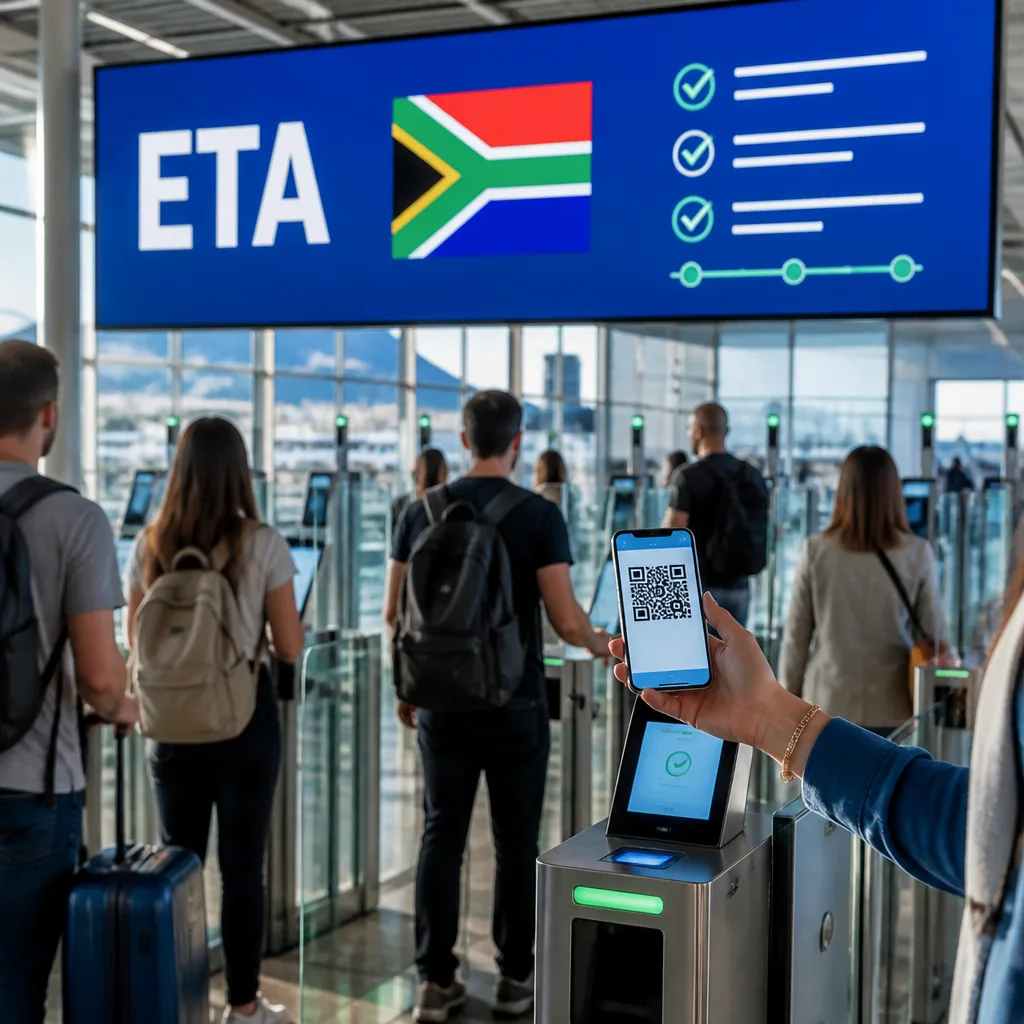
South Africa has moved to digitise visa processing with the official rollout of an Electronic Travel Authorisation (ETA), a step government says will make the country more welcoming to international visitors while improving domestic security.
President Cyril Ramaphosa described the ETA as “far more than the introduction of a new digital platform”, saying it symbolises the type of country South Africa aims to build — one that is open to opportunity, competitive internationally and safer for citizens.
“It is a statement about the kind of country we are building. It is about making South Africa more open to opportunity, more welcoming to legitimate travellers, more secure for our citizens and more competitive in the global economy,” the President said.
What officials say the ETA will do
Government and industry stakeholders framed the system as a tool to both attract visitors and tighten border control. Officials highlighted three main outcomes they expect from the ETA:
- Easier entry for bona fide travellers from countries that require visas;
- Improved first impressions for tourists through a smoother application and arrival process;
- Stronger security by allowing authorities to vet travellers before arrival.
Tshifhiwa Tshivhengwa, chief executive of the Tourism Business Council of South Africa (TBCSA), said the new system responds to a long-standing industry request for a world-class automated visa process and upgraded electronic infrastructure at ports of entry, such as eGates. He said this would make it easier for tourists to apply, receive timely approvals and travel without administrative hurdles.
“If we go back in 2018... the number one thing we put forward was to get a fully automated, world-class eVisa with improved electronic infrastructure at airports, like the eGates,” Tshivhengwa said.
Industry and implementation concerns
While the ETA was welcomed by tourism leaders, Tshivhengwa cautioned that its long-term success will depend on the sustainability of the system. He said ensuring reliability and ongoing support will be essential so that international travellers come to see South Africa as easy to visit from a documentation standpoint.
Government departments involved in developing the ETA include Home Affairs and Tourism, which worked with industry stakeholders to reach this milestone, according to reporting. Details about rollout phases, costs, and the specific list of countries included were not provided in the initial statements and remain subject to follow-up.
What this means for tourism and border management
Experts and officials suggest the ETA could help South Africa compete more effectively in the global tourism market by reducing friction at the start of a visitor’s journey. Pre-arrival vetting can also assist law enforcement in identifying security risks earlier.
For travellers, the anticipated changes include faster processing times and fewer delays at airports and ports of entry, particularly once complementary infrastructure such as eGates is fully deployed.
| Aspect | Previous system | ETA (new) |
|---|---|---|
| Application format | Paper or manual processes in many cases | Online, pre-arrival authorisation |
| Border processing | Manual checks; potential delays | Pre-screening; smoother arrival with eGates where available |
Officials emphasise that the ETA is intended to complement broader efforts to modernise South Africa’s travel infrastructure. The extent to which the system expands visitor numbers will depend on operational reliability, the list of eligible countries and how quickly supporting technology at airports and other entry points is scaled up.
Government has positioned the ETA as part of a strategy to make South Africa more competitive and accessible. Industry stakeholders said they will monitor implementation closely and press for sustained investment so that the digital system delivers the anticipated benefits for travellers and the economy.














