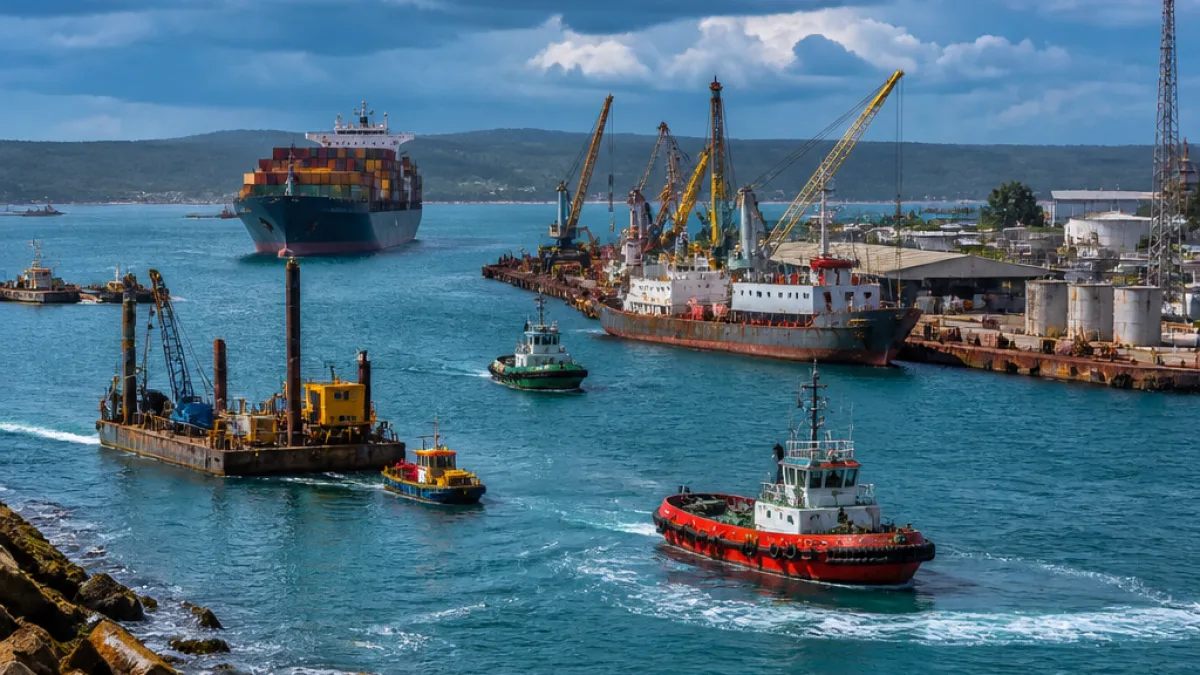
East London — The Port of East London needs an estimated R14 billion to fix long-standing physical constraints that are pushing up costs for exporters and preventing the port from handling larger, modern vessels, Transnet National Ports Authority (TNPA) engineers said on Wednesday.
What’s blocking growth at the port
At the Eastern Cape Export Symposium on 19 August, TNPA Port Engineer Zanele Ntantala set out the principal infrastructure limitations: a shallow entrance channel, a restricted turning basin and berth depths that are inadequate for larger ships. The turning basin can accommodate only three vessels, Ntantala said, and some ships have to lighten cargo at other ports before calling at East London, adding time and cost to supply chains.
“We need an estimated R14 billion to implement the project successfully at the Port of East London,” Ntantala said, listing the main engineering interventions as realigning the entrance channel and breakwater, deepening the turning basin and upgrading berth depths.
“We need an estimated R14 billion to implement the project successfully at the Port of East London.” — Zanele Ntantala, TNPA Port Engineer
Operational and climate challenges
Beyond depth and space constraints, port operations are being affected by increasingly extreme weather. Harbour Master Pinky Zungu told symposium delegates that unprecedented wind events were leaving the port wind-bound more frequently, disrupting vessel schedules and increasing the risk profile for berthing and cargo operations.
She noted that other major ports had procured bollard-mounted surge-control systems to improve safety in adverse weather, but further investment would be required at East London to achieve comparable resilience.
Supply-chain knock-on effects
The TNPA and industry speakers emphasised the wider economic consequences for the Eastern Cape. The port is a critical export gateway for the province’s automotive and agricultural sectors; limits on ship size and berth availability constrain the volumes and types of cargo that can move through the facility and raise costs for exporters.
Celeste Oberholzer, Director of Commercial Projects at DHL Express Sub-Saharan Africa, said that when maritime supply chains are disrupted, airfreight becomes a fallback to expedite critical shipments — an option that is far more expensive and not viable for bulk or lower-margin cargo.
Project scope and funding history
The proposed development would include:
- Realignment of the entrance channel and breakwater
- Deepening of the turning basin
- Upgrading berth depths and associated quay works
- Investments in weather-resilience equipment
According to TNPA, the project has been stalled since around 2010, with funding cited as the major obstacle to progress.
| Issue | Current state | Proposed fix |
|---|---|---|
| Entrance channel | Shallow | Realign and deepen |
| Turning basin | Holds up to 3 vessels | Deepen/expand |
| Berth depths | Cannot accommodate larger vessels | Upgrade berths |
| Weather resilience | Increasing wind-bound days | Install surge-control and safety systems |
Local impact and practical consequences
For Eastern Cape exporters — particularly vehicle assemblers and agricultural producers — the constraints translate into higher logistics costs, longer lead times and reduced competitiveness. When vessels must reduce cargo loads or call at alternative ports, exporters face additional terminal handling, re-routing and inland transport expenses.
The increased frequency of extreme wind events also raises the likelihood of schedule disruptions, demurrage charges and delays that cascade through manufacturing lines and seasonal agricultural exports.
What needs to happen next
TNPA has identified a clear engineering package but the immediate hurdle is funding. With the project dormant for more than a decade and capital needs put at R14 billion, the port requires committed public or private investment to proceed. Stakeholders at the symposium signalled the urgency but did not provide new funding pledges.
In the meantime, exporters and logistics providers may continue to rely on costly alternatives such as airfreight for urgent cargo, or accept slower, more expensive maritime routing that undermines competitiveness.
The call from engineers and operators is unambiguous: without significant capital injection and climate-resilience measures, the Port of East London will struggle to support the Eastern Cape’s export ambition.