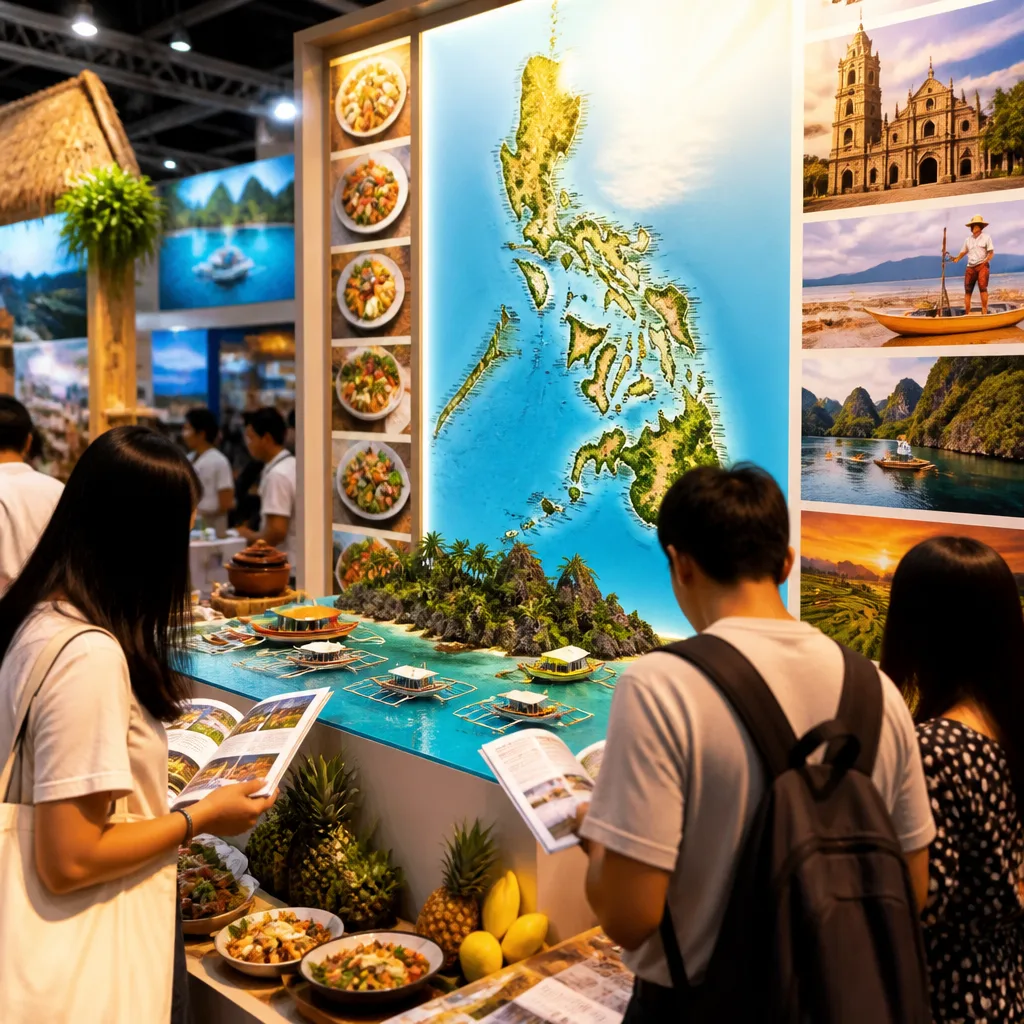
The Philippines is turning its diverse culinary traditions into a firm tourism selling point, unveiling seven culinary travel circuits at the IFTM Top Resa travel fair in Paris. The move builds on international interest sparked by the MICHELIN Guide's recent inclusion of Manila and Cebu.
Food as an experience, not just a meal
Officials and operators presented itineraries that move beyond restaurant dining to combine visits to markets and local producers, cooking classes, and island‑hopping. The strategy seeks to package food as an authentic cultural experience that travellers can book and explore region by region.
Chef Aaron Isip, who runs Kasa Palma in Manila and is among the generation of Filipino chefs bringing international experience back to the islands, described a wave of culinary innovation.
“There is a young generation of Filipino chefs who worked abroad and came back with new ideas of combining local and international flavours as well as modernising and reinterpreting our cuisine,”
At the same event the Philippines Department of Tourism highlighted demand for authentic culinary experiences in markets such as France. Dakila Gonzalez, Tourism Attache in the Frankfurt office, said the promotion aimed to capitalise on that interest.
“We know that the French market is keen not only over culture but authentic experiences including culinary. This is why we started the promotion of new culinary circuits and tours at IFTM,”
What the circuits offer
Operators showcased a variety of products targeting different traveller interests, from food‑focused island routes to hands‑on cooking workshops. Named offerings presented in Paris include:
- Visayas Culinary Discovery — A food‑centred journey through the central Philippines, promoted by Asiaven ture Tours & Travel.
- Cebu à Croquer — An itinerary linking Cebu, Siquijor and Bohol, marketed by Evasion Tropicale.
- Three‑island culinary trip — A Cebu, Bohol and Siquijor route promoted by Jans Tours.
- Classroom in El Nido — A hands‑on culinary programme based in Palawan.
- Intas offerings — Including an exclusive MICHELIN Trail and a Luzon Food Tour, extending the culinary proposition to northern and central Luzon.
| Product | Focus / Region | Operator |
|---|---|---|
| Visayas Culinary Discovery | Central Philippines food journey | Asiaven ture Tours & Travel |
| Cebu à Croquer | Cebu, Siquijor, Bohol | Evasion Tropicale |
| Three‑island culinary trip | Cebu, Bohol, Siquijor | Jans Tours |
| Classroom in El Nido | Hands‑on cooking in Palawan | Classroom in El Nido |
| MICHELIN Trail / Luzon Food Tour | Manila / Luzon and northern cuisines | Intas |
Together, these products aim to give travellers more ways to experience the Philippines’ regional diversity — from street food and wet markets to high‑end restaurants and producer visits.
What it means for travellers and operators
By packaging cuisine as travel circuits, the Philippines seeks to diversify its tourism offerings beyond beaches and scenery. For travellers this means more structured, bookable routes that can be sold through tour operators and travel agents, and that may appeal to markets looking for immersive, authentic experiences.
For local producers, restaurants and chefs the strategy can open new revenue streams and greater international exposure. The presence of a MICHELIN selection for Manila and Cebu adds cachet and may draw food‑curious visitors who combine fine dining with grassroots culinary encounters.
Travel trade sources at IFTM also presented experiences that link gastronomy with other tourism draws — for example, island‑hopping combined with cooking classes in Palawan, or curated trails in Luzon that highlight regional specialities alongside cultural sites.
As the Philippines markets its cuisine on the international stage, the new circuits point to an expanding notion of travel that treats food as a central, bookable part of the holiday rather than a secondary pleasure. For travellers who plan carefully, these circuits offer both culinary insight and the chance to support small producers and regional food traditions.
With the MICHELIN Guide’s recent attention and the active participation of chefs who have worked overseas, the Philippines is positioning its food scene as a key reason to visit — an appealing proposition for visitors who want to taste place as much as see it.