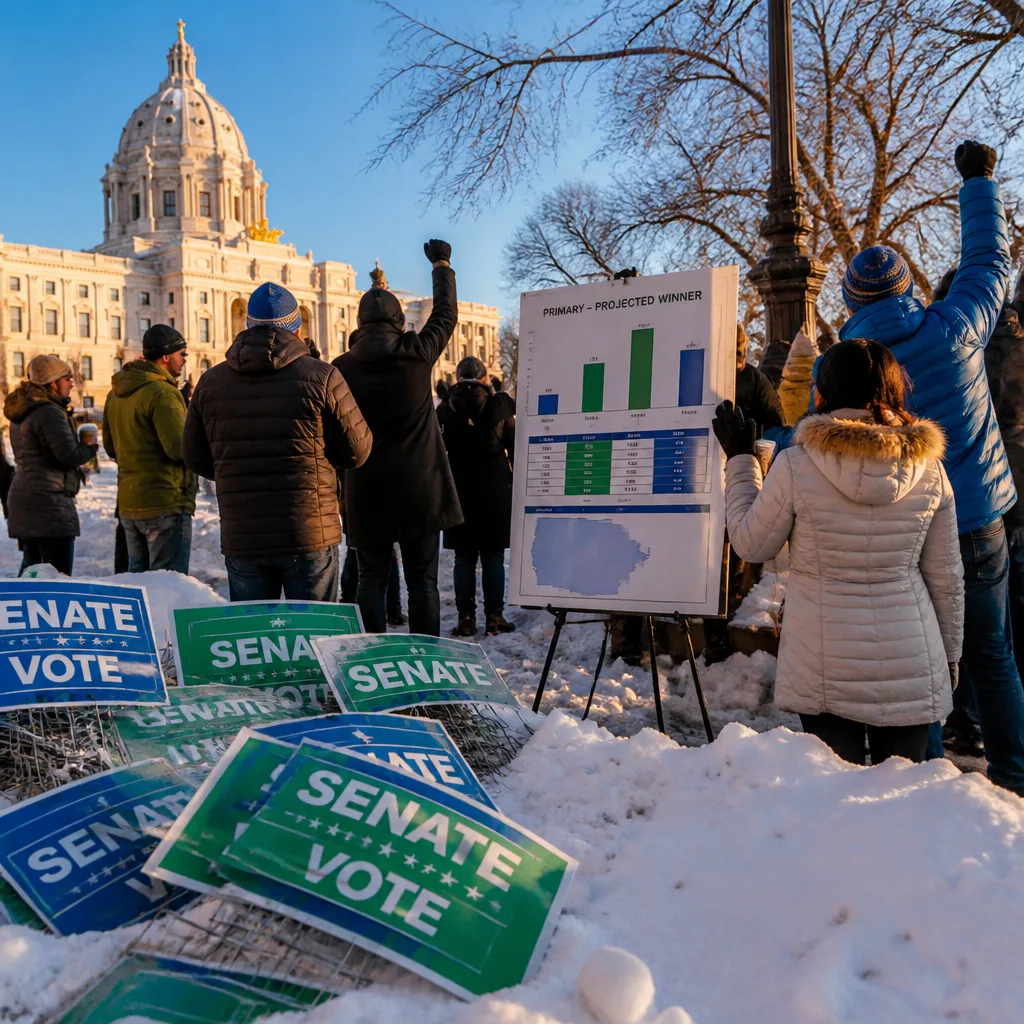
Peggy Flanagan, Minnesota's lieutenant governor, has won the Democratic primary for the US Senate, defeating Rep. Angie Craig in a race that pitted the party’s progressive wing against its more moderate centre. The result, projected by NBC News, positions Flanagan to contest the November general election for the seat being vacated by retiring Sen. Tina Smith.
What the result means
The victory marks a significant boost for progressives in a state that has long been competitive at the federal level. Flanagan would become the first Native American woman in the US Senate if she wins in November, a milestone repeatedly noted by supporters and national commentators during the campaign.
The contest also illustrated a familiar fault line in contemporary Democratic politics: ideology versus electability. Craig, a four-term House member viewed by many Democrats as a pragmatic general-election performer, argued she was best placed to hold the seat for the party. Flanagan ran as a progressive populist, emphasising economic fairness and systemic change.
Money and messaging
Spending in the primary highlighted the contrast. According to AdImpact data reported during the campaign, Craig and allied groups spent nearly R340 million in South African-rand equivalent terms for US$20 million on airwaves, while Flanagan and her allies spent the equivalent of about R79.6 million for US$4.7 million. The discrepancy underlined Flanagan’s claim that grassroots organising and a disciplined message could overcome a cash disadvantage.
| Candidate | Ad spending (reported) |
|---|---|
| Angie Craig and allies | nearly US$20 million |
| Peggy Flanagan and allies | US$4.7 million |
Flanagan framed the race as a contest between ordinary people and entrenched interests.
"This entire campaign has been about the many versus the money,"she said on the eve of the primary, according to reporting.
Policy divides and flashpoints
Immigration emerged as a key issue that drove distinctions between the two candidates. The race sharpened after the fatal shootings of two US citizens by federal agents in Minneapolis earlier this year; that episode intensified scrutiny of federal immigration enforcement in the state and nationally.
Craig drew criticism from opponents for having supported the Laken Riley Act, an immigration detention measure that became law early in President Donald Trump’s current term. Craig later said she regretted that vote, according to reporting from the campaign period. Flanagan has called for abolishing the US Immigration and Customs Enforcement agency, saying it should be fundamentally restructured, although she has also expressed support for immigration enforcement that secures the border.
Endorsements and national attention
Flanagan attracted high-profile endorsements from leading progressives, including Sens. Bernie Sanders of Vermont and Elizabeth Warren of Massachusetts, and received backing from the retiring Sen. Tina Smith. Those endorsements, coupled with an effective ground operation, helped offset the financial gap.
National observers noted the primary as a barometer for the Democratic Party’s direction ahead of the midterms. For progressives, Flanagan’s win is evidence that a more left-leaning message can prevail in competitive states when paired with organised grassroots mobilisation. For moderates, the loss raises questions about strategy and resource allocation in federally competitive contests.
What comes next
The November general election will determine whether Flanagan’s primary success translates into victory in a state that has alternated between Democratic and Republican strengths in recent cycles. The result will affect the Senate’s composition and, by extension, control over agenda items such as judiciary confirmations, federal spending priorities and oversight of the executive branch.
- Flanagan’s primary win boosts the progressive wing nationally and raises the prospect of historic representation.
- Spending disparities underline the continued role of money, but also the limits of ad buy if grassroots support is strong.
- Immigration policy and public safety incidents in Minnesota were decisive issues shaping voter choice.
The campaign now shifts to the general election, where party unity, turnout and independent voters will determine whether Flanagan converts primary momentum into a Senate seat this November.