
Paraguay has been positioning itself as an attractive jurisdiction for individuals and capital by highlighting a long stretch of macroeconomic stability, investor-friendly tax arrangements and simplified residence pathways, according to reporting in the region.
Economic fundamentals and sovereign ratings
After two decades of steady expansion and a period in which inflation was kept in check under the Central Bank of Paraguay’s inflation-targeting framework, the country has seen public debt remain at around 40% of GDP and maintained its currency, the guaraní, without redenomination. The quality of that performance was recognised with investment-grade ratings from Moody’s in 2024 and S&P Global Ratings in December 2025; Fitch remains one notch below investment grade but with a positive outlook.
Recent output figures underline the momentum: Paraguay recorded GDP growth of 6.6% in 2025, one of the strongest rates in the region, and both the Central Bank of Paraguay and the IMF projected growth of 4.4% for 2026 while forecasting contained inflation and sound macroeconomic fundamentals.
| Indicator | Value |
|---|---|
| Public debt | ~40% of GDP |
| GDP growth (2025) | 6.6% |
| Projected GDP growth (2026) | 4.4% |
| Sovereign ratings | Moody’s (2024) & S&P (Dec 2025): investment-grade; Fitch: one notch below, positive outlook |
Migration surge and residence demand
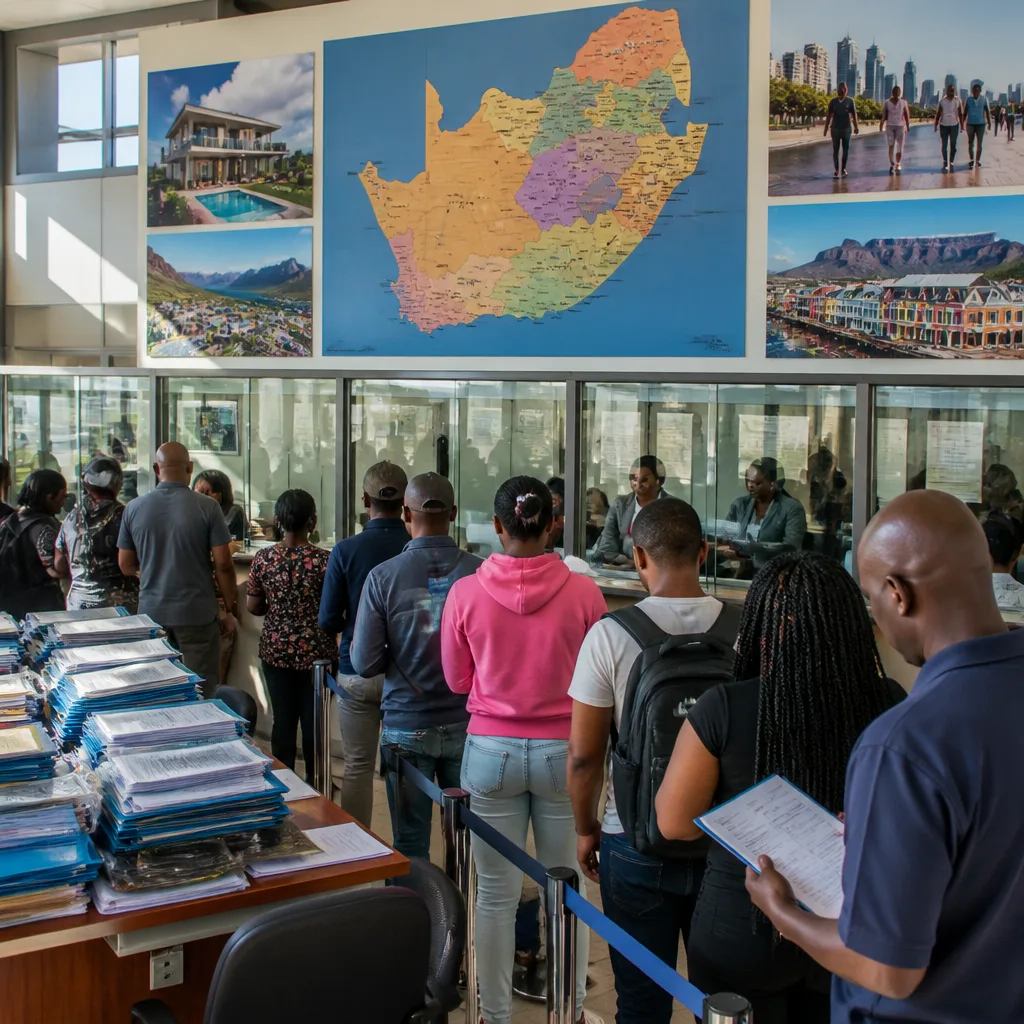
Renewed international visibility — illustrated by Paraguay qualifying for the 2026 FIFA World Cup and progressing to the round of 16 — coincided with a marked rise in requests to live in the country. The National Migration Directorate (DNM) reported a record 47,687 residence applications for 2025 and a sharp acceleration in 2026: 33,243 applications were lodged in the first half of this year, a 62% increase over the 20,567 filed in the same period of 2025. The DNM described this growth as unprecedented and expanded its processing capacity by lengthening working hours and adding weekend shifts.
Brazilian nationals make up the largest proportion of approvals. Of residences granted in the first quarter of 2026, 64% went to Brazilians, followed by 8.4% to Argentines, 4.5% to Germans, 2.6% to Spaniards and a share to US nationals, reflecting broadening interest from investors and entrepreneurs.
Policy tools: taxation, incentives and pathways
Advisers writing about Paraguay point to three policy areas that are drawing attention:
- Territorial tax system — which can favour non-resident income in certain circumstances;
- Investment incentives — measures designed to attract foreign capital across sectors; and
- Residence pathways — administrative and legal routes allowing foreigners to obtain residency.
Those elements, combined with the recent sovereign ratings and macroeconomic track record, are being presented by local advisers and policymakers as reasons to consider Paraguay as a destination for both individual migrants and capital.
Implications and caveats
For investors and high-net-worth individuals assessing regional options, Paraguay offers a mix of predictable macroeconomics and administrative incentives that have translated into tangible interest. The surge in residence applications — and the national migration authority’s need to expand processing — signals both demand and the practical consequences of rapid policy success.
However, the broader investment case will continue to hinge on factors beyond headline growth and ratings: the durability of policy settings, implementation of incentives, regulatory clarity and how effectively public institutions manage elevated inflows. Paraguay’s recent performance provides a platform, but it will require sustained governance to translate momentum into long-term diversification of investment and human capital.
Regional observers and potential investors will watch whether the growth in applications stabilises, and how quickly the DNM and other agencies adapt procedures without degrading service quality.









