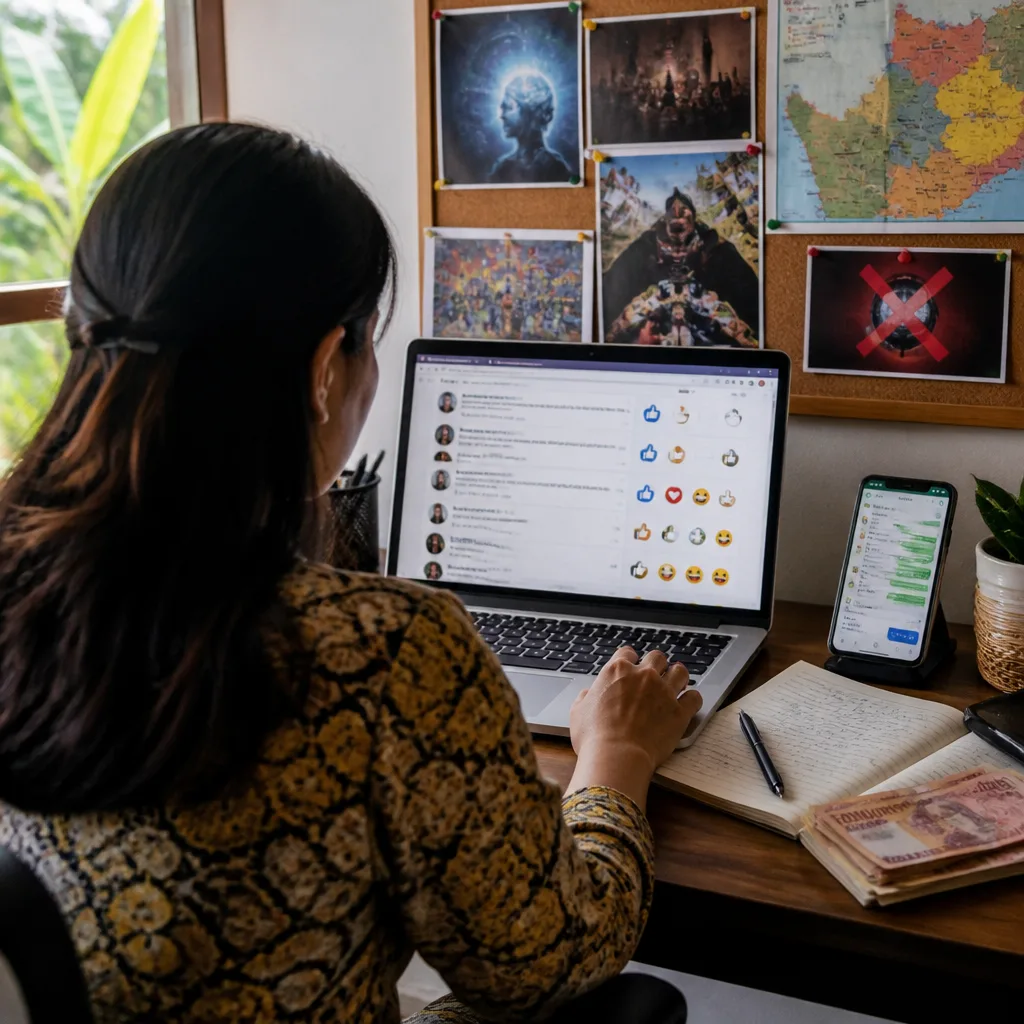
From a home in West Java, an account operated by a woman identified as Adira posts everything from casual lifestyle updates to politically charged images and prompts aimed at large Facebook groups abroad, according to a Guardian investigation published in June. The activity, the newspaper reports, is part of a broader ecosystem of creators who target foreign political communities to generate engagement and revenue through Meta’s creator programme.
How the operation works
The Guardian’s reporting outlines a pattern in which Indonesian-based users join and post in large overseas Facebook groups — including those supportive of Australia’s One Nation and US conservative figures — and use AI-generated or sourced images to provoke reaction. One such group, Team Pauline Hanson, reportedly has almost 26,000 members.
- Creators post provocative images and discussion prompts in groups such as those for supporters of Pauline Hanson and US personalities like Charlie Kirk, JD Vance and Pete Hegseth.
- Some images are AI-generated, including examples of a child in a hijab holding a sign about serving bacon at school — content designed to trigger engagement across cultural and political divides.
- Creators say they are pursuing payments from Meta’s creator programme rather than being paid by political campaigns or agencies; revenue depends on engagement metrics.
The Guardian quotes Adira as saying:
"We don’t follow politics overseas, we don’t want to be involved. We just, you know, try to earn more dollars. There is no intention to the right or to the left."
According to the account holder’s account of the system, participants coordinate in Facebook and WhatsApp groups, share tips on which communities are most lucrative and sometimes receive material or advice from informal “leaders” who suggest where to post. Platform recommendation tools — such as suggested groups after a post — are also part of how creators find new audiences.
What the investigation found
The Guardian’s June reporting found that several large One Nation supporter groups on Facebook appeared to be run by or populated with overseas creators who monetise content. The Indonesian creators described their activity as income-seeking rather than ideologically motivated, though their posts often take the form of incendiary or polarising content that can shape conversation in those communities.
| Element | Detail from reporting |
|---|---|
| Location of creators | Indonesia (example: West Java) |
| Target groups | Overseas political groups (One Nation, US conservative fan groups) |
| Monetisation | Meta creator programme (payments tied to engagement) |
Questions and consequences
The investigation raises a number of concerns about how platform incentives and global labour markets interact to produce political content. The key questions are practical rather than hypothetical:
- Who benefits: Creators in low-cost jurisdictions can earn foreign currency by targeting large, highly engaged groups overseas.
- Who pays: Platforms that remunerate engagement indirectly subsidise the creation of attention‑grabbing political content, while the communities targeted may bear the cost in polarised or misleading discourse.
For countries like South Africa, the case is a reminder that social media ecosystems are transnational. Content that shapes opinion or sows division need not originate domestically. While the Guardian’s coverage centres on Indonesia, Australia and the US, the underlying model — monetisation of engagement through platform programmes and the use of AI imagery to provoke responses — is replicable and therefore relevant to national policymakers, election authorities and platform regulators.
Platforms such as Meta have responsibility for the design of incentive systems and the moderation tools that govern cross-border flows of content. Investigations like this also underline the limits of relying solely on content origin or declared affiliations when assessing authenticity or intent.
The Guardian report does not present evidence that the creators it spoke to were directed by political actors abroad; instead it emphasises monetisation as the primary motive. Nevertheless, the effects on targeted communities can be similar whether the driver is ideology or income. The reporting shows how economic incentives can plug into political conversations and, in doing so, complicate efforts to maintain clean information environments.
As debates about platform regulation and disinformation continue globally, the Indonesian meme‑factory model will likely be cited as an example of how digital labour markets and algorithmic recommendation systems interact to produce contested political content across borders.