
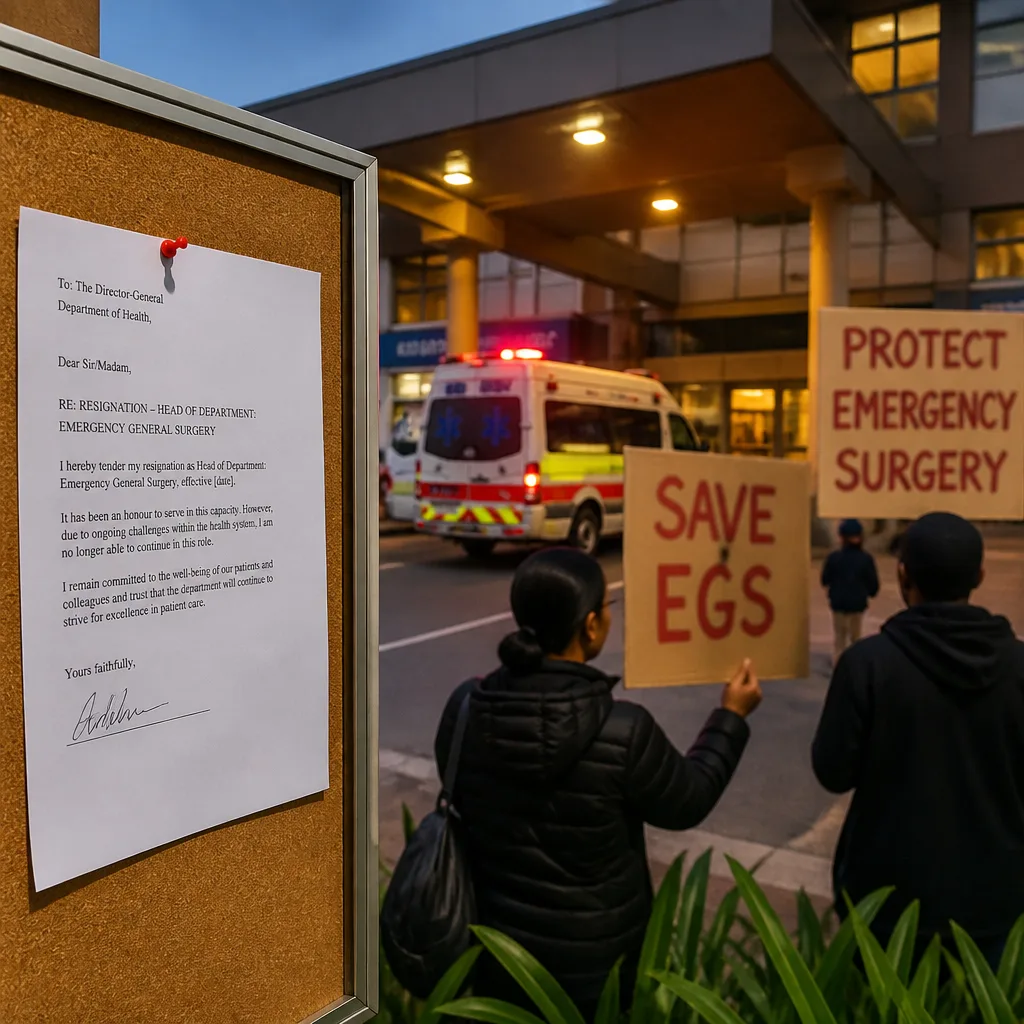
Mike Nesbitt has resigned as Northern Ireland's health minister after a public row with the Ulster Unionist Party (UUP) leader, Jon Burrows, centred on plans to withdraw emergency general surgery (EGS) services at Causeway Hospital. The departure was confirmed in a resignation letter Nesbitt posted on social media, in which he described his time as minister as "the greatest privilege of his political career".
What happened
The dispute escalated after Burrows, a North Antrim Member of the Legislative Assembly (MLA), attended a town-hall meeting last week and said he did not support removing EGS from Causeway Hospital. Burrows told attendees that he would "never agree" with the removal and said the service should be "built up, not run down". Nesbitt did not attend that meeting because of a constituency election meeting in Strangford.
"Emergency surgery must remain at the Causeway Hospital and it should be built up, not run down and that is my position and it's not for negotiation."
According to the correspondence made public by Nesbitt, Burrows told the minister that he had a first "red line" on other matters — puberty blockers and opposition to Northern Ireland participating in the Pathways trial — and subsequently introduced a second "red line" over the Causeway EGS issue. The Department of Health was reportedly still awaiting a final recommendation for the minister's approval on the service change when the dispute came to a head.
Party dynamics and unanswered questions
The resignation highlights internal tensions within the UUP since Burrows took over the party leadership earlier this year. Nesbitt has been a prominent figure in the party: he served as leader from 2012 to 2017 and again from 2024 until earlier this year when Burrows replaced him.
A UUP spokesperson thanked Nesbitt for his service and said he had left a "significant legacy". It remains unclear whether Nesbitt will also leave the party in addition to resigning the ministerial post.
Who benefits and who pays
The immediate beneficiaries are likely to be political actors who can present themselves as defenders of local hospital services: Burrows has positioned himself as opposing the EGS withdrawal at Causeway Hospital, a stance that will play well with constituents fearful of losing acute services. For the party, the row exposes a potential leadership fault line but also demonstrates Burrows asserting authority early in his tenure.
The costs are both political and administrative. Health-service reconfiguration decisions are complex and often require ministerial sign-off; sudden ministerial change can delay implementation and prolong uncertainty for clinicians and patients. The Department of Health's pending recommendation on Causeway may now face delays as a successor is appointed and brought up to speed.
- Key dates: Nesbitt served two spells as UUP leader (2012–2017 and 2024 until earlier this year); the town-hall meeting where Burrows opposed EGS removal took place last week.
- Key issues: proposed withdrawal of emergency general surgery from Causeway Hospital; party "red lines" set by the leader on puberty blockers and the Pathways trial.
- Immediate uncertainty: whether Nesbitt will remain a UUP member and how quickly a replacement minister will be appointed.
| Actor | Position |
|---|---|
| Mike Nesbitt | Resigned as health minister; described ministership as "the greatest privilege of his political career" |
| Jon Burrows | UUP leader; publicly opposed removal of EGS from Causeway Hospital |
These kinds of disputes are instructive about authority within parties: a leader asserting policy boundaries can quickly force ministerial choices where clinical, administrative and local political pressures collide. For the health service, the priority now will be securing continuity of decision-making so that any changes — or decisions to retain services — are made on clinical and procedural grounds rather than become overt casualties of party management.
As things stand, the Department of Health was awaiting a final recommendation before Nesbitt's resignation. That recommendation and the fate of the Causeway EGS service are now likely to be delayed while political and administrative arrangements are reset.
Observers will watch whether Nesbitt remains in the UUP and whether the episode prompts further realignment in the party. For constituents served by Causeway Hospital, the immediate concern is preserving access to emergency surgery services and ending the uncertainty about future provision.












