
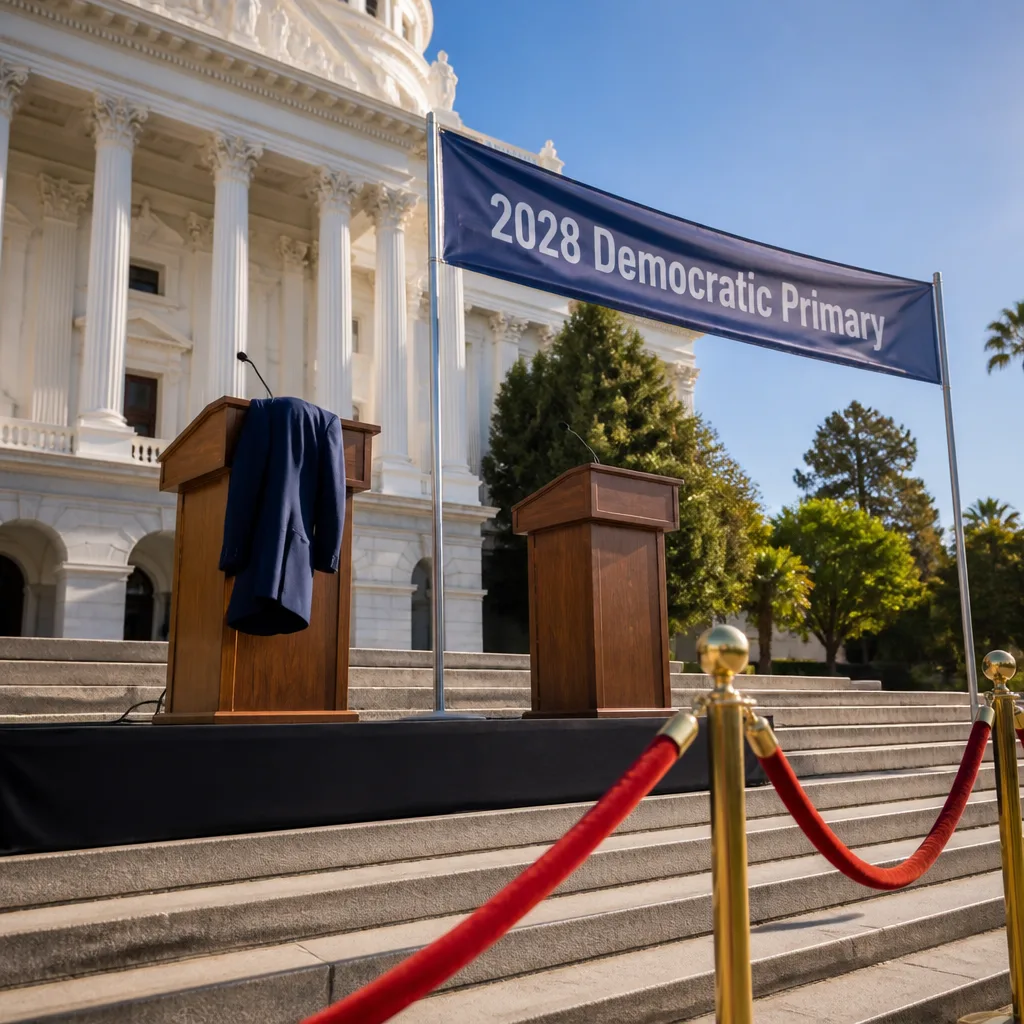
California Governor Gavin Newsom said he would not contest the 2028 Democratic presidential nomination if Kamala Harris chooses to run, signalling a willingness to avoid a direct clash between two of the state’s most prominent Democrats.
What Newsom said
In an interview with CNN’s Jake Tapper, Newsom was explicit about his intentions, telling the network that he would step back rather than compete against Harris. The assertion was quoted in reporting on the interview:
“I wouldn’t run if she ran… I wouldn’t do that to her. … I wouldn’t do it to you, I wouldn’t waste everyone’s time.”
The governor framed his stance as an attempt to prevent a potentially bitter battle for California supporters, saying there would be substantial voter overlap between his backers and Harris’ base, according to the report.
How it shifts the 2028 landscape
Newsom’s move narrows one axis of competition within the Democratic field. Both figures have been widely discussed as possible contenders: Harris has not announced a decision and has publicly said she is weighing her options, while Newsom has long been considered a likely entrant if the field opened for him.
Reporting noted that Harris has appeared as the front‑runner in multiple early polls about 2028, including one cited by the outlet that showed her ahead of Newsom by double digits. That polling edge is one reason close observers in the party have treated Harris’ decision as pivotal to how other hopefuls will behave.
- For donors: Newsom’s concession may simplify choices for backers who were weighing support between two California powerhouses.
- For the Democratic Party: a unified front behind a single leading candidate could reduce early infighting and conserve resources for the general election.
- For Harris: the absence of a Newsom challenge removes a high‑profile primary rival and a rival fundraising pull.
Room for questions and consequences
Although Newsom’s declaration reduces one possible matchup, it does not end the jockeying among other potential contenders. The early stages of a presidential cycle often see shifting alliances, exploratory committees and calculations by donors and state party organisations.
The report noted ongoing unease among some donors about a Harris candidacy, with a number of California donors saying earlier in the year they were reluctant to commit to supporting her. At the same time, other corners of the donor community have shown enthusiasm for Newsom. Those mixed attitudes explain why an explicit decision from Harris will continue to command attention.
Political strategists caution that name recognition and early polling matter, but they do not determine the outcome of a nominating contest. Candidates often rise and fall as campaigning, endorsements and primary calendars shift.
| Actor | Current stance (as reported) |
|---|---|
| Gavin Newsom | Will not run if Kamala Harris runs |
| Kamala Harris | Has not decided; remains the leading name in early polls |
Newsom’s announcement, as reported, therefore performs several political functions: it signals deference to a party colleague, attempts to channel donor and organisational energy more efficiently, and reduces the likelihood of a divisive California contest in the primary season.
How Harris responds — whether by declining to run, announcing a campaign, or delaying a decision — will be decisive for the shape of the Democratic primary. For now, Newsom’s public commitment clarifies one choice for voters and donors, but it leaves the broader question of who will carry the party into 2028 very much open.












