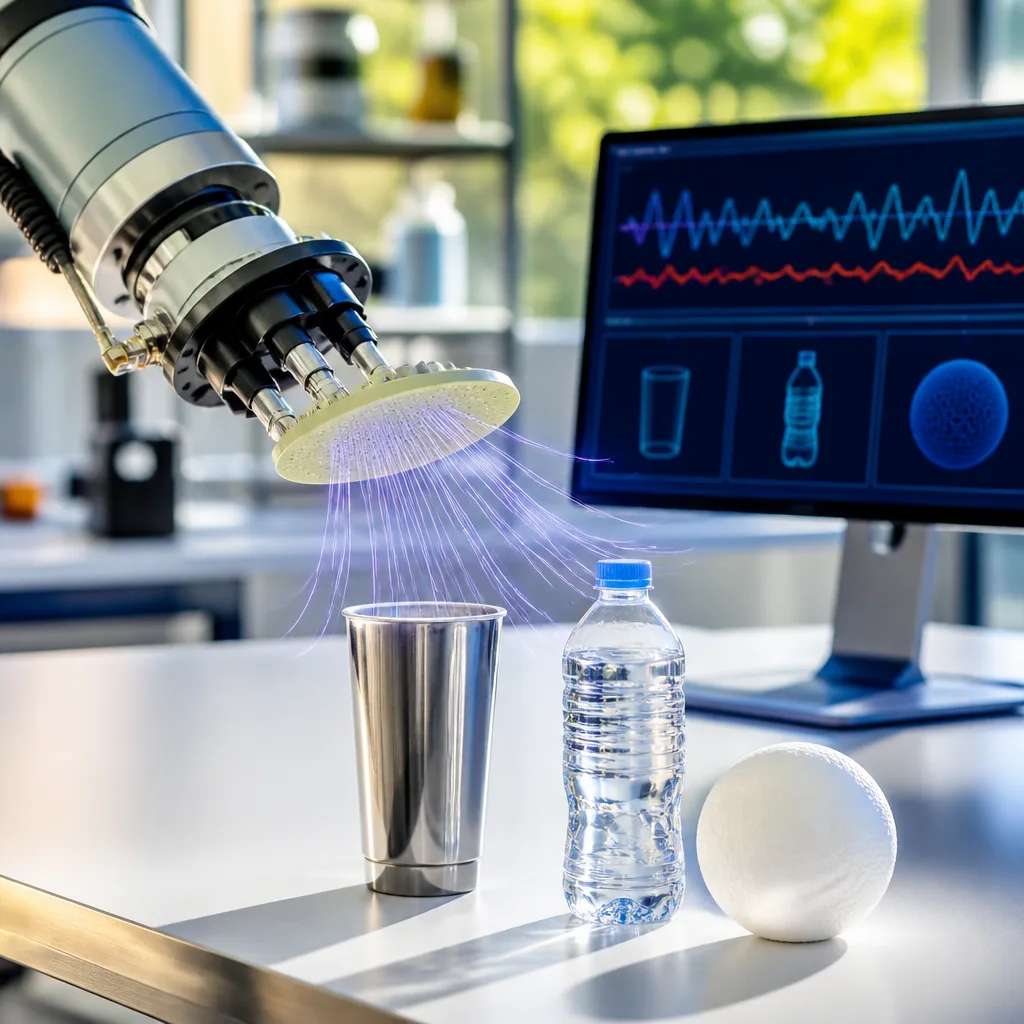
Scientists in China say they have built a sensor that allows machines to detect and classify objects at a short distance without making physical contact, modelling the approach used by electric eels to hunt in dark or murky water. The work, reported last month in the journal Advanced Materials, uses a treated fluoropolymer that stores charge and produces a persistent electric field around the device. When that field is disturbed by a nearby object, the sensor interprets the disturbance to infer the object's electrical and geometric properties.
How it works
The research team based the idea on electrolocation, the biological system electric eels and several other aquatic animals use. In biological electrolocation, an animal emits an electric field and senses changes to that field caused by nearby objects. The engineered sensor mimics that process by maintaining a steady field and measuring perturbations.
The device is made from a specially treated fluoropolymer that acts in effect as a small static battery: once charged it retains its charge for an extended period and forms an invisible electric envelope around the sensor. As a target approaches, the pattern of change in the field carries information about the target's:
- electrical conductivity
- dielectric properties
- surface geometry
“We want the machine to sense an approaching target – distinguish its material and surface condition – before any physical contact,” said Zhang Weiqiang, a professor at Xidian University, in a video interview.
Performance and potential
The authors report the sensor can differentiate materials and surface states by analysing the characteristic ways objects distort the electric field. Because the sensor detects properties that are not purely optical or mechanical, it can work in darkness or through obscuring media where cameras or touch sensors struggle.
Practical benefits envisaged by the researchers include safer manipulation by robots — which could perceive and classify an object before touching it — and improved performance in conditions where vision is limited. The passive nature of a charge‑retaining polymer means such sensors may be compact and energy‑efficient compared with active radar or lidar systems, but the publication notes further work will be needed to map real‑world performance limits and integration challenges.
Limitations and next steps
As with many new sensing approaches, results reported in a single peer‑reviewed study are an early stage in technology development. Key questions that remain include how well the sensor scales, its range under practical conditions, its robustness to electrical noise in industrial environments, and how rapidly it can update measurements during dynamic tasks. The authors demonstrated the concept and characteristic signatures in controlled experiments; broader validation will be needed before industrial deployment.
| Attribute | Claimed capability |
|---|---|
| Material | Specially treated fluoropolymer that stores charge |
| Sensing principle | Detects distortions in a persistent electric field |
| Detectable properties | Conductivity, dielectric response, shape |
The research adds to a growing suite of bio‑inspired sensing strategies. Unlike cameras and conventional touch sensors, electric‑field‑based detection can operate without illumination and before contact, potentially reducing the risk of damage when robots handle fragile items. However, integrating such sensors into robotic control systems will require calibration, shielding from stray fields and protocols for combining electric‑field data with other sensor streams.
For South African science and industry, the study highlights an avenue for low‑power, non‑contact sensing research that could be relevant to manufacturing, logistics and assistive robotics. Researchers and engineers here seeking to adopt similar approaches will need to evaluate how materials, manufacturing processes and electrical environments locally affect sensor behaviour.
At present the findings are a promising demonstration of concept reported in a peer‑reviewed journal rather than an off‑the‑shelf technology. Further engineering, testing and independent replication will determine how quickly and widely the approach can be applied.