
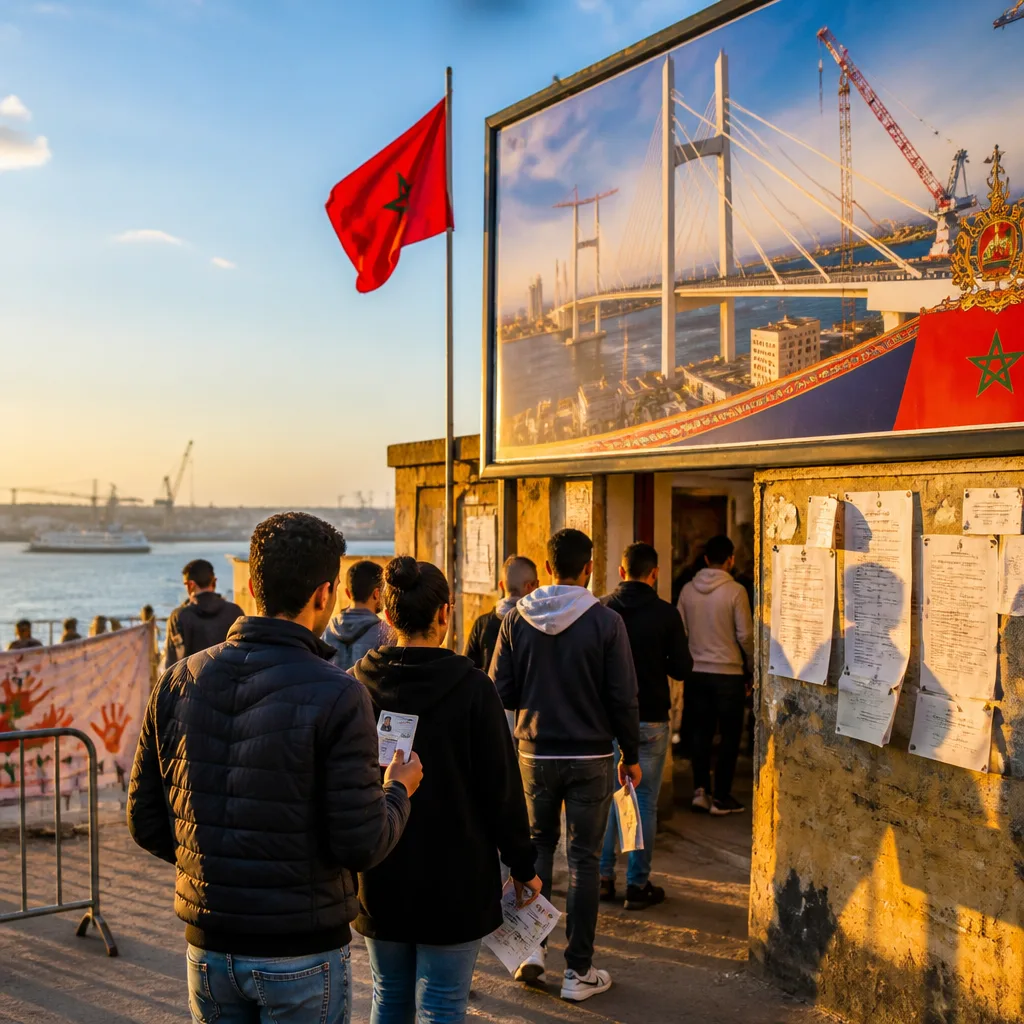
Morocco goes to the polls in a parliamentary election that will determine who forms the next government, but many young people remain unconvinced that ballots will deliver the economic change they seek. Voters will choose from 7,288 candidates representing 27 parties for 395 seats in the House of Representatives, and the party with the most seats is expected to name the next prime minister, the Associated Press reported.
Young voters sceptical despite growth and big projects
The vote is the first since widespread youth-led protests and a mass attempt by migrants to cross into the Spanish enclave of Ceuta that left dozens dead. Those events have focused attention on the priorities of younger Moroccans, who say jobs and economic opportunity matter more than political promises. The World Bank projects Morocco’s gross domestic product will expand by 4.2% this year, and the country has invested in major projects — notably a growing automotive and aeronautics sector, an expanding high-speed rail network and the Tanger Med container port — while preparing to co-host the 2030 FIFA World Cup. Yet growth has not delivered sufficient employment for the young, the AP reported.
Official figures cited by the Associated Press show significant disparities in unemployment:
| Population group | Unemployment rate |
|---|---|
| Overall (official) | 13% |
| Aged 15–24 | 37% |
| Higher-education graduates | 19% |
Campaigns meet mourners, migrants and the disenchanted
Candidates have been making unconventional campaign stops to connect with voters. The AP described one rural funeral where politicians sought to win over mourners with pledges and attention — some accepted the gestures, others remained unconvinced. Among the younger candidates is Moujane, running with the Democratic and Social Movement, a party generally seen as pro-establishment; he is noted as one of the youngest contestants and is a father of two small children, the AP said.
“Politicians don’t care about us. They only care about their own interests,”
said Yassine Hasnaoui, a 28-year-old unemployed man from Sidi Moussa El Majdoub, voicing a common refrain among young Moroccans who believe the political class is distant from their economic reality, according to the AP.
Migration remains a live political and humanitarian issue. The vote follows a period in which dozens of young Moroccans died attempting to reach Ceuta; among those lost were a factory worker trying to pay his mother’s medical bills, a struggling soccer player and a high school student seeking a better future, the AP reported after interviews with their families and friends. Such tragedies have helped crystalise a sense among many young people that the country’s economic transformation has not meaningfully improved their incomes or access to services.
What is at stake
The incoming government will inherit responsibility for billions in planned infrastructure and development spending tied to long-term projects and the World Cup, but immediate domestic demands are pressing: curb inflation, reduce youth unemployment and show that economic growth translates into better livelihoods and public services. The election will therefore serve as an early verdict on whether Morocco’s model of state-led investment and sectoral growth can be coupled with broader social mobility for young people.
For political parties, the challenge is practical and tactical: convert scepticism into votes in a demographic where few young people are registered to vote, while offering credible, deliverable policies rather than only promises. For voters — particularly those aged under 30 — the choice is existential, balancing the risk of political disengagement against the hope that a new parliament can tackle unemployment and inequality.
- 7,288 candidates from 27 parties contest 395 seats in Morocco’s House of Representatives.
- Official unemployment is 13%, but reaches 37% among 15–24-year-olds and 19% for higher-education graduates.
- The election follows youth-led protests and deadly migration attempts toward Ceuta, underlining the urgency of job creation and public services.
The Associated Press reporting highlights a central political paradox for Morocco: strong macroeconomic indicators and high-profile projects coexist with stinging youth unemployment and political scepticism. Whoever emerges with the largest share of seats will be judged not only on managing infrastructure and international commitments, but on restoring prospects for a generation that increasingly doubts that politics can deliver a fairer future.












