
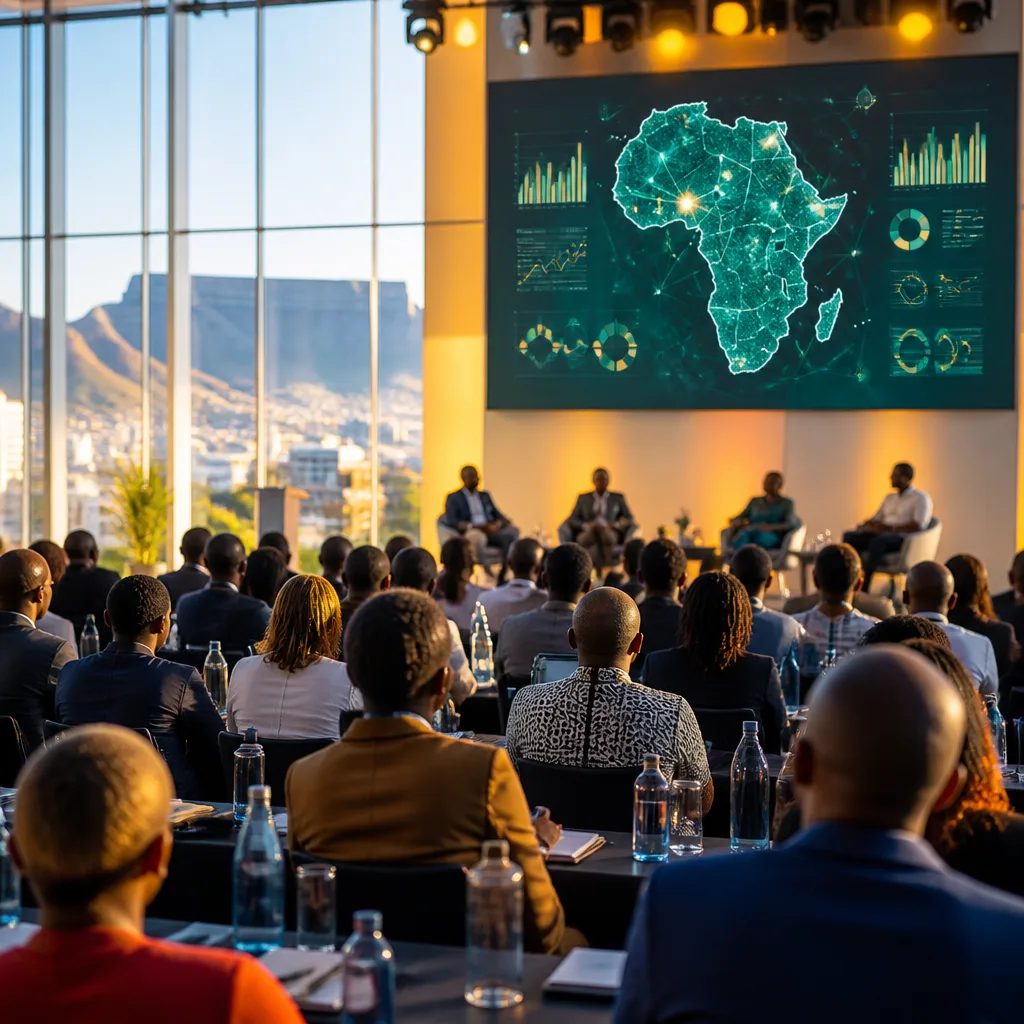
Microsoft South Africa Chief Executive Vukani Mngxati has urged a shift from passive use of artificial intelligence to active African participation in its development, saying the country must invest in skills and make AI systems that reflect local realities. He made the remarks on the GEC+Africa 2026 stage in Cape Town during a panel on how AI is changing the world of work.
High adoption, low confidence
Mngxati pointed to recent figures showing strong AI use across the continent: 64% of African workers reported using AI at work in the past year, compared with a global average of 54%. But that adoption does not yet translate into certainty about the future. Only 35% of workers believe their skills will still be relevant in three years’ time, he said, calling that divergence “a key challenge”.
“The hero of AI is you,”
He used the line to underline a people-centred approach to technology. Drawing a historical parallel, Mngxati compared the current AI transition to the emergence of the combustion engine, which reshaped how people moved and worked. The implication, he said, is that societies that learn and adapt will gain the most from the change.
Why local systems matter
Mngxati argued that current AI models often fail to capture how Africans live, work and think. Without systems designed with local contexts in mind, he warned, the benefits of AI will be uneven and likely concentrated with a small number of businesses or geographies.
He called for three complementary interventions:
- Targeted skills development so workers can use and co-design AI tools;
- Wider access to the necessary digital infrastructure and platforms;
- Support for homegrown AI models and datasets that reflect African languages, customs and economic activity.
Those points speak directly to policy debates now under way in South Africa about digital skills training, education curricula and how government and industry should share responsibility for upskilling the workforce.
From consumer to contributor
Mngxati urged a move beyond the continent being primarily a purchaser or end-user of AI to become a contributor to how systems are built and applied. He said business leaders must ensure access extends beyond a limited group so small companies and public-sector bodies can also benefit.
The call to contribute — not just consume — aligns with wider industry discussion about data sovereignty, local content and the economic opportunities from building AI tools that can be exported or adapted across African markets.
Implications for South Africa
For South Africa, the remarks sharpen three immediate policy questions:
- How will training programmes be scaled so that the substantial number of workers already using AI can update skills and remain employable?
- What investment is required in affordable, reliable digital infrastructure to widen access to AI-enabled tools?
- How can government, universities and private firms collaborate to create datasets and models tuned to local languages and economic patterns?
Answers will influence labour markets, education priorities and procurement decisions across the public service. They also affect small and medium enterprises that may lack the resources to adapt without targeted support.
Mngxati framed the moment as an opportunity rather than a threat: rapid technological change, he said, is a chance for people and organisations to learn and adapt if investments follow. The challenge for policymakers and business leaders is to ensure that adaptation is affordable and inclusive, especially for South Africans on constrained data and training budgets.
| Metric | Value |
|---|---|
| African workers using AI at work (past year) | 64% |
| Global average using AI at work | 54% |
| Workers who believe skills will remain relevant in 3 years | 35% |
Developing local capability in AI could help South Africa capture new economic value, but it requires coordination. Without clear pathways for training, affordable access, and incentives for building African-centred models, the country risks being a high-use but low-influence participant in an unfolding global technology shift.
The conversation at GEC+Africa emphasised practical priorities rather than hype: ensure people are at the centre of AI, invest in skills, and build systems that reflect the continent’s realities. Those are precisely the levers that will determine whether South Africa is a user of imported technology or a creator of AI solutions that serve local needs.










