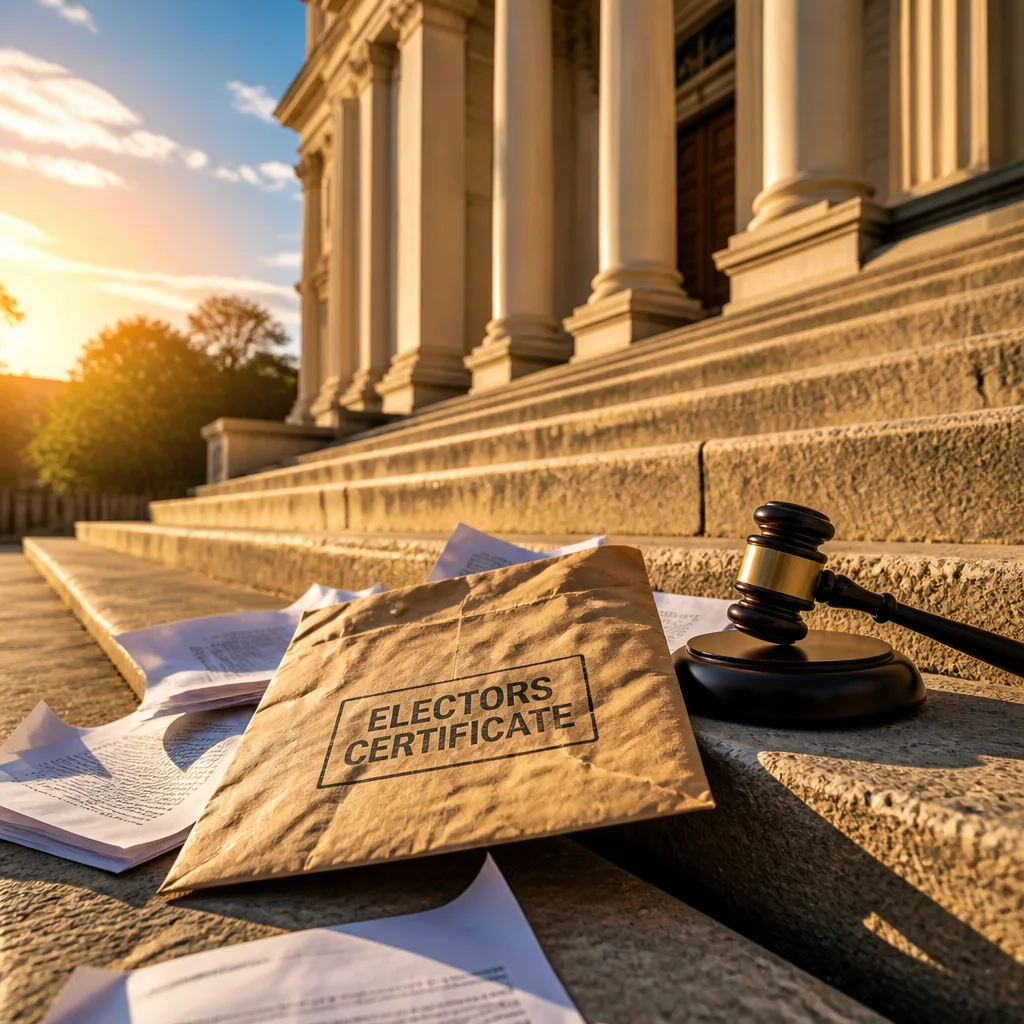
A judge in Las Vegas on Thursday dismissed a years‑long criminal case against six Nevada Republicans who were accused of submitting a bogus certificate claiming Donald Trump won the state’s 2020 presidential election, court filings and reporting show.
Latest blow to prosecutions of fake electors
The decision is the most recent development in a string of setbacks for prosecutors pursuing cases against individuals who sought to certify alternate slates of electors after President Joe Biden was declared the winner in key battleground states. Similar cases in Arizona, Michigan and Georgia have also been dismissed, court records and media reports indicate.
Nevada Attorney‑General Aaron Ford, who brought charges against the six and is also campaigning for governor, accused the defendants of forgery and of "offering a false instrument for filing or record." The six pleaded not guilty. Ford's office said it plans to appeal the dismissal.
"They were preserving their rights to challenge the result," the defendants have argued, calling their actions political theatre designed to publicise concerns about the vote.
Who was charged and what evidence was central
The group included Michael McDonald, then chair of the Nevada Republican Party, and Jesse Law, former chair of the Clark County Republican Party. Prosecutors relied in part on video of the group gathering outside the Nevada Legislature to sign a certificate assigning the state's six electoral votes to Trump, despite Biden winning Nevada by more than 30,000 votes.
Prosecutors argued the defendants intended their documents to be mistaken for official electoral votes that then‑Vice‑President Mike Pence might count on 6 January 2021. The defence maintained the certificate was an act of political expression rather than a criminal attempt to usurp the official results.
Wider context and consequences
The Nevada dismissal follows a pattern in which courts have scrutinised the line between political theatre and criminal conduct in the fraught aftermath of the 2020 election. The rulings have left prosecutors in battleground states navigating complex questions of intent and statutory reach when applied to extraordinary post‑election behaviour.
Arizona Attorney‑General Kris Mayes recently dismissed her office’s criminal case but signalled an intention to seek a new indictment before a grand jury, a manoeuvre aimed at circumventing procedural deadlines after an earlier appeal was lost. The outcomes across jurisdictions will shape how future cases of this kind are brought and whether criminal enforcement can be used to deter similar conduct in subsequent elections.
- Charges in Nevada: Forgery; offering a false instrument for filing or record.
- Defendants: Six Republicans, including party officials Michael McDonald and Jesse Law.
- Prosecutor action: Nevada AG Aaron Ford plans to appeal the dismissal.
| State | Case status (as reported) |
|---|---|
| Nevada | Dismissed; prosecutor will appeal |
| Arizona | Dismissed; AG sought to refile via grand jury |
| Michigan | Dismissed |
| Georgia | Dismissed |
For South African and other international observers, the litigation underscores how legal systems grapple with novel political conduct and the demands of proving criminal intent in a charged partisan environment. It also illustrates the limits of criminal law as a tool for resolving disputed election narratives: procedural hurdles, standards of proof and appellate remedies can blunt prosecutions even where public opinion views the conduct as improper.
The Nevada case will now move into an appellate phase if the Attorney‑General proceeds. Any reversal could reinstate charges or allow a grand jury to consider new evidence; if the dismissal is upheld, it will add to the legal precedent that has constrained similar efforts in other states.
Whatever the outcome on appeal, the episode has already had political consequences. It has shaped public debate about responsibility for the post‑election manoeuvres of 2020, affected the reputations of those charged and will influence how future electoral disputes are framed by both political actors and prosecutors.
As the judicial process continues, the core factual threads — the convening of alternate electors, the public signing of a certificate, and competing accounts of intent — will remain central to how courts and voters evaluate the boundary between partisan protest and criminal action.