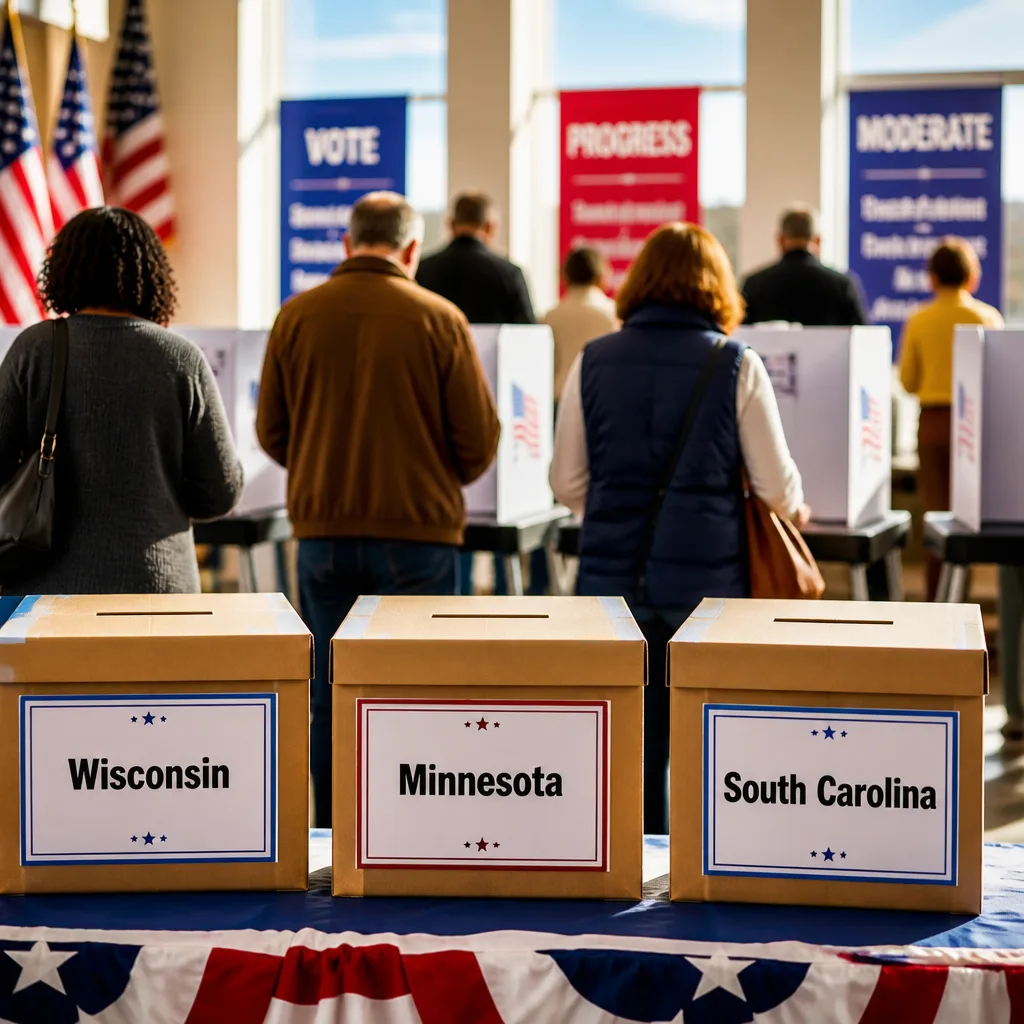
Primary voting in several US states on Tuesday tightened a national picture already shaped by intraparty rivalry. In Wisconsin and Minnesota, Democratic contests pitted progressive and moderate wings of the party against one another, while in South Carolina Republicans began a special primary to select a candidate to replace the late senator on the November ticket.
Wisconsin: governor's Democratic primary tight between progressive and moderate
In Wisconsin, the Democratic nomination for governor narrowed to a contest between the democratic socialist Francesca Hong and the more moderate David Crowley after two other contenders dropped out. The primary follows a period of consolidation that left voters choosing between distinct ideological approaches within the party.
On the Republican side, Representative Tom Tiffany, an ally of former president Donald Trump, was widely expected to secure the GOP nomination according to US election projections. His likely nomination reduces the number of contested general election matchups the party will oversee in the state.
Minnesota: Senate and governor contests reflect party divides
In Minnesota, the departure of Democratic Senator Tina Smith from the race opened a competitive Democratic Senate primary. Progressive Lieutenant‑Governor Peggy Flanagan faced centrist Representative Angie Craig in what the source described as a proxy fight between progressive and moderate Democrats.
For governor, Senator Amy Klobuchar opted to run for the state’s top job and reportedly faced no significant primary opposition for the Democratic nomination to replace outgoing governor Tim Walz, who is not seeking re‑election.
The Republican field for the Minnesota Senate seat included former sportscaster Michele Tafoya, a retired Navy SEAL Adam Schwarze, and former professional basketball player and 2024 GOP candidate Royce White. Tafoya was considered the frontrunner in the Republican primary. The governor’s Republican primary listed several hopefuls, including MyPillow CEO Mike Lindell, State House Speaker Lisa Demuth, and businessman Kendall Qualls.
South Carolina: special primary to replace late senator
South Carolina held a special Republican primary to choose a nominee for the Senate seat left vacant by the sudden death of Senator Lindsey Graham. Ten Republican candidates contested the primary, with no one expected to secure an outright majority, meaning the race was projected to go to a runoff later in the month.
Senator Graham’s sister, Darline Graham, who had been appointed to serve out the remainder of his term, was among the candidates. Her appointment and candidacy set up a crowded field vying for the party’s spot on the November ballot.
| State | Key contests | Notes |
|---|---|---|
| Wisconsin | Democratic governor: Francesca Hong vs David Crowley; GOP likely: Tom Tiffany | Democratic race narrowed after two dropouts |
| Minnesota | Democratic Senate: Peggy Flanagan vs Angie Craig; Governor: Amy Klobuchar running | Senator Tina Smith not pursuing re‑election |
| South Carolina | Republican special primary to replace Lindsey Graham; Darline Graham among 10 candidates | Projected runoff likely as no candidate expected to win majority |
- Who benefits: Intra‑party wings — progressives or moderates — stand to gain influence depending on primary outcomes.
- Who pays: The parties and eventual nominees must marshal resources for either immediate runoffs or prolonged general‑election campaigns.
These contests are consequential not only for the individual states but for national party strategy. A progressive or moderate victory in the Democratic primaries will signal which faction can better mobilise voters in swing and closely contested states. For Republicans, the selection of candidates aligned with or distant from former president Trump will shape messaging and turnout in the lead‑up to November.
According to US election projections, the South Carolina contest was unlikely to produce a majority winner on Tuesday, setting up a runoff later in the month between the top two finishers. In Minnesota and Wisconsin, the outcomes will determine whether moderates or progressives hold the upper hand heading into the general election cycle.
The immediate aftermath of these primaries will involve fundraising shifts, reallocation of campaign resources and renewed efforts by national and state parties to consolidate support — the familiar horse‑trading that follows primary nights in the United States.