
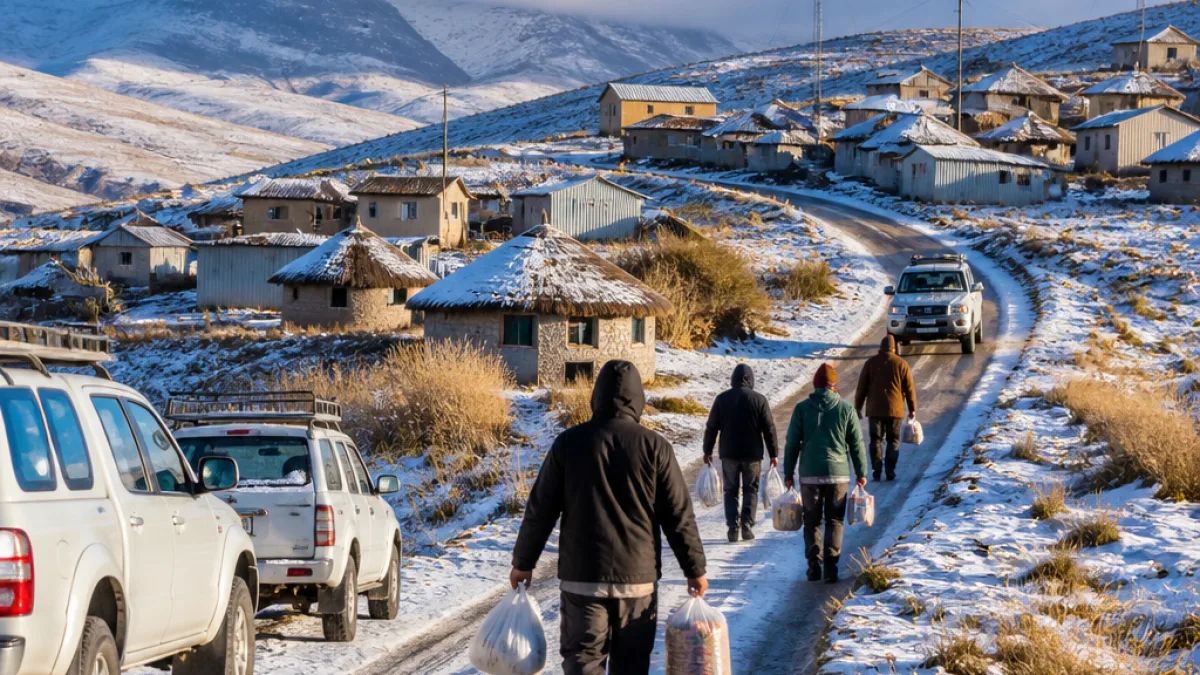
Heavy snowfall across high‑lying parts of KwaZulu‑Natal has left several rural communities cut off from normal communications and access to services, provincial authorities said on Tuesday. Areas around Impendle, near the Drakensberg, reported homes and roads blanketed in snow after falls began on Monday.
Communications and access disrupted
Officials from the provincial Department of Transport and Human Settlements reported that the cold snap has weakened cellphone and network signals in parts of the affected region, complicating efforts by residents to contact relatives and emergency services.
According to the provincial update, the situation was not limited to Impendle. Teams found communities in other deep rural areas badly affected, including locations around Underberg, Kokstad and settlements near the KwaZulu‑Natal–Eastern Cape border.
"Government teams were working to help affected residents."
The comment was attributed to KwaZulu‑Natal MEC for Transport and Human Settlements, Siboniso Duma, who said provincial teams were coordinating with local municipalities to reach isolated households and speed up interventions.
Who is responding and what they are doing
Provincial response teams are operating with the Impendle Local Municipality, uMgungundlovu District Municipality and other stakeholders. Efforts focus on restoring communications, checking on vulnerable residents and ensuring access to emergency health and rescue services where required.
Authorities said crews were prioritising routes to enable emergency vehicles to reach affected communities once conditions allow. No numbers on the households affected or any confirmed fatalities or injuries were provided in the initial update.
Local impact and risks
Rural residents who live considerable distances from clinics, police stations and other services face heightened risk during severe weather. The combination of snow, freezing temperatures and patchy network coverage increases the chance that medical or other emergencies could go unreported or delayed.
Community leaders and municipal officials are being asked to track vulnerable households — including the elderly and those with chronic health conditions — and to use community radio and local networks where cellphone coverage has faltered.
- Affected areas: Impendle, Underberg, Kokstad and communities near the KZN–Eastern Cape border.
- Main problems: weakened cellphone and network signals, snow‑bound roads, isolation from services.
- Response: provincial teams working with local municipalities to reach communities and restore services.
Practical advice for residents
Residents in high‑lying areas are advised to keep warm, avoid unnecessary travel and conserve phone battery power when signals are intermittent. If possible, households should establish a communication plan with neighbours and have contact details for local clinics and municipal emergency numbers written down in case devices fail.
Where cellphone networks are weak, community members should use alternative means such as battery‑powered radios to receive weather updates and municipal advisories. Those with medical emergencies should try to reach the nearest health facility by designated safe routes once they are cleared by response teams.
Background — winter conditions in the Drakensberg
Snow in KwaZulu‑Natal is not unprecedented but when it falls heavily in deep rural districts it can exacerbate existing service delivery challenges. The Drakensberg and surrounding highlands routinely experience colder weather during winter months; however, significant accumulations can isolate communities that are already distant from municipal centres.
| Area | Reported problem |
|---|---|
| Impendle | Homes and roads blanketed in snow; weakened network signals |
| Underberg | Deep rural communities affected; access difficulties |
| Kokstad | Snowfall reported near surrounding communities; assistance being mobilised |
Provincial officials emphasised that interventions are ongoing while severe weather persists. Residents seeking help should contact their local municipality or district emergency office and follow guidance from municipal authorities as teams work to restore communication links and access.
Further updates are expected as response teams assess conditions on the ground and establish clearer relief plans for the most affected settlements.












