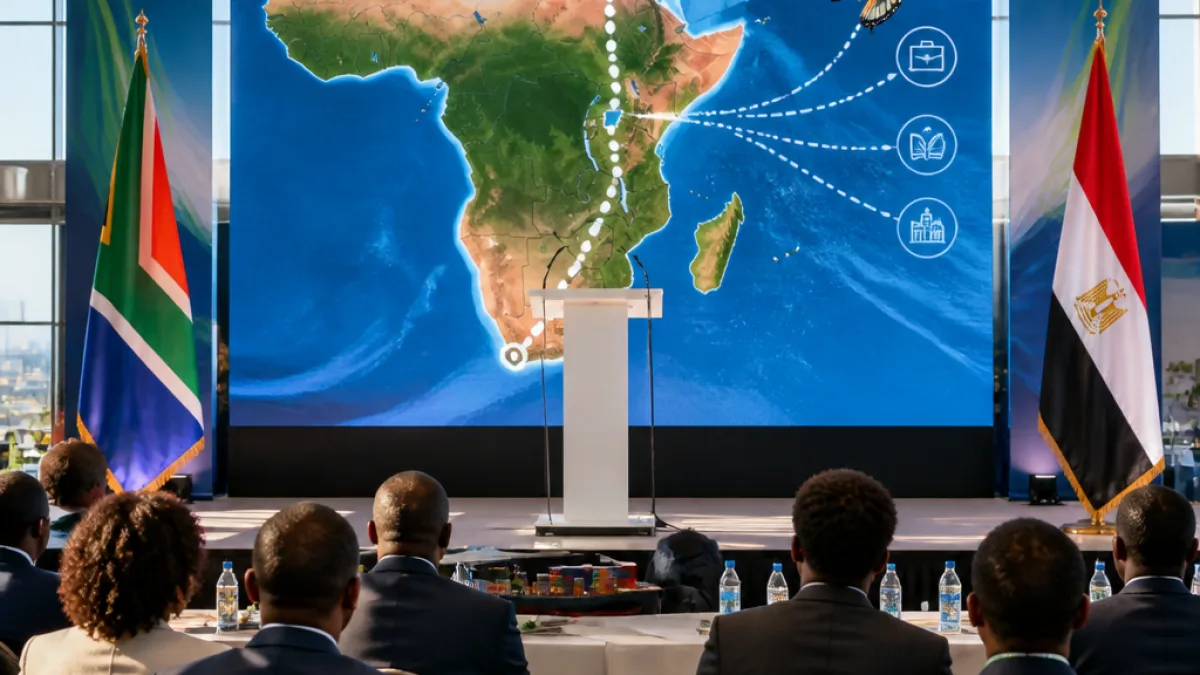
The national government has identified the Eastern Cape’s industrial parks as the launch point for a long‑planned Cape‑to‑Cairo trade corridor, with bilateral agreements reached with Egypt that envisage Egyptian businesses establishing operations in the province, Trade, Industry and Competition Minister Parks Tau announced at an export symposium in KuGompo City.
Eastern Cape as strategic gateway
Speaking at the Eastern Cape Development Agency event at the ICC, Tau framed the initiative as part of a broader effort to reduce the province’s heavy dependence on the automotive industry. He said the so‑called "butterfly strategy" is designed to spread risk across sectors and markets so a shock in one area does not collapse the whole economy.
"If one wing is disrupted, as we have seen with recent shifts in global tariffs, the strategy does not collapse because the foundation still holds," Tau said.
Tau described renewed engagement with Egypt through a joint commission for co‑operation as central to closing trade gaps within Africa. He said South Africa and Egypt already rank among the continent’s largest intra‑African exporters, but noted more than 80% of South African intra‑African trade continues to flow to five Southern African neighbours.
What the agreements cover
According to Tau, the agreements will allow Egyptian companies to set up in the East London Industrial Development Zone (IDZ) and Coega. In turn, South African firms will gain facilitated access to Egyptian economic zones intended to serve North African and Middle Eastern markets.
- Entry points named: East London IDZ and Coega.
- Reciprocity: South African businesses to access Egyptian economic zones.
- Policy aim: Diversification beyond the automotive sector; implementation phase emphasised.
Tau stressed that signing bilateral deals is only a first step and that the next phase requires concrete implementation. No timeframes or detailed lists of sectors and companies were provided at the symposium.
Why this matters for the province
The Eastern Cape’s economy remains concentrated in vehicle manufacturing and related supply chains. That specialisation has made the province vulnerable to global tariff changes, shifts in automotive demand and investment movements. A successful south‑to‑north trade corridor could widen the province’s industrial base and open new markets for local producers.
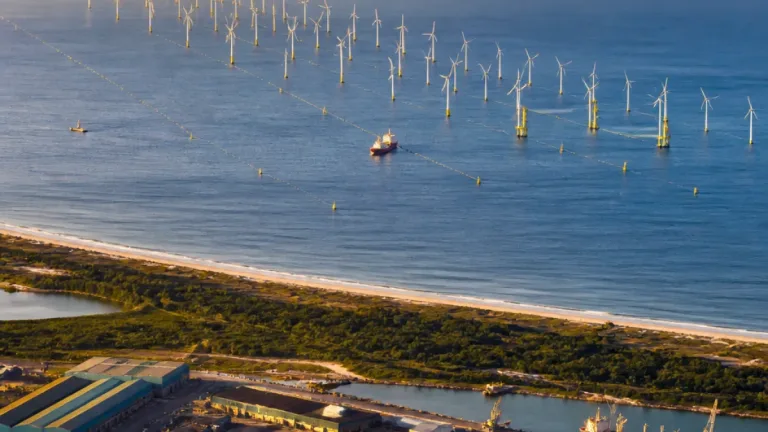
Industrial parks such as Coega and the East London IDZ already host export‑oriented manufacturing and logistics operations. The new bilateral framework with Egypt signals a policy preference for leveraging these sites as continental gateways rather than confining export flows to neighbouring countries.
Practical questions remain
While ministers and agencies highlighted the corridor’s potential, municipal and provincial stakeholders will want clarity on several practical matters before the benefits materialise:
- Timelines for investor relocations and plant openings in the Coega and East London zones.
- Which sectors will be prioritised beyond automotive and whether incentives will be adjusted.
- Infrastructure upgrades and logistics capacity required to support increased intra‑African freight movements.
The Eastern Cape Development Agency hosted the symposium where Tau made his remarks; its role in shepherding export projects will be central to implementation. Tau himself acknowledged that diversification demands sustained follow‑through rather than headline agreements alone.
Regional context and next steps
The trade corridor concept aligns with continental economic integration objectives under the African Continental Free Trade Area. For the Eastern Cape, the immediate challenge is converting diplomatic accords into jobs, investment and resilient supply chains.
Officials have so far not provided timebound milestones or named participating firms. That leaves municipal and provincial planners with the task of pressing for implementation details that will translate into tangible local economic outcomes.
The announcement positions the Eastern Cape as an industrial anchor in a broader South Africa–Egypt trade relationship. Whether that vision will yield new factories, expanded logistics capacity and sustained export growth will depend on the next—and more operational—phase of the plan.